
Lord Krishna is worshipped as the Supreme Personality of Godhead in Hindu tradition. He represents love, wisdom, playfulness, and divine guidance. Chanting the 108 names of Lord Krishna is a powerful devotional practice that helps calm the mind, awaken devotion (bhakti), and deepen spiritual understanding.
These sacred names describe Krishna’s divine qualities, pastimes, and eternal relationship with devotees. Chanting them daily is considered an effective form of Naam Japa and mantra meditation.
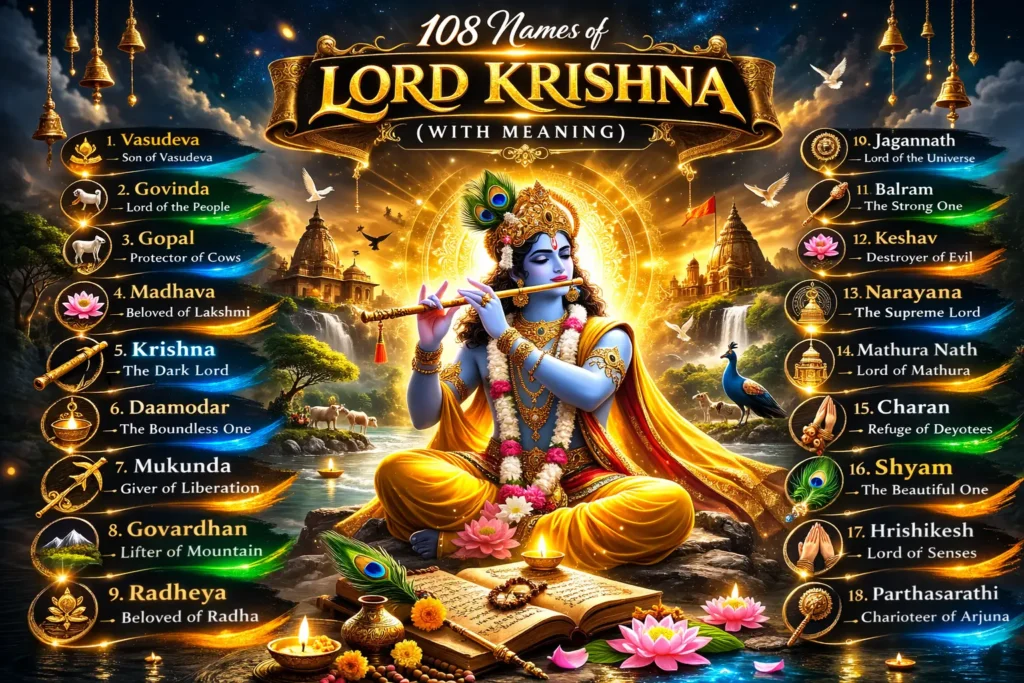
Table of Contents
Why Chant the 108 Names of Lord Krishna?
Chanting Krishna’s names is believed to purify the heart and bring inner joy. Each name carries a unique spiritual vibration that reminds devotees of Krishna’s divine presence.
Benefits include:
- Growth of devotion and surrender
- Inner peace and emotional balance
- Strengthened connection with Radha – Krishna bhakti
- Reduction of stress and negative thoughts
Many devotees chant these names along with Radha Naam Jap or the Hare Krishna Maha Mantra.
Spiritual Importance of the Number 108
The number 108 holds deep spiritual meaning in Hindu tradition. Chanting 108 names creates a complete devotional cycle and helps maintain rhythm and focus during chanting.
To understand this better, you can read about the importance of 108 in japa meditation and why it is widely used in mantra practice.
108 Names of Lord Krishna With Meaning
Below is the traditional list of 108 names of Lord Krishna along with their meanings:
- Krishna – The All-Attractive One
- Vasudeva – Son of Vasudeva
- Devakinandana – Son of Devaki
- Nandagopa Kumara – Son of Nanda Maharaj
- Yashodanandana – Beloved Son of Yashoda
- Govinda – Giver of Pleasure to Cows and Senses
- Gopala – Protector of Cows
- Gopinatha – Lord of the Gopis
- Madhusudana – Slayer of Demon Madhu
- Keshava – Slayer of Kesi Demon
- Madhava – Husband of Goddess Lakshmi
- Mukunda – Giver of Liberation
- Janardana – Protector of Humanity
- Damodara – One Bound by Love
- Hrishikesha – Lord of the Senses
- Padmanabha – From Whose Navel Came the Lotus
- Trivikrama – Conqueror of Three Worlds
- Vamana – The Dwarf Incarnation
- Adhokshaja – Beyond Material Perception
- Narayana – Resting on Cosmic Waters
- Achyuta – The Infallible One
- Ananta – Infinite
- Purushottama – Supreme Person
- Yogeshwara – Supreme Yogi
- Hari – Remover of Sins
- Shyamasundara – Dark and Beautiful
- Ranchodasa – One Who Left the Battlefield
- Parthasarathi – Charioteer of Arjuna
- Jagannatha – Lord of the Universe
- Vishvambhara – Supporter of the Universe
- Bhaktavatsala – Protector of Devotees
- Bhagavan – The Supreme God
- Mahabahu – Mighty-Armed
- Chaturbhuja – Four-Armed One
- Shantakara – Bestower of Peace
- Sarvapalaka – Protector of All
- Sarveshwara – Lord of All
- Gadadhara – Holder of the Mace
- Chakrapani – Holder of the Discus
- Shankhadhari – Holder of the Conch
- Vanamali – Wearer of Forest Garland
- Pitambaradhari – Dressed in Yellow Garments
- Murali Manohara – Enchanter with the Flute
- Venugopala – Flute-Playing Cowherd
- Rasavihari – Enjoyer of Rasa Dance
- Radhavallabha – Beloved of Radha
- Radha Raman – One Who Pleases Radha
- Premanidhi – Treasure of Love
- Prema Murti – Embodiment of Love
- Anandaroopa – Form of Bliss
- Satchidananda – Truth, Consciousness, Bliss
- Nityananda – Eternal Bliss
- Narayana Priya – Beloved of Lakshmi
- Yajneshwara – Lord of Sacrifice
- Vedantavid – Knower of the Vedas
- Vedavettā – Knower of All Scriptures
- Sarvajna – All-Knowing
- Sarvasakshi – Witness of All
- Sarvanayaka – Leader of All
- Sarvabhauma – Supreme Ruler
- Mahaveera – Supreme Hero
- Mahadhruti – One of Great Patience
- Lokadhyaksha – Overseer of Worlds
- Lokeshwara – Lord of the World
- Punyashravana – Hearer of Sacred Names
- Tirthakara – Creator of Sacred Places
- Mahotsaha – Full of Great Enthusiasm
- Mahabala – Supremely Strong
- Mahabuddhi – Supremely Intelligent
- Mahavira – The Brave One
- Chintamani – Wish-Fulfilling Gem
- Dhanvantari – Divine Healer
- Shivapriya – Beloved of Shiva
- Bhutabhavana – Source of All Beings
- Sarvabhavanaya – Shelter of All
- Bhaktabhavana – Protector of Devotees
- Vishnave – The All-Pervading
- Janmadi Nidhana – Source of Creation
- Avyaya – Imperishable
- Ajaramara – Unborn and Deathless
- Mahatejas – Supremely Radiant
- Mahadyuti – Of Great Splendor
- Mahakaya – Vast Cosmic Form
- Mahabalaaya – All-Powerful
- Mahashakti – Source of All Power
- Mahadhipa – Supreme Ruler
- Sarvadeva – God of All Gods
- Jagatguru – Teacher of the Universe
- Jagadishwara – Supreme Lord
- Vishvarupa – Universal Form
- Shantatma – Peaceful Soul
- Shantida – Giver of Peace
- Shrivatsa Vaksha – Bearer of Shrivatsa Mark
- Shrinivasa – Abode of Lakshmi
- Lokatrayaashraya – Refuge of Three Worlds
- Padmapani – Lotus-Handed
- Padmanabha – Lotus-Naveled
- Sarvashubhakara – Bestower of Auspiciousness
- Sarvamangalya – Source of All Auspiciousness
- Krishnaya – Supreme Krishna
- Vasudevatmaja – Son of Vasudeva
- Devaki Putra – Son of Devaki
- Nanda Nandana – Son of Nanda
- Yashoda Bala – Child of Yashoda
- Gopi Jana Vallabha – Beloved of the Gopis
- Radha Prana Vallabha – Life of Radha
- Shri Krishna – Supreme Lord Krishna
- Parabrahma – The Supreme Absolute Truth
How to Chant the 108 Names of Lord Krishna
- Chant each name once
- Complete one round of 108
- Practice daily or on Ekadashi
- Chant softly or mentally
For accurate daily chanting, many devotees prefer using TemplePedia’s Mantra Counter Online to complete all 108 names without distraction.
Conclusion
The 108 names of Lord Krishna reflect divine love, wisdom, and protection. Chanting these names daily helps awaken devotion, calm the mind, and deepen spiritual awareness.
When combined with Naam Japa or Radha–Krishna bhakti, this practice becomes a complete devotional path rooted in love and surrender.
FAQ – 108 Names of Lord Krishna
Q1. What are the 108 names of Lord Krishna?
The 108 names of Lord Krishna are sacred devotional names that describe his divine qualities, pastimes, compassion, wisdom, and supreme nature.
Q2. Why should devotees chant the 108 names of Lord Krishna?
Chanting the 108 names of Lord Krishna helps purify the heart, increase devotion (bhakti), calm the mind, and strengthen the spiritual connection with Krishna.
Q3. Is chanting the 108 names of Lord Krishna part of Naam Japa?
Yes, chanting the 108 names of Lord Krishna is a form of Naam Japa, where each name is repeated once to complete a full devotional cycle.
Q4. Why is the number 108 important in Krishna chanting?
The number 108 represents spiritual completeness in Hindu tradition. Chanting 108 names helps maintain rhythm, focus, and discipline during japa meditation.
Q5. Can beginners chant the 108 names of Lord Krishna?
Yes, beginners can chant slowly with understanding. Even if all 108 names are not completed initially, regular practice brings progress.
Q6. What is the best time to chant Krishna’s 108 names?
Early morning and evening are considered ideal, especially on Ekadashi, but chanting can be done anytime with devotion.
Q7. Do I need a japa mala to chant the 108 names?
A japa mala is helpful but not compulsory. Many devotees also use digital mantra counters for accurate counting.
Q8. Can the 108 names of Lord Krishna be chanted silently?
Yes, the names can be chanted aloud, softly, or mentally based on comfort and surroundings.
Q9. How long does it take to chant all 108 names of Lord Krishna?
Chanting all 108 names usually takes about 10–15 minutes when done calmly and mindfully.
Q10. What are the benefits of chanting Krishna’s names daily?
Daily chanting helps develop love, peace, emotional balance, devotion, and remembrance of Krishna in daily life.