
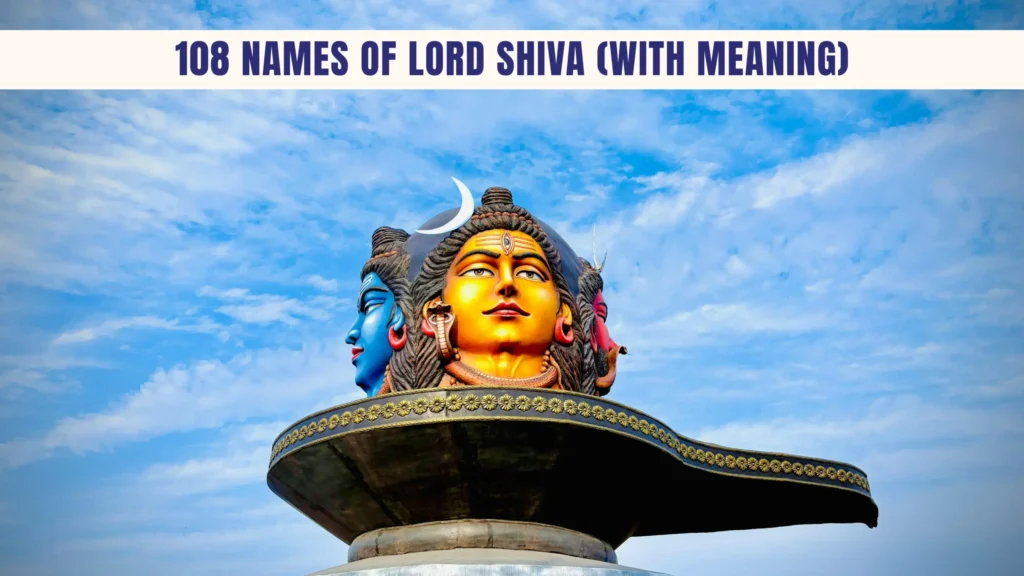
The 108 names of Lord Shiva – hold profound spiritual significance in Hindu tradition. Known as the Shiva Ashtottara Shatanamavali, these sacred names describe the divine qualities, cosmic powers, and compassionate nature of Lord Shiva. Chanting these names is considered a powerful devotional practice that purifies the mind, strengthens faith, and promotes inner transformation.
In Vedic tradition, the number 108 represents completeness and spiritual alignment. Devotees often chant Shiva’s 108 names using a japa mala or a digital counting method to complete one full sacred cycle. If you wish to understand why 108 repetitions are spiritually important, you can also explore the deeper meaning behind the importance of 108 in japa meditation.
To understand why 108 repetitions are spiritually significant, you can read our guide on the importance of 108 in japa meditation.
Table of Contents
Why Chant the 108 Names of Lord Shiva?
Lord Shiva is worshipped as the destroyer of negativity and the source of cosmic balance. His names reflect his many forms — from ascetic yogi to compassionate protector.
Chanting the 108 names of Lord Shiva:
- Brings mental calmness
- Removes fear and negative energy
- Enhances spiritual awareness
- Promotes emotional balance
- Deepens devotion
Many devotees combine this practice with chanting the Om Namah Shivaya mantra, one of the most powerful Shiva mantras in Hinduism.
Spiritual Meaning of the Number 108
The number 108 is considered sacred because:
- There are 108 Upanishads
- The distance between Earth and Sun is approximately 108 times the Sun’s diameter
- There are 108 energy channels (nadis) converging in the heart chakra
Completing 108 repetitions creates spiritual wholeness and focus.
108 Names of Lord Shiva (With Meaning)
| No. | Name | Meaning |
|---|---|---|
| 1 | Shiva | The Auspicious One |
| 2 | Maheshwara | The Great Lord |
| 3 | Shambhu | The Source of Bliss |
| 4 | Pinakapani | The Holder of the Bow |
| 5 | Shashishekhara | The Moon-Crowned One |
| 6 | Vamadeva | The Gentle Form |
| 7 | Virupaksha | The Three-Eyed Lord |
| 8 | Kapardi | The Matted-Haired One |
| 9 | Nilalohita | The Blue and Red Complexioned |
| 10 | Shankara | The Giver of Prosperity |
| 11 | Shulapani | The Holder of the Trident |
| 12 | Khatvangi | The Bearer of the Skull Staff |
| 13 | Vishnuvallabha | Beloved of Vishnu |
| 14 | Shipivishta | The All-Pervading One |
| 15 | Ambikanatha | Consort of Goddess Parvati |
| 16 | Shrikantha | The Glorious-Throated One |
| 17 | Bhaktavatsala | Protector of Devotees |
| 18 | Bhava | Source of Existence |
| 19 | Sharva | The Archer |
| 20 | Trilokeshwara | Lord of the Three Worlds |
| 21 | Sitikantha | The Blue-Throated One |
| 22 | Shivapriya | Beloved of the Divine |
| 23 | Ugra | The Fierce One |
| 24 | Kapali | Bearer of the Skull |
| 25 | Kamaari | Destroyer of Desire |
| 26 | Andhakasurasudana | Slayer of Demon Andhaka |
| 27 | Gangadhara | Bearer of River Ganga |
| 28 | Lalataksha | The Third-Eyed Lord |
| 29 | Kalakala | Destroyer of Time |
| 30 | Kripanidhi | Ocean of Compassion |
| 31 | Bheema | The Powerful One |
| 32 | Parashuhasta | Holder of the Axe |
| 33 | Mrigapani | Holder of the Deer |
| 34 | Jatadhara | The One with Matted Hair |
| 35 | Kailasavasi | Resident of Mount Kailasa |
| 36 | Kavachi | The Armored One |
| 37 | Kritivasa | Clothed in Animal Skin |
| 38 | Girisha | Lord of the Mountains |
| 39 | Girijapati | Husband of Parvati |
| 40 | Bhujangabhushana | Adorned with Serpents |
| 41 | Rudra | The Roaring Lord |
| 42 | Nataraja | The Cosmic Dancer |
| 43 | Pashupati | Lord of All Living Beings |
| 44 | Mahadeva | The Supreme God |
| 45 | Tryambaka | The Three-Eyed One |
| 46 | Ashutosh | The Easily Pleased |
| 47 | Dakshinamurthy | The Supreme Teacher |
| 48 | Mahakala | Lord of Time |
| 49 | Chandrasekhara | The Moon Adorned One |
| 50 | Neelkantha | The Blue-Throated Lord |
| 51 | Someshwara | Lord of the Moon |
| 52 | Tripurari | Destroyer of Tripura |
| 53 | Bhagavan | The Divine One |
| 54 | Mahabala | The Strongest |
| 55 | Sadasiva | The Eternal Shiva |
| 56 | Yogeshwara | Lord of Yoga |
| 57 | Adiyogi | The First Yogi |
| 58 | Sarveshwara | Lord of All |
| 59 | Ananta | Infinite |
| 60 | Vishwanatha | Lord of the Universe |
| 61 | Chandramouli | The Moon-Crested |
| 62 | Hara | The Remover |
| 63 | Ishana | The Supreme Ruler |
| 64 | Bholenath | The Innocent Lord |
| 65 | Mahesh | The Great God |
| 66 | Rudranatha | The Fierce Lord |
| 67 | Nagabhushana | Adorned with Serpents |
| 68 | Lingeshwara | Lord of the Linga |
| 69 | Kedarnath | Lord of Kedarnath |
| 70 | Omkareshwara | Lord of Om |
| 71 | Bhuteshwara | Lord of the Elements |
| 72 | Digambara | Clothed in Space |
| 73 | Ardhanarishwara | Half Male-Half Female Form |
| 74 | Virabhadra | The Fierce Warrior |
| 75 | Kameshwara | Lord of Desires |
| 76 | Shambhunatha | Blissful Lord |
| 77 | Maheshan | Supreme Controller |
| 78 | Somanatha | Lord of the Moon |
| 79 | Adideva | The Primordial God |
| 80 | Bhavanishankara | Lord of Parvati |
| 81 | Paramatma | Supreme Soul |
| 82 | Maheshwaraaya | The Great Supreme |
| 83 | Sarvadeva | God of All Gods |
| 84 | Vaidyanatha | Divine Healer |
| 85 | Nageshwara | Lord of Serpents |
| 86 | Sharveshwara | Universal Lord |
| 87 | Ishwara | The Supreme |
| 88 | Rameshwara | Lord Worshipped by Rama |
| 89 | Kaleshwara | Lord of Time |
| 90 | Chidambareswara | Lord of Chidambaram |
| 91 | Trilochana | The Three-Eyed Lord |
| 92 | Kapaleshwara | Skull-Bearing Lord |
| 93 | Giridhar | Upholder of Mountains |
| 94 | Vishweshwara | Universal God |
| 95 | Mahabuddhi | Supremely Wise |
| 96 | Somnath | Lord of Soma |
| 97 | Sadashivaya | Eternal Form |
| 98 | Harahara | Remover of Sins |
| 99 | Bhavaneshwara | Lord of Creation |
| 100 | Umapati | Husband of Uma |
| 101 | Sharvaaya | Destroyer |
| 102 | Maheshanatha | Great Lord |
| 103 | Parameshwara | Supreme Controller |
| 104 | Kailashnatha | Lord of Kailash |
| 105 | Triloknatha | Lord of Three Worlds |
| 106 | Shivashambhu | Auspicious and Blissful |
| 107 | Mahadeveshwara | Supreme Deity |
| 108 | Sivaya | The Auspicious Consciousness |
How to Chant These 108 Names
You can chant:
- Once daily
- On Mondays
- During Maha Shivaratri
- During meditation
To complete all 108 names without losing count, many devotees use a simple mantra counter online for accuracy and consistency.
Final Thoughts
The 108 names of Lord Shiva offer a complete spiritual discipline. Each name carries a vibration that purifies the mind and strengthens devotion.
Whether you chant traditionally with beads or use a digital counter, what matters most is sincerity and consistency.
By integrating this practice into your daily routine, you invite peace, strength, and divine grace into your life.
For accurate counting during daily chanting, you can use TemplePedia’s Mantra Counter Online to complete all 108 names without distraction.
Related Articles :-
- Mantra Counter Online – Free Naam Japa Counter for Daily Chanting
- What Is Naam Japa? Meaning, Benefits & How to Start Daily Practice
- Why Important of 108 in Japa Meditation? Spiritual Meaning
- Om Namah Shivaya Mantra: Meaning, Benefits & Japa Method
Frequently Asked Questions (FAQs)
Q1. What are the 108 names of Lord Shiva?
The 108 names of Lord Shiva are sacred titles representing his qualities, powers, and divine attributes.
Q2. Why is 108 important in Shiva chanting?
The number 108 represents spiritual completeness and balance in Hindu tradition.
Q3. When should I chant Shiva’s 108 names?
Morning time, Mondays, and Maha Shivaratri are considered ideal.
Q4. Can beginners chant the 108 names?
Yes, beginners can chant slowly and gradually build consistency.
Q5. Is using a digital counter acceptable?
Yes, digital tools help maintain accurate repetition without losing focus.