
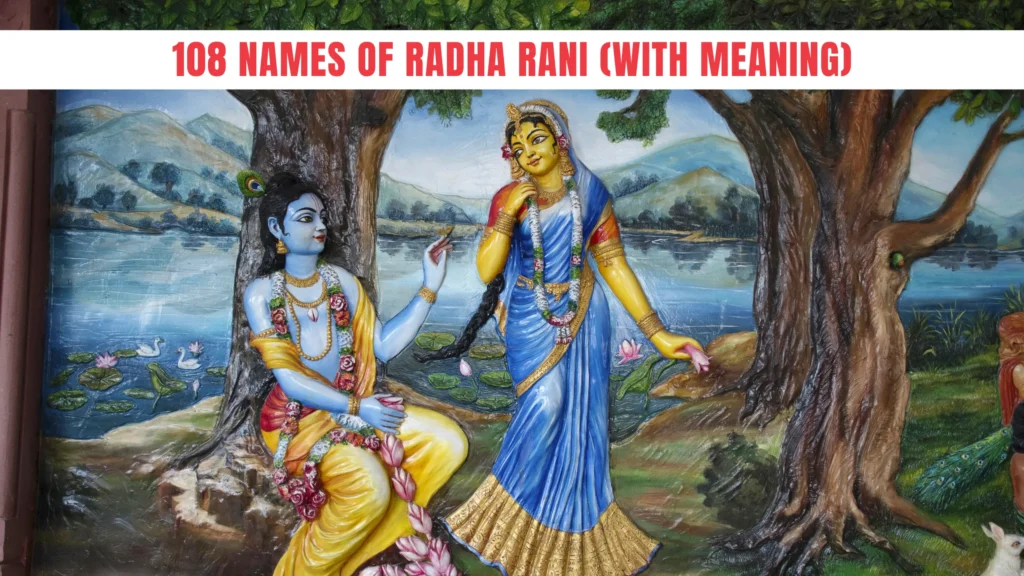
Radha Rani is worshipped as the supreme embodiment of devotion, love, and compassion in Vaishnava tradition. She represents pure bhakti – selfless love toward Lord Krishna. Chanting the 108 names of Radha Rani is considered a powerful devotional practice that softens the heart, calms the mind, and deepens spiritual connection.
These sacred names describe her divine qualities, emotions, and spiritual significance. Devotees often chant these names as part of Radha Naam Jap, especially during daily chanting, festivals, and meditation.
Table of Contents
Spiritual Importance of Chanting Radha Rani’s Names
Radha Rani is not only Krishna’s beloved but also the personification of devotion itself. Chanting her names helps devotees cultivate humility, love, and surrender.
Benefits of chanting Radha’s names include:
- Growth of pure devotion (bhakti)
- Emotional healing and inner peace
- Stronger connection with Krishna
- Calmness of mind and heart
Many devotees chant Radha’s names using a structured count of 108 repetitions. If you want to understand this practice deeply, you may also read about Radha Naam Jap and how to practice it daily.
Why 108 Names?
The number 108 holds sacred importance in Hindu spirituality. Chanting 108 names creates a complete devotional cycle and helps maintain rhythm and discipline during chanting.
Devotees often chant each name once to complete one full round.
108 Names of Radha Rani With Meaning
Below is the traditional devotional list of 108 names of Radha Rani along with their meanings:
- Radha – The Beloved of Krishna
- Radhika – One Who Is Worshipped
- Vrindavaneshwari – Queen of Vrindavan
- Krishnapriya – Beloved of Krishna
- Govindavallabha – Dearest to Govinda
- Gokulanandini – Daughter of Gokula
- Vrishabhanuja – Daughter of King Vrishabhanu
- Kirti Kanya – Daughter of Kirti
- Shyama – Dark-Complexioned Beauty
- Madhavi – Sweet and Gentle One
- Madhurya Roopini – Embodiment of Sweetness
- Prema Bhakti Pradayini – Giver of Pure Love
- Bhavani – Source of Devotion
- Bhaktavatsala – Protector of Devotees
- Karunamayi – Full of Compassion
- Dayamayi – Merciful One
- Premaroopa – Form of Divine Love
- Kripamayi – Full of Grace
- Saraswati – Goddess of Wisdom
- Shri – Goddess of Fortune
- Lalita – Playful One
- Vishakha – Close Companion
- Chandravali – Moonlike Beauty
- Gopi – Cowherd Maiden
- Gopika – Beloved Gopi
- Gopijanavallabha – Beloved of the Gopis
- Krishnamayi – One Who Is Krishna Herself
- Govindamohini – Enchantress of Govinda
- Raseshwari – Queen of the Rasa Dance
- Rasika – Expert in Divine Love
- Rasapriya – Lover of Rasa
- Rasaroopini – Form of Rasa
- Anandaroopini – Embodiment of Bliss
- Nityasakhi – Eternal Companion
- Sakhiswaroopini – Form of Friendship
- Premanidhi – Treasure of Love
- Bhaktiprada – Giver of Devotion
- Bhaktigamya – Attained Through Devotion
- Krishnaika Sahaayini – Sole Companion of Krishna
- Krishnaika Priya – Most Dear to Krishna
- Haripriya – Beloved of Hari
- Hari Vallabha – Dear to Hari
- Anangamanjari – Cupid-like Beauty
- Preeti Swaroopini – Form of Affection
- Manohara – Enchanting One
- Mohini – Enchantress
- Chanchala – Playful and Lively
- Chitramohini – Wonderfully Enchanting
- Kalyani – Auspicious One
- Sundari – Beautiful Goddess
- Rasavilasini – Enjoyer of Rasa
- Shubhangi – Auspicious Limbs
- Soubhagyavati – Goddess of Fortune
- Saubhagyaroopini – Embodiment of Fortune
- Mangala – Auspicious Goddess
- Premabhakti Rasatmika – Essence of Devotion
- Krishnabhakta Shiromani – Crown Jewel of Devotees
- Bhava Bhavini – Source of Emotions
- Shanta – Peaceful One
- Komala – Soft and Gentle
- Prema Lalasa – Yearning for Love
- Bhava Sundari – Beautiful in Emotion
- Premasindhu – Ocean of Love
- Premaroopa – Form of Love
- Anandini – Giver of Joy
- Rasa Purna – Full of Rasa
- Krishnarasika – Enjoyer of Krishna’s Love
- Rasa Tarangini – Waves of Rasa
- Bhava Gahvara – Deep Emotion
- Bhakti Pradatri – Bestower of Devotion
- Nitya Kishori – Eternal Young Goddess
- Nitya Seva Rata – Engaged in Eternal Service
- Krishna Seva Parayana – Dedicated to Krishna’s Service
- Krishna Bhava Ranjini – Pleaser of Krishna’s Heart
- Krishna Manohari – Enchantress of Krishna
- Radha Vallabha – Beloved of Radha
- Radha Prana Vallabha – Life of Radha
- Krishna Praneshwari – Mistress of Krishna’s Heart
- Prema Sampurna – Complete in Love
- Bhava Gambhira – Deep Emotion
- Rasika Shekhara – Supreme Rasika
- Rasa Rajeshwari – Queen of Rasa
- Premamayee – Full of Love
- Bhaktiswaroopini – Form of Devotion
- Krishnaika Sharanam – Refuge of Krishna
- Krishnaika Bhava – Emotion of Krishna
- Krishnaika Prema – Love for Krishna
- Bhava Ranjani – Delighter of Emotions
- Nitya Premika – Eternal Lover
- Prema Parayana – Dedicated to Love
- Krishna Hridaya Vasini – Dweller in Krishna’s Heart
- Rasa Madhuri – Sweetness of Rasa
- Prema Madhuri – Sweetness of Love
- Rasa Purnima – Full Moon of Rasa
- Bhava Madhuri – Sweetness of Emotion
- Premamayi – Full of Love
- Bhakti Rasika – Enjoyer of Devotion
- Krishna Rasa Bhavita – Absorbed in Krishna’s Love
- Nitya Premaroopini – Eternal Love Form
- Krishna Hridaya Nivasini – Residing in Krishna’s Heart
- Rasa Vilasa Roopini – Form of Rasa Play
- Premabhakti Pradayini – Bestower of Love and Devotion
- Bhava Rupa – Form of Emotion
- Rasa Sundari – Beautiful in Rasa
- Krishnaika Jeevana – Life of Krishna
- Premaroopa Nitya – Eternal Form of Love
- Bhakti Bhavita – Filled With Devotion
- Shri Radha – Supreme Goddess of Love
How to Chant the 108 Names of Radha Rani
- Chant each name once
- Complete one round of 108
- Practice in the morning or evening
- Chant softly or mentally
For accurate counting during daily chanting, many devotees prefer using a simple Mantra Counter Online to complete 108 repetitions without distraction.
Conclusion
The 108 names of Radha Rani reflect the highest form of divine love and devotion. Chanting these names helps awaken pure bhakti and inner peace.
Whether you practice daily or occasionally, this sacred list offers a gentle and powerful way to connect with Radha Rani’s grace. Combined with Radha Naam Jap, this practice becomes a complete devotional path rooted in love and surrender.
Related Articles
FAQ – 108 Names of Radha Rani
Q1. What are the 108 names of Radha Rani?
The 108 names of Radha Rani are sacred devotional names that describe her divine qualities, love, compassion, and eternal connection with Lord Krishna.
Q2. Why should devotees chant the 108 names of Radha Rani?
Chanting the 108 names of Radha Rani helps cultivate pure devotion (bhakti), emotional peace, humility, and a deeper spiritual bond with Krishna.
Q3. How are the 108 names of Radha Rani connected to Radha Naam Jap?
The 108 names of Radha Rani are often chanted as part of Radha Naam Jap, where each name represents one repetition in a complete devotional cycle.
Q4. Is 108 an important number in Radha Naam chanting?
Yes, 108 is considered spiritually complete in Hindu tradition. Chanting 108 names creates focus, rhythm, and devotional discipline.
Q5. Can beginners chant the 108 names of Radha Rani?
Yes, beginners can chant slowly with understanding and gradually build consistency. There are no strict rules for beginners.
Q6. What is the best time to chant Radha Rani’s 108 names?
Early morning and evening are ideal, but chanting can be done anytime with devotion and a calm mind.
Q7. Do I need a japa mala to chant the 108 names?
A traditional japa mala is optional. Many devotees also use simple digital tools to maintain accurate counting.
Q8. Can the 108 names of Radha Rani be chanted silently?
Yes, the names can be chanted aloud, softly, or mentally depending on personal comfort and surroundings.
Q9. How long does it take to chant all 108 names?
Chanting the 108 names of Radha Rani usually takes around 10–15 minutes when done calmly and mindfully.
Q10. What are the spiritual benefits of chanting Radha Rani’s names daily?
Daily chanting helps calm the heart, increase love and devotion, reduce stress, and strengthen faith in Krishna consciousness.