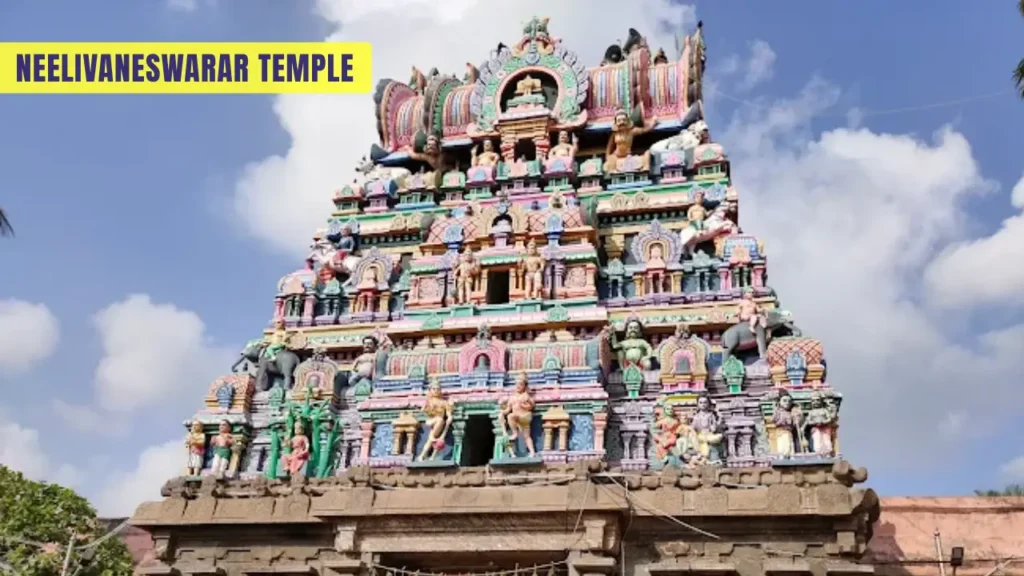
Neelivaneswarar Temple – An Ancient Paadal Petra Sthalam
Neelivaneswarar Temple – Timings
| Day | Morning Timings | Evening Timings |
|---|---|---|
| Monday – Sunday | 6:00 AM – 1:00 PM | 4:00 PM – 8:00 PM |
Neelivaneswarar Temple – Location Details
| Detail | Information |
|---|---|
| Temple Name | Neelivaneswarar Temple |
| Village | Thiruppaingneeli (Thirupanjali) |
| District | Tiruchirappalli |
| State | Tamil Nadu |
| Country | India |
| Deity | Lord Shiva (Neelivaneswarar) |
| Temple Type | Paadal Petra Sthalam |
How to Reach Neelivaneswarar Temple
| Mode | Details |
|---|---|
| By Road | The temple is about 20 km northwest of Tiruchirappalli. Regular buses, autos, and taxis are available from Trichy city and nearby towns. |
| By Train | Tiruchirappalli Junction is the nearest major railway station. From the station, the temple can be reached by bus or taxi. |
| By Air | Tiruchirappalli International Airport is the nearest airport. From there, taxis and buses are available to reach the temple. |
The Neelivaneswarar Temple, sometimes called Gneelivaneswarar or Vishwanathar Temple, sits in Thiruppaingneeli – a small village in Tamil Nadu’s Tiruchirappalli area – but goes by alternate names like Thirupanjali here and there. It’s an old Hindu site focused on Shiva, shown in a natural form named Gneelivaneswarar; meanwhile, his partners are set up nearby under different roofs: Visalakshi and Neelnedungannayaki each have their own space.
Experts guess it’s been around 1,000 to 2,000 years, give or take, making it one of those rare spots tied to early spiritual verses from Appar, Sundarar, and Sambandar – all part of the Tevaram songs sung between the 7th and 9th centuries. Actually counted among 275 holy places known as Paadal Petra Sthalams, this temple ranks number 61 if you follow the north side of the Cauvery river.
The temple holds deep meaning in Shaivite beliefs – stories say Shiva brought Yama, lord of death, back to life following a curse; this moment lives on through Thai Poosam rituals at a rare shrine showing Yama as a child. One tale tells how sage Vasishta once saw Nataraja here, pointing to its ancient sacred roots.
Its design includes a broad Vimana above the holy chamber, five wide courtyards surrounding it, along with a marked entryway – the Ravana Gate – with nine stairs standing for the Navagrahas, since no independent planet shrine exists, which isn’t common. The grand entrance tower began under Pandyan ruler Sundara Pandyan, part of many building phases over time.
An eye-catching detail: sunlight hits the Shiva lingam straight-on during the 6th to 8th days of Purattasi (Sept–Oct) and Panguni (Mar–Apr), helping earn names like “South Kailash” or “Melai Chidambaram.”
Also Check Out This :- Banke Bihari Temple Darshan, Timings, History
People come here hoping things get better – like finding a spouse, landing work, or living longer. This place keeps seven special water pools, two named after Visalakshi and Yama, along with a holy plant called Kalvazhai.
Big events happen often – one lasting ten days around April or May, others like Aadi 18, food offerings in autumn, lights in winter, a festival when rivers are honored, plus one big night for Shiva between February and March, pulling in huge groups for parades and dips in water.
Gates open every day at six in the morning, close by one, then reopen at four till eight at night. It’s about twenty kilometers up north-west from Tiruchirappalli core area; you can hop on a bus or take a train from Trichy Junction to reach it.
Powerful Tirupati Balaji Temple – History, Miracles & Darshan Guide
Location and Etymology
Location
The Neelivaneswarar Temple stands in Thiruppaingneeli village – part of Manachanallur Taluk, Tiruchirappalli district, Tamil Nadu, India. On the south side of the Cauvery River, it rests.
The location sits around 20 to 25 kilometers up north from Tiruchirappalli’s main area, also nearly 25 clicks west of Lalgudi town. Closest train stop? Srirangam (SRGM), some 15 klicks off. As for flights, travelers usually land at Tiruchirappalli International Airport (TRZ) – that’s about 25 km down south.
Getting to the temple’s easy thanks to local roads that link up with NH 45 – the Trichy–Chennai highway – so you won’t get stuck. Buses run often from Chathiram station in Tiruchirappalli, while smaller ones leave regularly from Manachanallur, just 7 km off.
Out here, things stay quiet and countryside-like, filled with wide stretches of farmland watered by rivers close by. You’ll see rice fields spread out around tiny villages, making everything feel calm and open. The Cauvery River plays a big role in stories tied to the temple, standing for life coming back and sacredness.
Etymology
The temple’s name, Neelivaneswarar Temple– sometimes written as Gneeliwaneswarar or Gneelivaneswarar – comes from Tamil words: ‘Gneeli,’ which is a type of plantain tree, while ‘vanam’ stands for forest; so it means Lord Shiva rules over a grove full of these special trees. That naming hints at how this place once had thick green cover where those holy plantains grew everywhere.
The name Thiruppaingneeli comes from Thiru Paingneeli – “Thiru” meaning holy, “Pain” standing for rich greenery, while “Gneeli” points to a type of plantain, highlighting the dense foliage around the shrine by the Cauvery River.
Also called Then Kailasam or South Kailash, it draws a link to key northern sanctuaries through symbolic importance. Known as Melai Chidambaram too, showing how deeply rooted its spiritual role is. The local sacred tree – the Kadali or plantain – is tied closely to the “Gneeli” part, shaping both temple traditions and its core character.
Kedarnath Temple – Sacred Jyotirlinga of Lord Shiva
History
Early Construction and Patronage
The Neelivaneswarar Temple – sometimes called Gneelivaneswarar Temple – comes from around the 7th century CE, so it’s roughly 1,400 years in age; yet it holds a spot among the 276 Paadal Petra Sthalams, holy Shiva sites praised in Tevaram songs written by saint poets Appar, Sundarar, and Sambandar during the 7th to 9th centuries. Old verses mention this place lightly but clearly show how deep its spiritual roots go, especially on the north side of the Cauvery River in Chola Nadu.
The temple began during the Pallava era, around the 7th century CE – showing one of South India’s first attempts at carving temples straight from stone. Instead of building up, they dug into cliffs; a cave shrine for Yama, death’s deity, took shape near 640 CE under King Mahendravarman I, known for launching this bold new method. Unlike later styles, his team carved entire spaces out of solid rock, mixing art with function in fresh ways. inside these hollowed halls, worship met deeper meaning – not just prayer spots but signs of power and belief shaped through stone.
Later on, under the Cholas in the 900s, the temple’s basic plan started taking shape. Instead of finishing it fully, King Konerinmai Kondaan built just the first level of the main tower – called a gopuram – which shows how big projects were still changing back then. From the 600s to the 900s, its key parts reflect early Dravidian styles; these weren’t fancy but strong, setting the stage for future South Indian temples.
Inscriptions and Renovations
The Neelivaneswarar Temple has many old Tamil writings carved into its walls and parts of the building – mostly from the Chola era, around 800 to 1100 CE. Because of these carvings, we know about gifts of land, money, or supplies given to grow the temple complex; this shows how deeply the Chola kings backed spiritual sites. Besides that, they reveal a lot about society and faith back then – one-off payments meant for everyday ceremonies, yearly festivals, or feeding priests kept Shiva traditions alive through generations.
Prominent examples include writings from when Rajaraja Chola I ruled (985–1014 CE), alongside those from his son, Rajendra Chola I (1012–1044 CE), describing gifts meant for constant oil lamps or rituals tied to the main god. Instead of using “and,” later texts shift focus – like ones from Rajadhiraja Chola I’s era (1018–1057 CE) – which show large chunks of farmland handed to temples by loyal commanders such as Rajaraja Pallavaraya, a warrior serving under the crown,
revealing how local power figures helped run sacred spaces. In another case, carvings linked to Konerinmai Konda Chola (also known as Rajendra Chola II, ruling 1051–1063 CE) point to bigger celebrations plus extra supplies set aside specifically for yearly feasts. Altogether, these stone messages, usually carved on hallways surrounding shrines or outer chambers near altars, help trace how this place grew into one major spiritual hub within the old Chola heartland.
After the Chola era, later kingdoms like the Pandyas and Vijayanagara kept up repairs – adding small upgrades now and then. They helped protect several Shaivite temples across South India by funding them or strengthening their structures; yet records about this particular site are still scarce.
Also Check Out This :-Trimbakeshwar Temple: Complete Spiritual Journey Guide 2025
Today, Tamil Nadu’s HR&CE Department handles daily care, balancing restoration work with better access for visitors. Back in 2014, they introduced updates: fixing the main tower, building a fresh temple cart, refreshing prayer halls and water tanks, along with spaces like palli arai where travelers can rest.
Come April 2023, news came out about raising a seven-storey entrance tower, expected to cost around ₹7 crore. These moves try to honor the temple’s past while supporting ongoing community practices.
Mythological Origins
Long ago, folks say a big fight happened between Adhiseshan – the heavenly snake – and Vayu, the wind god. Instead of teaming up, they raced round Mount Kailash to prove who was stronger. The serpent wrapped tight around the peak to keep it steady. At the same time, Vayu blew wild gusts trying to shake it loose. This clash broke off chunks from the holy white hill called Swethagiri. Pieces flew far; one dropped right here in Thiruppaignelli. Locals believe that’s when Lord Shiva showed up on his own as a natural lingam. Because of this link, the shrine became known as Then Kailasam – like a twin spot down south.
A different tale focuses on Yama, lord of the dead – this highlights how the temple helps ease worries about dying. When Markandeya was nearly taken too soon, Shiva stepped in, defeating Yama right there in Thirukadaiyur, throwing off life’s usual rhythm. After gods begged for mercy, Shiva brought Yama back, but this time as a young boy, setting things straight again while urging fair judgment. Because of that clash, a hidden cave carved into stone now honors Yama inside the compound; people visit it to find peace from fear of death or heavy past deeds.
More stories point to the place being holy because big names once came here. Instead of just hearing about Shiva’s dance, Sage Vashishta actually saw it – right inside the temple’s gem-lit hall, much like what happened at Chidambaram, showing this spot holds equal weight to major northern shrines. On his way to Lanka, Lord Rama stopped by, praying to the self-formed lingam, asking for strength before battle. Because of tales like these, people believe the temple ties back to ancient moments shaped by gods themselves.
Best Temples in Andhra Pradesh – A Complete Travel Guide (2025)
Associations with Saints and Deities
The Neelivaneswarar Temple, sometimes called Gneelivaneswarar Temple in Thirupainjeeli, is counted among the 275 Paadal Petra Sthalams – holy Shiva sites celebrated in ancient songs. Devotees honor Lord Shiva here under the name Gneelivaneswarar; his presence praised through sacred verses written between the 7th and 9th centuries AD. Poets like Thirugnanasambandar, Appar (also known as Tirunavukkarasar), along with Sundarar sang about this site, giving it spiritual weight. It stands as number 61 among shrines located south of the Kaveri River according to the Tevaram tradition.
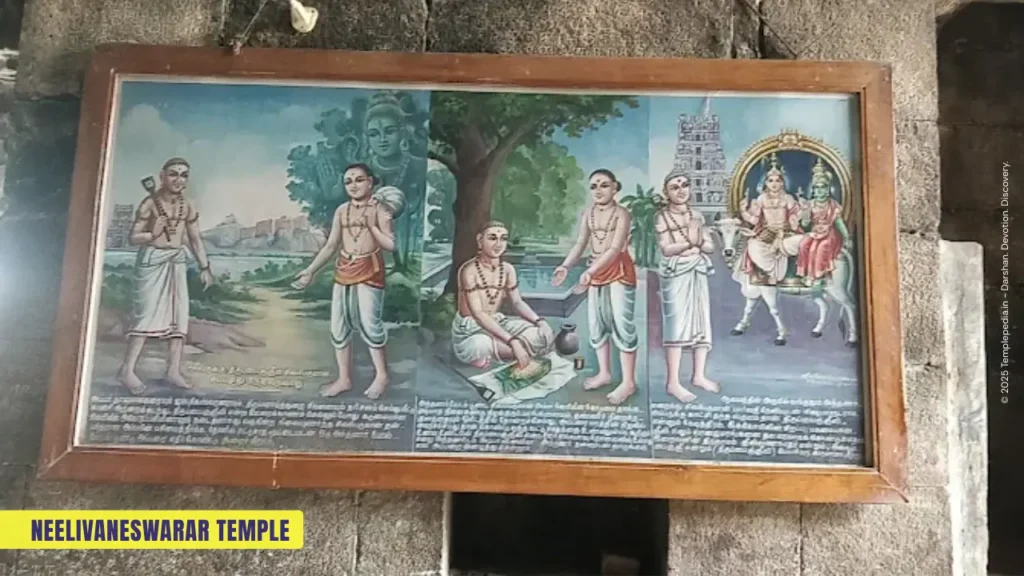
A well-known tale links the temple to Saint Appar, who felt drained and starved during his journey there. Though tired, he kept moving until a man – Shiva in disguise as a priest – handed him food. Instead of leaving right away, the figure led him toward the sacred place before disappearing suddenly. Today’s visitors honor that moment at Chottrudaya Easwarar Shrine, where locals say Appar lives on as a lingam. That act shows how Shiva quietly backs those deeply devoted, especially the Nayanars.
The temple’s stories tie into how gods connect – like when Vishnu showed up as Senthamaraikannan, the lotus-eyed one, similar to Pundarikaksha, with his own spot inside the courtyard walls. One major tale tells of Vishnu stepping in alongside the devas, asking Shiva to bring Yama back to life after he’d been killed while defending Markandeya, which set things right across the universe.
Meanwhile, Bhumadevi stepped forward, worried the Earth couldn’t handle the load without Yama around, so Shiva brought him back – not as an adult, but as a young boy – and told him to judge fairly, yet kindly. This moment lives on in a rare Somaskanda setup showing Shiva, Parvati, Muruga, plus little Yama sitting below them.
Alongside these shrines sit seven holy water tanks tied closely to temple rites – Yama Theertham stands out, said to cleanse sins through divine tales from ancient lore. Besides that one, places like Visalakshi, Kalyana, Agni, Deva, Appar, and Maniankarunai draw devotion during washings or big celebration times thanks to their believed inner strength.
Architecture and Deities
Deities
The main god at the Neelivaneswarar Temple is Shiva – shown here as a naturally formed lingam called Gneelivaneswarar, representing the blue-throated deity nestled within woodland surroundings. Instead of being carved by hands, this sacred stone grew on its own; people honor it using around 43 different titles. Names like Neelakandar, Vishwanathar, or Gneelivananathar highlight separate sides of his power and presence. Others include Kadalivasanthar, linked to oceanic depths, along with Aaranyavidankar, tied to wilderness wisdom.
Goddess Parvati, Shiva’s partner, gets honored here as Sri Visalakshi or Neelnedungkanni – shown with big, striking eyes that reflect kindness; she lives in two different shrines at this temple site. Each shrine shows a side of her nature, bringing calm strength and safety to those who pray for happy relationships and good health.
In one small cave from the 700s – built by the Pallavas – you’ll find a special chamber below ground for Yama, lord of the dead. Hidden inside stone carved straight into rock, called Gunabaram, this quiet spot shows Yama as a tiny kid near Shiva’s feet. Sitting close are Parvati and Murugan, arranged in what’s known as Somaskanda pose – not just art, but meaning life renewal and second chances. People come here mainly for ceremonies such as Shashtiaptha Poorthi or Ayush Homam, both tied to health and longer years.
Also Check Out This :-Prem Mandir Vrindavan – History, Timings, Architecture, Aarti & Travel Guide (2025)
Besides these, you’ll find Vasantha Vinayaka – another form of Ganesha – alongside the holy bull Nandi. Then there’s Murugan tucked into the Yama shrine area. Dakshinamurthy shows up too, plus a second Shiva lingam called Chottrudaya Eswarar. You can see carvings of the 63 Nayanars here – the respected Tamil devotees tied to Shaivism. This place is part of the special Paadal Petra Sthalams praised in ancient Tevaram songs.
Unlike many Paadal Petra sites, this one doesn’t have a special spot for Nataraja – instead, scenes of Shiva dancing are painted inside the main hall’s Ratna Sabha, where locals believe he once showed himself to Sage Vasishta.
Architectural Features
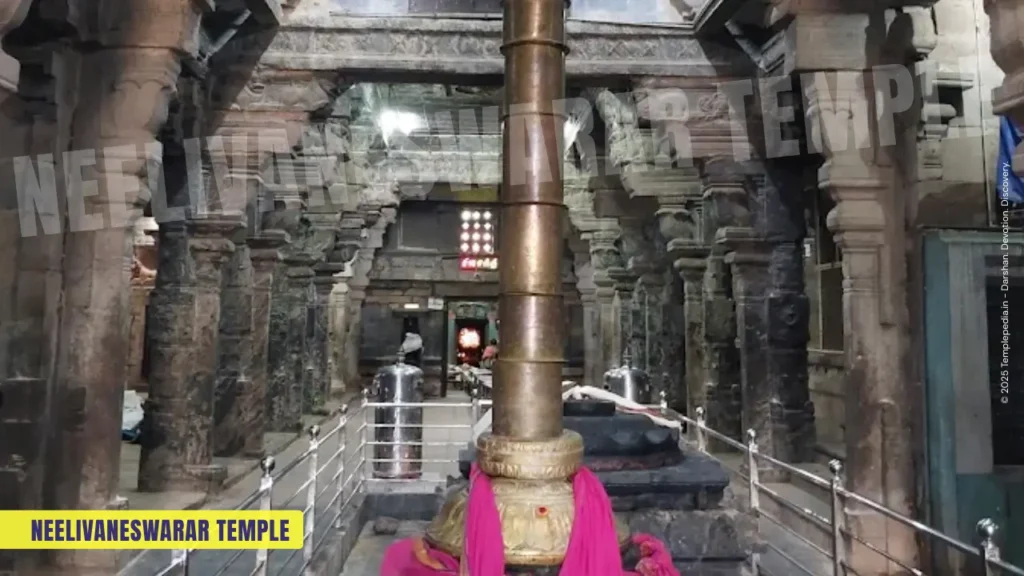
The Neelivaneswarar Temple shows classic Dravidian design – set facing east, surrounded by courtyards used for walking rituals. You enter through a main gate that never got finished – a tower meant to have three levels, built by Pandya ruler Sundara Pandyan; its incomplete state gives the doorway a rough, unique look.
The temple’s design focuses on a main chamber with a self-formed Shiva linga, while open halls and smaller shrines around it allow space for ceremonies and people to come together.
A key highlight? The 7th-century cave temple for Yama – carved right into stone back in Pallava times, found in the outer courtyard as a sunken chamber reached by stairs. This below-ground space, shaped straight from rock with bare walls, stands apart from the surface buildings and holds sculpted forms of Shiva, Parvati, along with other figures tied to Shaivism.
The tower over the main shrine climbs up in steps, shaped like a pyramid – common in southern Indian temples – and ends with a glittering dome called Rathna Sabha, showing Shiva’s eternal dance; close by, just inside the gate, stands a tiny pavilion on four posts where regular ceremonies take place.
Artwork fills the temple’s carved walls, especially in the second courtyard – scenes show the seven goddesses, Ganesha, plus six-faced Shanmukha with his partners. Statues of Dakshinamurthy and half-male, half-female Shiva line the walls, pointing to deep Shaivite faith.
Inscriptions dating back to the Chola era – like ones from Rajaraja Chola 1 , Rajendra Chola 1 , or Rajadhiraja Chola – are carved into the stone, showing gifts meant for upkeep and daily rituals. Pools used for holy dips, such as Yama Theertham together with Kalyana Theertham, sit inside the site, adding practical value to worship routines.
The sthala vriksham, a unique kind of plantain called Gneeli or Kalvazhai, shows up in temple art as signs of growth and spiritual effort – trees stand near the area to echo its ancient story.
Worship Practices and Festivals
Rituals and Unique Ceremonies
The daily prayers at Neelivaneswarar Temple stick to old Shaivite ways – like pouring sacred liquids on the Shiva lingam to seek grace. Instead of just watching, people give bilva leaves along with flowers, dropping by between 6:30 a.m. and 1 p.m., then again from 4 till 8 every day. Each ritual focuses on love for Lord Gneelivaneswarar plus reverence for Goddess Visalakshi, helping those who visit feel more peaceful inside.
A unique healing practice called Kadali Vivaha uses a mock wedding to a banana tree – meant to fix marriage troubles like late ceremonies or relationship issues. People do prayers, then wrap a holy string around the trunk, hoping for quick bonding and better home life.
The temple focuses on fixing Kalathira and Mangalya doshas – people dealing with these issues perform specific fire rituals or make offerings to ease planetary effects that might disrupt married life or shorten its duration.
Over at the Yama shrine, people do unique rituals to ease worries about dying young – especially during big birthdays such as 60 or 80 – with sacred baths plus chants passed down through generations.
The temple grounds hold the Jeeva Samadhi of sage Sudama Munivar – a quiet spot where visitors honor him with soft prayers or walking around it slowly, showing respect for his deep spiritual freedom earned through long meditation.
In temples, people use water from seven holy ponds – like Visalakshi Theertham or Yama Theertham – to wash away bad karma; this helps them feel clean again before doing prayers. Bathing there isn’t just physical – it’s part of getting ready spiritually when joining rituals inside.
Major Festivals
The Neelivaneswarar Temple – sometimes called Gneelivaneswarar Temple – is located in Thirupanjali, close to Tiruchirappalli in Tamil Nadu; it holds big yearly festivals pulling crowds who pray for long life, weddings, or children. With longer prayer sessions and group activities tied into regular routines, these occasions highlight its purpose as a healing-focused shrine where people come seeking solutions.
Thai Poosam comes during the Tamil month of Thai – usually January or February – and centers around unique pujas for Lord Yama when the Poosam star appears, tied to a legend where Shiva restores Yama’s role, according to temple tales. People who’ve reached age sixty join in, praying for longer lives along with others asking for good health, making this time deeply personal yet shared. Instead of just private worship, whole groups take part; couples look for stronger bonds while families hope for children through linked ceremonies.
Maha Shivarathri falls during Masi – usually February or March – and people stay awake all night, caught up in quiet focus. Instead of sleep, they turn to prayer, drawn by devotion to Shiva known here as Gneelivaneswarar. Rituals unfold slowly: the lingam gets bathed in sacred offerings, then dressed with fresh garlands and colors. Crowds gather, pulled by hymns sung loud, voices rising together through dark hours. Many skip food, holding fast to personal vows while hoping for peace within. At home, families join in hopes for health, strength, and quieter hearts.
The Chithirai Brahmotsavam unfolds over ten days during Chithirai – usually April or May – and counts as a major celebration at the temple, filled with parades along with prayers honoring saint Appar, also known as Tirunavukkarasar. Locals join shared meals besides sprucing up spaces, focusing extra attention on Chottrudaya Easwarar when Avittam star appears, aiming to overcome hurdles tied to late marriages.
Navarathri takes place in Purattasi – around September or October – and revolves around Goddess Visalakshi. For nine nights, people perform unique pujas, decorate the deity, and enjoy music or dance shows. The event highlights female spiritual power along with hopes for strong families. Couples usually join in, asking for help having children during this woman-centered festival.
A bright moment happens in Purattasi (Sept-Oct) yet also in Panguni (Mar-Apr), when sunlight hits the Shiva lingam just right on the 6th, 7th, and 8th days every month – seen as Surya honoring Shiva, bringing visitors eager for sacred sight. That event adds depth to the celebrations; more people join night gatherings because of it.
FAQ – Neelivaneswarar Temple
Q. Where is Neelivaneswarar Temple located?
Neelivaneswarar Temple is located in Thiruppaingneeli village, also known as Thirupanjali, in the Tiruchirappalli district of Tamil Nadu, India. It lies about 20 km northwest of Trichy city.
Q. What are the temple timings of Neelivaneswarar Temple?
The temple is open every day from 6:00 AM to 1:00 PM and 4:00 PM to 8:00 PM. Timings may vary slightly on festival days and special occasions.
Q. Which deity is worshipped at Neelivaneswarar Temple?
The main deity worshipped here is Lord Shiva, revered as Neelivaneswarar in the form of a Shiva Lingam. The consorts Visalakshi and Neelnedungannayaki are worshipped in separate shrines.
Q. Why is Neelivaneswarar Temple famous?
Neelivaneswarar Temple is famous for being one of the 275 Paadal Petra Sthalams and is glorified in the Tevaram hymns sung by Appar, Sundarar, and Sambandar. It is also known for its sunlight phenomenon and strong Shaivite significance.
Q. What is the spiritual significance of this Neelivaneswarar temple?
According to legend, Lord Shiva revived Yama, the god of death, at this sacred place. A rare shrine depicts Yama as a child, making the temple especially significant for devotees seeking long life and relief from death-related fears.
Q. When does sunlight fall on the Shiva Lingam?
Sunlight directly falls on the Shiva Lingam during the 6th to 8th days of Purattasi (September–October) and Panguni (March–April), highlighting the temple’s unique architectural planning.
Q. How can devotees reach Neelivaneswarar Temple?
Devotees can reach the temple by road from Trichy via bus or taxi. Tiruchirappalli Junction is the nearest railway station, and Trichy International Airport is the closest airport.
Q. Are there any major festivals celebrated at the Neelivaneswarar temple?
Yes, major festivals include a 10-day annual Brahmotsavam, Thai Poosam, Aadi 18, Maha Shivaratri, and several seasonal celebrations that attract large numbers of devotees.
Q. Is Neelivaneswarar Temple suitable for family visits?
Yes, the temple is family-friendly and visited by devotees of all ages. The calm surroundings and spiritual atmosphere make it suitable for peaceful worship.
Q. What wishes do devotees pray for at this Neelivaneswarar temple?
Devotees commonly pray for marriage prospects, career growth, good health, and longevity. The temple is especially popular among those seeking relief from doshas related to life and death.
Pingback: Powerful Tirupati Balaji Temple – History, Miracles & Guide