
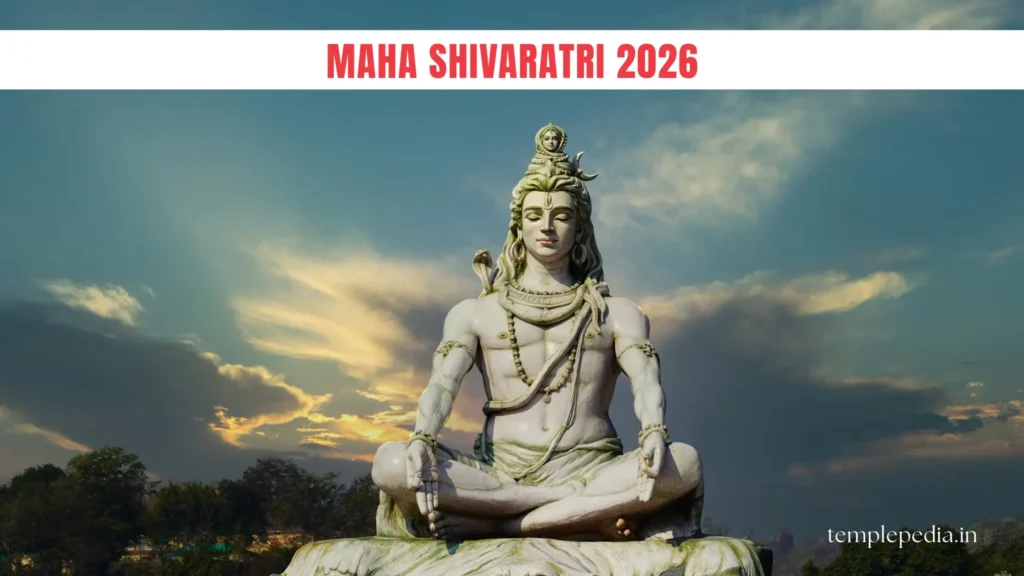
Maha Shivaratri, meaning the Great Night of Lord Shiva, is one of the most sacred festivals in Hinduism. It is observed every year on the fourteenth day of the waning moon in the month of Phalguna, usually falling in late February or early March. The festival is dedicated to Lord Shiva, the deity associated with transformation, destruction of ignorance, and spiritual awakening. Maha Shivaratri symbolizes the victory of light over darkness and encourages devotees to turn inward for self-realization.
The spiritual importance of Maha Shivaratri is deeply connected to ancient Hindu traditions and legends. One popular belief recalls the episode of Samudra Manthan, when Lord Shiva consumed the deadly poison Halahala to save the universe, holding it in his throat and earning the name Neelkanth. Another widely known legend associates the night with the divine union of Lord Shiva and Goddess Parvati, representing the balance of consciousness and energy that sustains creation. It is also believed to be the night when Shiva performed his cosmic Tandava, expressing the eternal cycle of creation, preservation, and dissolution.
Devotees observe Maha Shivaratri with fasting, prayer, and night-long vigil. Many people fast from sunrise until the next morning, consuming only fruits or milk, while others follow a strict waterless fast. The most important ritual is Abhishekam, where the Shiva Linga is bathed with sacred offerings such as milk, water, honey, curd, and ghee, along with the offering of bilva leaves, which are especially dear to Lord Shiva. Chanting mantras, meditation, and listening to devotional hymns are central to the observance.
Maha Shivaratri is celebrated with great devotion across India, especially at famous Shiva temples like Kashi Vishwanath (Varanasi), Somnath (Gujarat), and Mahakaleshwar (Ujjain), where large numbers of pilgrims gather for special prayers. The festival also holds special importance in Nepal, particularly at the Pashupatinath Temple, attracting devotees and ascetics from around the world. Cultural events, spiritual discourses, and devotional music add to the sacred atmosphere.
Overall, Maha Shivaratri is a festival of discipline, devotion, and inner reflection. It brings people together in prayer and reminds devotees of the path toward spiritual growth, self-control, and harmony with the cosmic order.
Also Check Out This:- शिव चालीसा – Shiva Chalisa (Hindi)
Maha Shivaratri 2026: Key Details at a Glance
| Topic | Details |
|---|---|
| When is Maha Shivaratri 2026? | 15 February 2026 (Sunday) |
| Maha Shivaratri Tithi | Phalguna Krishna Chaturdashi |
| When does it usually fall? | Late February or early March |
| Why is Maha Shivaratri celebrated? | To worship Lord Shiva and seek spiritual purification and liberation |
| Which deity is worshipped? | Lord Shiva (destruction of ignorance, transformation) |
| Where is it celebrated? | India, Nepal, and Hindu communities worldwide |
| Major regions in India | Uttar Pradesh, Uttarakhand, Gujarat, Maharashtra, Tamil Nadu, Karnataka, West Bengal, Assam |
| Key rituals | Fasting, night-long vigil (Jaagran), Abhishekam, chanting “Om Namah Shivaya” |
Introduction and Overview
Etymology and Meaning
The term Maha Shivaratri comes from Sanskrit, where Maha means “great,” Shiva refers to Lord Shiva- the symbol of auspiciousness and transformation- and Ratri means “night.” Together, the name signifies “The Great Night of Lord Shiva,” a sacred occasion devoted to spiritual discipline and devotion observed primarily during the night.
Among the twelve Shivaratris that occur every year on the fourteenth day of the waning moon, Maha Shivaratri is regarded as the most significant. It is observed on the Krishna Paksha Chaturdashi of the month of Phalguna, which usually falls between February and March. This particular night is considered especially auspicious because it coincides with natural and cosmic transitions linked to renewal and inner awakening.
Symbolically, the “night” of Maha Shivaratri represents darkness and ignorance, often associated with inertia and lack of awareness. Lord Shiva is worshipped as the force that removes this ignorance and leads the soul toward higher consciousness. His cosmic dance, known as Tandava, reflects the destruction of illusion and the awakening of spiritual insight, guiding devotees from bondage toward liberation and self-realization.
Date and Calendar
Maha Shivaratri is observed on the fourteenth lunar day (Chaturdashi) of the waning phase of the moon during the Hindu month of Phalguna, which generally corresponds to February or March in the Gregorian calendar. The festival date is determined according to the Hindu lunisolar calendar, most commonly following the Purnimanta system used in North India.
In some regions, especially in South India where the Amanta calendar is followed, Maha Shivaratri may be associated with the month of Magha instead. Due to these regional calendar traditions, the exact Gregorian date can vary slightly, although it usually remains within the same seasonal window. For example, Maha Shivaratri was observed on 26 February 2025 and will be celebrated on 15 February 2026 in most parts of India.
The precise date is calculated using panchangams, traditional Hindu almanacs that determine lunar days based on the angular distance between the sun and the moon. Since this calculation depends on local sunrise timings, there are rare occasions when the Chaturdashi tithi spans two calendar days, leading some traditions to observe the festival on both days to ensure it falls within the auspicious period.
Maha Shivaratri: Key Details at a Glance
| Topic | Details |
|---|---|
| When is Maha Shivaratri celebrated? | It is observed on the fourteenth day (Chaturdashi) of the waning moon in the month of Phalguna. |
| When does Maha Shivaratri usually fall? | It generally falls in February or March, depending on the Hindu lunar calendar. |
| Why is Maha Shivaratri celebrated? | The festival honors Lord Shiva and symbolizes spiritual awakening, discipline, and inner transformation. |
| Which deity is worshipped on Maha Shivaratri? | Lord Shiva, the supreme yogi and symbol of cosmic balance. |
| Where is Maha Shivaratri celebrated? | It is widely celebrated in India and Nepal, and by Hindu communities across the world. |
| Which regions in India celebrate it prominently? | Varanasi, Ujjain, Somnath, Kedarnath, Rameswaram, Tamil Nadu, Karnataka, Maharashtra |
| What are the main rituals of Maha Shivaratri? | Abhishekam of the Shiva Lingam, fasting, night vigil, temple visits, and meditation. |
| What is the spiritual significance of the night? | The night represents overcoming darkness and ignorance through devotion and self-realization. |
Historical Development

Origins in Scriptures
The earliest clear references to Maha Shivaratri are found in major Shaivite Puranas such as the Skanda Purana, Shiva Purana, and Linga Purana, composed roughly between the 5th and 10th centuries CE. These texts firmly establish Maha Shivaratri as a central observance devoted to Lord Shiva, describing its rituals, fasting practices, and spiritual rewards. In the Kashi Khanda of the Skanda Purana, the Shivaratri Vrata is praised as a powerful vow capable of granting liberation through night-long worship.
Similarly, the Vidyesvara Samhita of the Shiva Purana emphasizes the sanctity of the night, linking devotion, meditation, and fasting with Shiva’s divine grace. The Linga Purana further highlights the importance of Shiva Linga worship, portraying the festival as a key occasion for spiritual union with Shiva.
Earlier foundations of Shiva worship, which later shaped Maha Shivaratri, can be traced back to the Vedic period, particularly through hymns dedicated to Rudra, the fierce yet benevolent precursor of Shiva. Texts such as the Rigveda and Yajurveda describe Rudra as a deity of storms, healing, and cosmic balance.
These attributes gradually evolved into the more complex Shaivite understanding of Shiva. References in the Mahabharata, especially those describing Shiva’s Tandava dance, further reinforce his role as a transformative cosmic force- an idea that aligns closely with the spiritual symbolism of Maha Shivaratri.
Shaivite doctrine later defined Maha Shivaratri as the night of Shiva’s cosmic manifestation, often associated with the concept of Lingodbhava, the infinite pillar of light symbolizing Shiva’s supremacy over creation, preservation, and dissolution. Devotees observe the night vigil to attune themselves to this cosmic presence, a theme repeatedly emphasized in Puranic narratives.
Scholars suggest that the festival may have evolved from earlier regional and seasonal rites, especially those connected with agricultural cycles marking the transition from winter to spring, before becoming a pan-Hindu Shaivite observance.
Archaeological evidence also points to much older roots of proto-Shaivite worship. The famous Pashupati seal from the Indus Valley Civilization (circa 2500–2000 BCE), discovered at Mohenjo-daro, depicts a seated yogic figure surrounded by animals. Many scholars interpret this figure as an early form of Pashupati, or “Lord of Beasts,” a title later associated with Shiva.
This artifact suggests that indigenous traditions centered on meditation, asceticism, and mastery over nature may have influenced later Vedic and Puranic conceptions of Shiva, contributing indirectly to the philosophical foundations of Maha Shivaratri.
Evolution and Historical References
Modern research suggests that the observance of Maha Shivaratri may have originated from early proto-Shaivite practices that existed even before the formal structure of Vedic rituals. In ancient India, rural and tribal communities worshipped Shiva as a deity linked to fertility, asceticism, and natural forces. These early practices likely included night-long vigils and offerings to elements of nature, which gradually evolved into more organized religious observances by the early centuries of the Common Era.
During the medieval period, Maha Shivaratri gained wider recognition through royal patronage, especially in South India. Under the Chola dynasty (9th–13th centuries CE), grand Shiva temples such as the Brihadisvara Temple at Thanjavur became important centers of Shaivite worship. In these regions, the festival reflected the close connection between political authority and religious devotion.
In North India, Maha Shivaratri spread further through bhakti movements between the 12th and 16th centuries. Traditions like Virashaivism emphasized personal devotion to Shiva through local languages, hymns, and communal worship, making the festival accessible to people beyond priestly circles.
Shaiva philosophical schools, particularly Kashmir Shaivism, interpreted Shiva as the embodiment of cosmic balance and universal consciousness. Their writings highlighted harmony between humanity and nature, reinforcing Maha Shivaratri’s association with spiritual renewal and ecological awareness. These ideas enriched the festival’s meaning beyond ritual practice, giving it a deeper philosophical foundation.
During British colonial rule in the 19th century, Maha Shivaratri was frequently noted in administrative and travel records as a major religious gathering, especially in rural areas. Despite social and political changes, the festival continued through temple traditions and oral transmission. In the 20th century, Maha Shivaratri was observed alongside the Indian independence movement, where ideals of self-discipline, fasting, and inner strength resonated strongly.
After independence in 1947, the festival emerged as a unifying cultural observance, celebrated across regions and communities, reinforcing its enduring role in India’s spiritual and cultural life.
Religious and Cultural Significance
Key Legends and Myths
Maha Shivaratri is deeply rooted in several powerful legends that highlight Lord Shiva’s role as both an ascetic and a cosmic force. One of the most well-known stories is the divine marriage of Lord Shiva and Goddess Parvati. According to Shaivite tradition, Parvati performed intense penance and meditation in the Himalayas to win Shiva’s grace after he withdrew into deep asceticism. Her devotion eventually moved Shiva, leading to their sacred union. This marriage symbolizes the balance of consciousness and energy, a harmony essential for the functioning of the universe.
Another important legend associated with Maha Shivaratri comes from the Samudra Manthan, or the churning of the cosmic ocean. During this event, a deadly poison known as Halahala emerged, threatening to destroy all creation. To protect the universe, Shiva consumed the poison and held it in his throat, turning it blue and earning him the name Neelkanth. This act reflects Shiva’s compassion and self-sacrifice for the welfare of all beings.
A popular story emphasizing the power of devotion is that of Lubdhaka the hunter. On the night of Shivaratri, Lubdhaka unknowingly performed Shiva worship by staying awake, fasting, and dropping bilva leaves onto a Shiva Lingam while chanting Shiva’s name unintentionally. By dawn, his heart transformed, and he was granted liberation. This tale highlights that sincere intention matters more than ritual perfection.
Another major myth explains the origin of the Shiva Lingam. When Brahma and Vishnu argued over cosmic supremacy, an endless pillar of light appeared before them. Unable to find its beginning or end, both realized its infinite nature. Shiva then emerged from this radiant column, establishing the Lingam as a symbol of his eternal, formless presence. Maha Shivaratri is believed to mark this sacred manifestation.
The festival is also linked to Shiva’s role as Tripurantaka, the destroyer of the three demon cities. By annihilating these cities with a single arrow, Shiva symbolically destroyed ego, ignorance, and attachment, reinforcing the festival’s theme of inner purification.
In Kashmir, Maha Shivaratri- known as Herath– has its own unique legends centered on the appearance of the Jwala Lingam, emphasizing divine protection, balance, and the merging of spiritual forces.
Spiritual and Symbolic Importance
In Shaivite philosophy, Maha Shivaratri is revered as the night when Lord Shiva performs the cosmic Tandava, representing the cycles of creation, preservation, and destruction. This dance reflects transformation, where old limitations dissolve to make way for renewal and spiritual growth. Observing the festival at night symbolizes moving beyond darkness and ignorance toward awareness.
Spiritually, Maha Shivaratri encourages self-discipline, meditation, and inner reflection. Devotees believe that fasting, chanting, and maintaining a night vigil help purify the mind, reduce ego, and deepen spiritual awareness. The night is considered especially favorable for meditation, as it supports mental stillness and inner balance, making it easier to focus on the higher self.
Symbolic offerings also carry deep meaning. Bilva leaves, commonly offered during worship, represent purity and balance, while the Shiva Lingam itself symbolizes infinite consciousness. The festival also celebrates the union of Shiva and Shakti, illustrating that creation arises when awareness and energy exist in harmony.
Beyond spiritual practice, Maha Shivaratri holds strong cultural and ethical significance. It promotes equality, as Shiva worship transcends social divisions and is accessible to all. The festival encourages values such as non-violence, self-control, compassion, and respect for nature. In modern interpretations, Shiva’s role as the protector of the universe also inspires environmental awareness, reminding devotees to live in harmony with the natural world.
Observances and Rituals
General Worship Practices
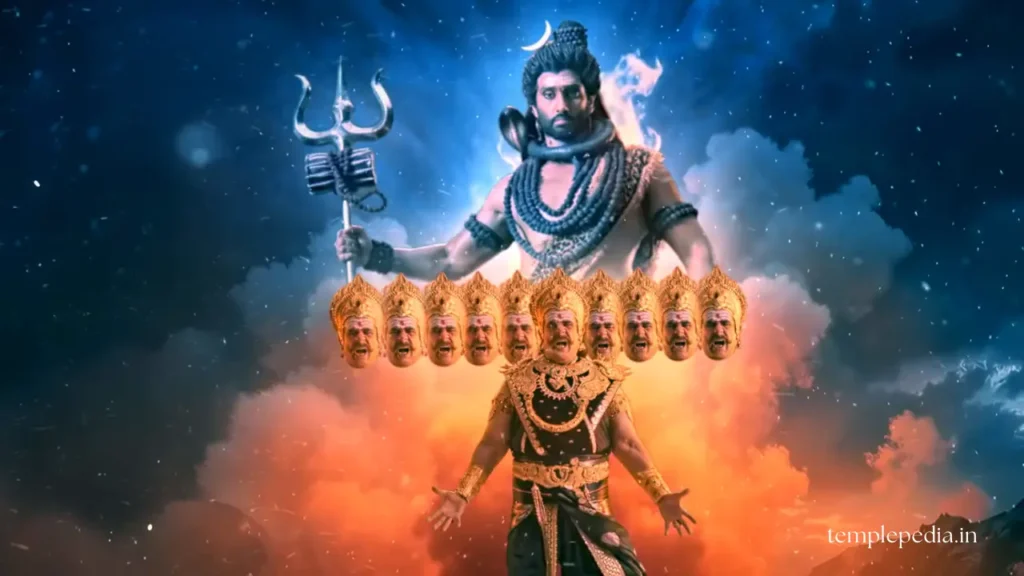
Maha Shivaratri observances begin early in the morning with ritual purification. Devotees take a bath, preferably in sacred rivers like the Ganga, symbolizing the cleansing of body and mind before worship. Many wear rudraksha beads, believed to be closely associated with Lord Shiva and valued for spiritual protection and focus. At home or in temples, devotees prepare a simple altar with a Shiva Lingam as the central symbol of worship.
Offerings to the Shiva Lingam form the core of Maha Shivaratri rituals. Bilva leaves, considered especially sacred to Shiva, are offered along with milk, honey, water, curd, and bel fruit during abhishekam, the ceremonial bathing of the Lingam. Devotees chant “Om Namah Shivaya”, often 108 times using a rudraksha mala, helping calm the mind and deepen devotion.
Visiting Shiva temples is an important part of the day. Devotees perform pradakshina, or clockwise circumambulation, around the deity or sacred shrines, expressing humility and surrender. Family participation is common- married women pray for the health and longevity of their husbands, while unmarried women seek blessings for a suitable life partner. In recent years, many devotees have also adopted eco-friendly practices, such as avoiding plastic offerings and using natural or reusable materials during worship.
Night-long Vigil and Puja Rituals
The most distinctive feature of Maha Shivaratri is the night-long vigil, known as jaagran. Devotees remain awake from sunset to sunrise, dedicating the entire night to Lord Shiva through prayer, meditation, and chanting. This practice represents spiritual discipline and conscious awareness.
Traditionally, the night is divided into four prahars, or time periods, each marked by a special puja. During every prahar, abhishekam is performed using different sacred substances- water, curd, ghee, and honey- each symbolizing purification, nourishment, illumination, and divine grace. After the offerings, devotees perform aarti, recite hymns such as the Shiva Chalisa, and chant Shiva mantras.
Meditation and devotional singing play an important role during the vigil. Bhajans and group chanting help devotees stay awake and maintain spiritual focus, while silent meditation encourages inner stillness and reflection. The jaagran concludes at dawn with final prayers, after which the fast is broken, symbolizing renewal and spiritual fulfillment. In recent times, many temples and spiritual organizations have also enabled live-streamed pujas, allowing devotees to participate remotely.
Fasting and Dietary Observances
Fasting, or vrat, is a key element of Maha Shivaratri and is observed in different forms depending on individual capacity. Some devotees observe a nirjala fast, abstaining from both food and water, while others follow a phalahar fast, consuming fruits, milk, and nuts. Many choose a moderate fast that balances devotion with physical well-being.
Only sattvic foods are allowed during the fast, such as fruits, dairy products, nuts, and dishes prepared with sendha namak (rock salt). Grains, pulses, onions, garlic, non-vegetarian food, alcohol, and processed items are avoided, as they are believed to disturb mental clarity and spiritual focus.
The spiritual purpose of fasting is to cultivate self-control, purity, and concentration, allowing devotees to focus fully on prayer and meditation. The fast is traditionally broken after sunrise the following day with light, sattvic food or prasad, reinforcing the themes of renewal, balance, and divine grace associated with Maha Shivaratri.
Regional and Global Celebrations
Celebrations in India
Maha Shivaratri is celebrated across India with distinct regional traditions, yet the underlying spirit of devotion remains the same. In South India, the festival is marked by deep spiritual practices. One of the most notable observances is the Girivalam at the Arunachaleswara Temple in Tiruvannamalai, Tamil Nadu, where devotees walk barefoot around the sacred Arunachala Hill throughout the night. This circumambulation is believed to bring spiritual merit and inner purification.
In Karnataka, the Manjunatha Temple at Dharmasthala becomes a major center of worship, with thousands of devotees undertaking foot pilgrimages and participating in night-long prayers and chanting.
In North India, Maha Shivaratri is celebrated with vibrant temple rituals and public processions. In Varanasi, the festival is famous for the Shiv Baraat, a grand procession symbolizing Lord Shiva’s wedding to Goddess Parvati, accompanied by music, lamps, and devotional fervor along the ghats of the Ganga.
In Kashmir, the festival is known as Herath and is observed by Kashmiri Pandits through family-based rituals such as Vatuk Pooja, fasting, night vigils, and symbolic offerings using water-filled vessels and walnuts.
In Eastern India, devotees gather at sacred centers like the Kamakhya Temple in Assam, where Shiva worship blends with local tantric traditions. In Western India, especially in Maharashtra, Maha Shivaratri is closely associated with Lord Khandoba, a form of Shiva, with major celebrations at temples such as Jejuri near Pune.
Across the country, common elements like temple processions, chanting of “Har Har Mahadev,” and night-long worship unite diverse traditions. In recent years, authorities and devotees have also emphasized eco-friendly celebrations, promoting plastic-free rituals and sustainable pilgrimage practices.
Celebrations in Nepal and Pakistan
In Nepal, Maha Shivaratri is observed as a national festival, with the Pashupatinath Temple in Kathmandu serving as its spiritual center. Millions of devotees visit the temple to perform night-long worship, ritual bathing, and offerings to Lord Shiva. Large numbers of sadhus and ascetics gather at the temple complex, creating a powerful spiritual atmosphere. The festival is marked by meditation, devotional chanting, and a strong sense of unity that transcends social and caste boundaries.
In Pakistan, Maha Shivaratri holds special importance for the Hindu minority, particularly among Sindhi communities. Celebrations take place at temples such as Shree Ratneshwar Mahadev in Karachi, where devotees observe fasting, perform rituals, and gather for communal prayers. In several regions, local communities and authorities provide support and security, reflecting interfaith cooperation and mutual respect. These observances highlight the festival’s message of harmony, devotion, and spiritual balance.
Diaspora and International Observances
Maha Shivaratri is also widely celebrated by Hindu communities across the world. In the Caribbean, countries like Trinidad and Tobago and Guyana observe the festival with night-long temple prayers, abhishekam rituals, and community gatherings, preserving cultural traditions passed down through generations. In the United States, temples and cultural centers host all-night vigils, devotional singing, and meditation sessions, allowing diaspora communities to stay connected to their spiritual roots.
In Europe, especially in the United Kingdom, Maha Shivaratri is observed at major temples in cities like London and Leicester through fasting, chanting, and midnight pujas. In Africa, the festival reaches a grand scale in Mauritius, where hundreds of thousands of devotees gather at Ganga Talao (Grand Bassin) for one of the largest Shivaratri pilgrimages outside India, blending Indian traditions with local cultural elements.
Modern spiritual organizations have further globalized the festival through large-scale events and online participation. Live-streamed pujas, virtual meditation sessions, and global chanting initiatives have made Maha Shivaratri accessible to devotees worldwide. These adaptations ensure that the festival continues to evolve while preserving its core message of devotion, self-discipline, and spiritual awakening.
Conclusion
Maha Shivaratri is more than a religious festival; it is a powerful spiritual occasion that encourages self-discipline, devotion, and inner awakening. Through fasting, night-long vigil, meditation, and worship of Lord Shiva, devotees seek liberation from ignorance and alignment with higher consciousness.
Rooted in ancient scriptures yet evolving with time, Maha Shivaratri continues to unite people across regions, cultures, and generations. Whether observed in grand temples, at home, or through modern digital platforms, the festival remains a reminder of balance, transformation, and the eternal presence of divine energy in everyday life.
Frequently Asked Questions (FAQs) – Maha Shivaratri
Q. What is Maha Shivaratri?
Maha Shivaratri is a major Hindu festival dedicated to Lord Shiva, observed annually on the fourteenth day of the waning moon in the month of Phalguna.
Q. Why is Maha Shivaratri celebrated at night?
The night symbolizes overcoming darkness and ignorance. Staying awake in devotion represents spiritual awareness and inner transformation.
Q. When is Maha Shivaratri in 2026?
Maha Shivaratri in 2026 will be observed on 15 February, as per the Hindu panchang.
Q. What is the significance of fasting on Maha Shivaratri?
Fasting helps purify the body and mind, promotes self-control, and allows devotees to focus deeply on prayer and meditation.
Q. What are the main rituals of Maha Shivaratri?
Key rituals include abhishekam of the Shiva Lingam, chanting “Om Namah Shivaya,” night-long vigil (jaagran), fasting, and temple visits.
Q. Can Maha Shivaratri be observed at home?
Yes, devotees can observe Maha Shivaratri at home by performing simple puja, fasting, chanting Shiva mantras, and meditating.
Q. Is Maha Shivaratri important for spiritual growth?
Yes, it is believed to be highly beneficial for meditation, self-realization, and spiritual progress.