
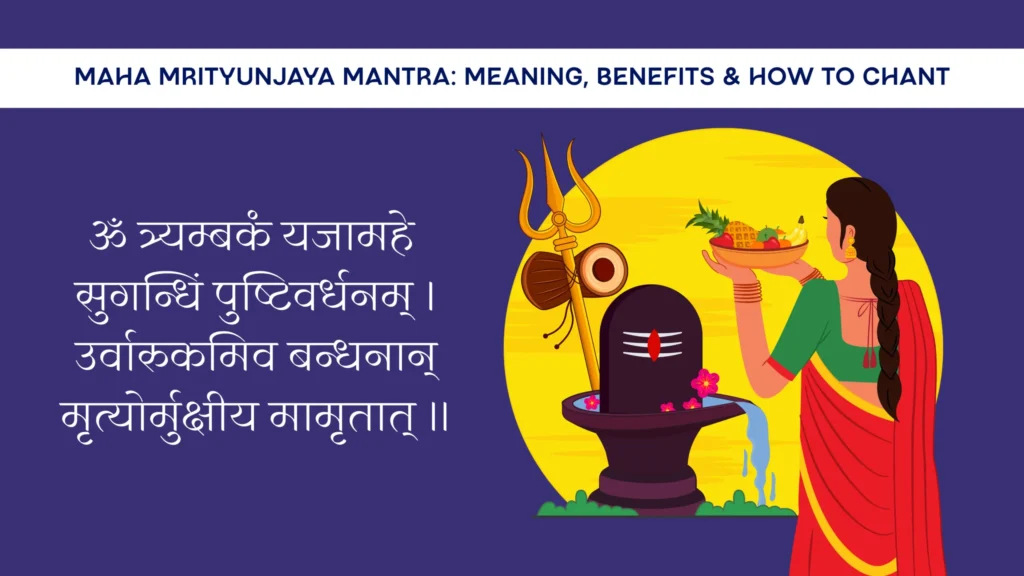
The Maha Mrityunjaya Mantra is one of the most powerful and sacred mantras in Hinduism. Dedicated to Lord Shiva, this mantra is often called the Death-Conquering Mantra or Healing Mantra. Devotees chant it for protection, health, inner strength, and spiritual upliftment.
For centuries, sages and householders alike have relied on this mantra during times of fear, illness, uncertainty, and transformation. Chanting the Maha Mrityunjaya Mantra is believed to create a protective spiritual shield and bring calmness to the mind.
What Is the Maha Mrityunjaya Mantra?
The Maha Mrityunjaya Mantra originates from the Rig Veda and is associated with Lord Shiva in his compassionate and healing form.
The Mantra
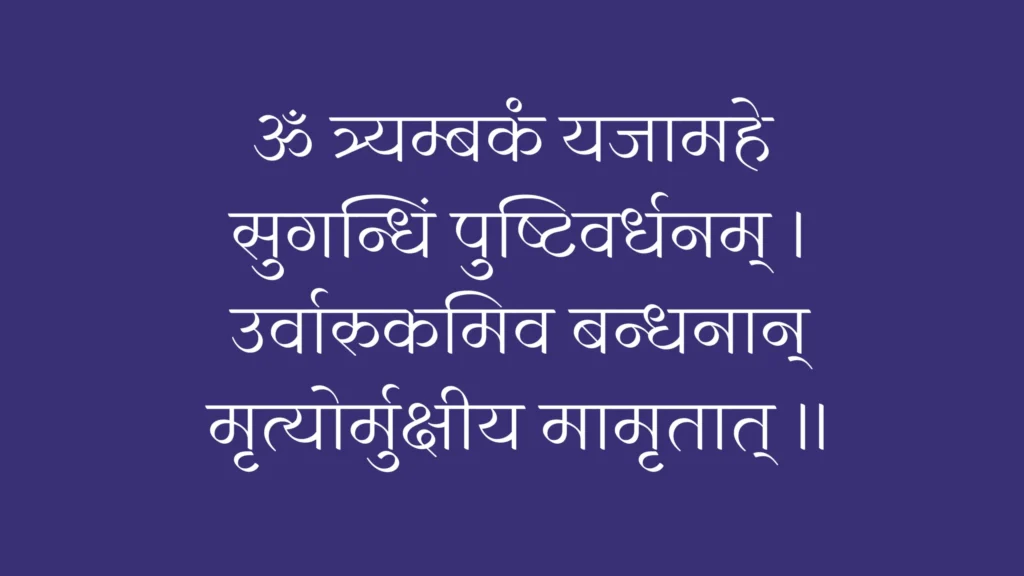
Om Tryambakam Yajamahe
Sugandhim Pushtivardhanam
Urvarukamiva Bandhanan
Mrityor Mukshiya Maamritatॐ त्र्यम्बकं यजामहे
सुगन्धिं पुष्टिवर्धनम् ।
उर्वारुकमिव बन्धनान्
मृत्योर्मुक्षीय मामृतात् ॥
This mantra is traditionally chanted during meditation, japa, and Shiva worship.
Meaning of Maha Mrityunjaya Mantra (Simple Explanation)
- Om – The universal sound
- Tryambakam – The three-eyed Lord (Shiva)
- Yajamahe – We worship
- Sugandhim – Fragrant, divine presence
- Pushtivardhanam – Nourisher of strength and vitality
- Urvarukamiva Bandhanan – Like a ripe cucumber released from bondage
- Mrityor Mukshiya – Free us from death
- Maamritat – Grant immortality (spiritual liberation)
In simple terms, the mantra is a prayer asking Lord Shiva to free us from fear, suffering, and attachment, and guide us toward spiritual liberation.
Spiritual Importance of the Maha Mrityunjaya Mantra
This mantra is not about physical immortality. Instead, it symbolizes freedom from fear, ignorance, and inner bondage.
Devotees believe that chanting this mantra:
- Calms the mind
- Strengthens inner resilience
- Reduces fear of death
- Encourages spiritual detachment
Many practitioners combine this mantra with Om Namah Shivaya chanting as part of their Shiva sadhana.
Benefits of Chanting Maha Mrityunjaya Mantra
1. Mental Peace and Stability
Regular chanting brings calmness and reduces anxiety by stabilizing the mind.
2. Emotional Strength During Difficult Times
Devotees often chant this mantra during illness, loss, or uncertainty to gain inner courage.
3. Healing and Protection
Traditionally known as a healing mantra, it is believed to promote physical and mental well-being.
4. Fear Reduction
The mantra helps dissolve fear related to death, insecurity, and change.
5. Spiritual Growth
Chanting with devotion encourages surrender and trust in divine will.
How to Chant Maha Mrityunjaya Mantra Properly
Step 1: Choose a Calm Place
Sit in a quiet and clean space where you won’t be disturbed.
Step 2: Sit Comfortably
Keep your spine straight and body relaxed.
Step 3: Focus on the Mantra
Chant clearly, slowly, and with awareness.
Step 4: Maintain Rhythm
Avoid rushing. Let the mantra flow naturally.
Step 5: Count Repetitions
Traditionally, devotees chant this mantra 108 times. To maintain accuracy without distraction, many people use a Mantra Counter Online during daily practice.
Why Chant 108 Times?
Chanting 108 times completes a full spiritual cycle. The number 108 holds deep significance in Hindu tradition and meditation practices. To understand this better, you can read about the importance of 108 in japa meditation and why it is commonly used in mantra chanting.
Best Time to Chant Maha Mrityunjaya Mantra
- Early morning (Brahma Muhurta)
- Mondays (dedicated to Lord Shiva)
- During illness or recovery
- Evening meditation
However, consistency is more important than timing.
Can Beginners Chant Maha Mrityunjaya Mantra?
Yes. Beginners can chant at their own pace. There is no restriction based on age, background, or experience. Even a few sincere repetitions daily can be beneficial.
Audible vs Silent Chanting
- Audible chanting helps beginners stay focused
- Silent chanting is suitable for deeper meditation
Both methods are effective when done with devotion.
Common Mistakes to Avoid
- Chanting mechanically without awareness
- Rushing through repetitions
- Expecting instant miracles
- Skipping practice due to “busy schedule”
Spiritual practice grows gradually with patience.
How This Mantra Fits Into Daily Japa Practice
The Maha Mrityunjaya Mantra is often included in:
- Daily Shiva worship
- Healing prayer sessions
- Night meditation
- Long-term japa sadhana
Many devotees chant it alongside Naam Japa or other Shiva mantras.
Conclusion
The Maha Mrityunjaya Mantra is a timeless prayer of protection, healing, and spiritual awakening. Chanting it regularly brings inner peace, courage, and clarity. Whether you are seeking calmness, strength, or spiritual growth, this mantra offers a gentle yet powerful path. With consistent practice and sincere devotion, its transformative effects unfold naturally.
For structured daily chanting, many practitioners rely on TemplePedia’s Naam Japa Counter to complete their japa without distraction.
Related Articles
FAQ – Maha Mrityunjaya Mantra
Q1. What is the Maha Mrityunjaya Mantra?
The Maha Mrityunjaya Mantra is a powerful Shiva mantra from the Rig Veda, chanted for protection, healing, inner strength, and spiritual growth.
Q2. What are the benefits of chanting the Maha Mrityunjaya Mantra?
Chanting the Maha Mrityunjaya Mantra helps calm the mind, reduce fear, support emotional healing, and strengthen spiritual awareness.
Q3. How many times should the Maha Mrityunjaya Mantra be chanted?
Traditionally, devotees chant the Maha Mrityunjaya Mantra 108 times to complete one full spiritual cycle, though even fewer repetitions are beneficial.
Q4. What is the best time to chant the Maha Mrityunjaya Mantra?
Early morning (Brahma Muhurta) and Mondays are considered especially auspicious, but the mantra can be chanted at any time with devotion.
Q5. Can beginners chant the Maha Mrityunjaya Mantra?
Yes, beginners can chant the Maha Mrityunjaya Mantra without any restriction. Sincerity and consistency are more important than experience.
Q6. Is the Mrityunjaya Mantra only for illness or fear?
No. While often chanted for healing and protection, the mantra is also practiced for inner peace, spiritual strength, and devotion to Lord Shiva.
Q7. Should the Mrityunjaya Mantra be chanted aloud or silently?
Both methods are acceptable. Audible chanting helps beginners focus, while silent chanting supports deeper meditation.
Q8. Can the Maha Mrityunjaya Mantra be combined with Om Namah Shivaya?
Yes, many devotees chant the Maha Mrityunjaya Mantra along with Om Namah Shivaya as part of daily Shiva worship or japa practice.
Q9. Do I need a mala to chant the Mrityunjaya Mantra?
A japa mala is optional. Some devotees also use digital counters to maintain accurate repetition counts.
Q10. How long does it take to chant the Mrityunjaya Mantra 108 times?
On average, chanting the Maha Mrityunjaya Mantra 108 times takes about 10–15 minutes when done calmly and mindfully.