
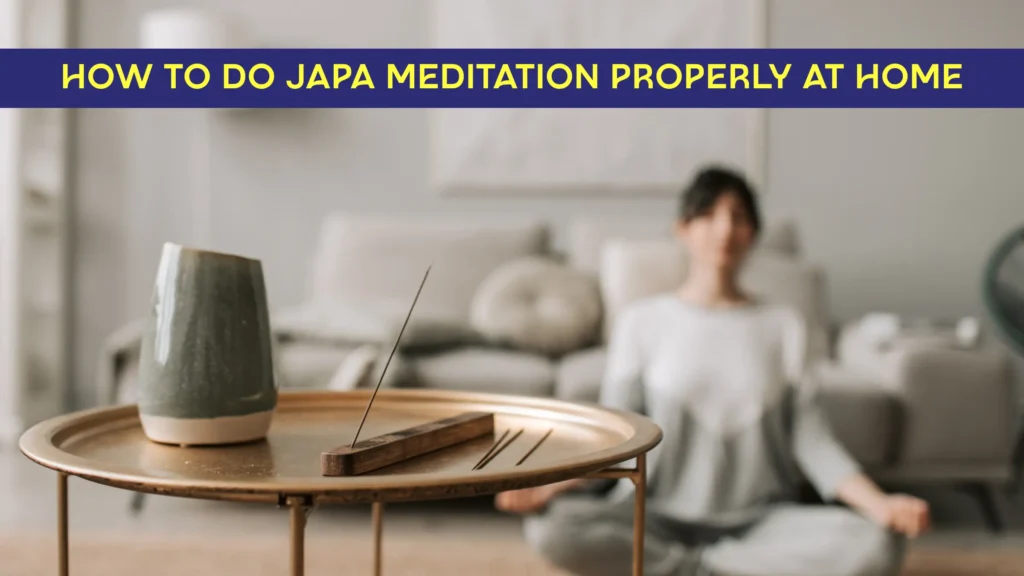
Japa meditation is one of the simplest yet most powerful spiritual practices described in ancient Hindu traditions. It involves the repetition of a sacred mantra with awareness and devotion. Unlike complex rituals, japa meditation can be practiced by anyone, anywhere – even at home – without special preparation.
For beginners, learning how to do japa meditation properly at home helps build a strong spiritual foundation. This guide explains everything step by step, making it easy to start and maintain a consistent practice.
Table of Contents
What Is Japa Meditation?
Japa meditation is the practice of repeating a mantra either aloud, softly, or silently. The word japa means repetition, and the purpose is to keep the mind focused on a sacred sound rather than wandering thoughts.
Mantras such as Om Namah Shivaya, Radhe Radhe, Hare Krishna, or Gayatri Mantra are commonly used for japa meditation. Over time, repetition creates inner calm, clarity, and devotion.
If you are new to this practice, you may first understand what is naam japa and how it forms the foundation of mantra meditation.
Why Practice Japa Meditation at Home?
Practicing at home offers comfort, privacy, and consistency. You can choose your own time and environment without pressure.
Benefits of home practice include:
- Freedom to chant without disturbance
- Easy integration into daily routine
- Better focus in familiar surroundings
- Suitable for beginners
Many practitioners begin with short sessions at home and gradually build discipline.
Step-by-Step Guide to Japa Meditation at Home
Step 1: Choose a Quiet Space
Select a clean and calm area of your home. It could be a corner of a room, near a window, or a small prayer space. You don’t need a dedicated temple room—just a peaceful place where you won’t be interrupted.
Step 2: Decide Your Mantra
Choose one mantra and stick with it. Beginners should avoid switching mantras frequently.
Popular beginner-friendly mantras include:
- Om Namah Shivaya
- Radhe Radhe
- Hare Krishna
- Gayatri Mantra
Choose a mantra that feels natural and calming to you.
Step 3: Sit Comfortably
Sit in a comfortable posture:
- Cross-legged on the floor
- On a chair with feet flat on the ground
Keep your spine straight but relaxed. Comfort is more important than perfect posture.
Step 4: Set a Simple Goal
As a beginner, start small:
- 5 minutes
- 10 minutes
- 27 repetitions
Gradually work toward a full cycle of 108 repetitions. Understanding the importance of 108 in japa meditation can help you appreciate this structure.
Step 5: Begin the Repetition
Start chanting slowly and clearly. You may chant:
- Aloud (audible)
- Softly (whisper)
- Silently (mental repetition)
If thoughts arise, gently bring your attention back to the mantra without frustration.
Step 6: Use a Counting Method (Optional)
Counting helps beginners maintain focus. Traditionally, a japa mala with 108 beads is used. If you prefer a modern approach, you can use a simple Mantra Counter Online to track repetitions without distraction. This is especially helpful during home practice or busy schedules.
Step 7: Maintain Steady Rhythm
Do not rush. Let the mantra flow naturally with your breath. A slow and steady pace creates a meditative rhythm that calms the nervous system.
Step 8: Complete the Session Mindfully
When you finish your session:
- Sit quietly for a minute
- Observe your breath
- Feel the calmness
This helps the mind transition gently back to daily activities.
Best Time to Do Japa Meditation at Home
Although japa meditation can be done anytime, beginners often benefit from fixed timing.
Recommended Times:
- Early morning (Brahma Muhurta)
- Evening before sleep
- Early morning after bath
Choose a time you can follow consistently.
How Long Should Beginners Practice?
Start with:
- 5–10 minutes daily
Gradually increase as comfort grows. Consistency matters more than duration. Even short daily practice is better than long sessions done occasionally.
Common Mistakes Beginners Should Avoid
To practice japa meditation properly at home, avoid:
- Chanting mechanically without awareness
- Expecting instant results
- Changing mantra frequently
- Forcing concentration
Patience and regularity are key.
Mental vs Audible Chanting
Beginners often wonder which method is best.
- Audible chanting helps beginners stay focused
- Silent chanting is suitable once concentration improves
Both methods are effective when practiced sincerely.
How Japa Meditation Helps Daily Life
Regular practice can:
- Reduce stress
- Improve emotional balance
- Increase focus
- Create inner peace
Over time, the mantra may continue silently in the background of the mind.
Can Japa Meditation Be Combined With Other Practices?
Yes. Many practitioners combine japa meditation with:
- Breathing awareness
- Simple prayer
- Reading spiritual texts
However, beginners should keep the practice simple initially.
Conclusion
Learning how to do japa meditation properly at home is a beautiful step toward inner peace and spiritual discipline. This simple practice requires no special equipment- only sincerity and consistency. Whether you chant a few times or complete a full cycle daily, japa meditation gradually transforms the mind. With regular practice, it becomes a natural and comforting part of everyday life.
For structured and distraction-free counting, many beginners find it helpful to use TemplePedia’s Naam Japa Counter to support their daily practice.
FAQ – How to Do Japa Meditation Properly at Home
Q1. What is japa meditation?
Japa meditation is the practice of repeating a sacred mantra with awareness to calm the mind and develop spiritual focus.
Q2. How do I do japa meditation properly at home?
To do japa meditation properly at home, choose a quiet space, select one mantra, sit comfortably, chant slowly, and maintain regular practice.
Q3. Which mantra is best for beginners in japa meditation?
Simple mantras like Om Namah Shivaya, Radhe Radhe, or Gayatri Mantra are suitable for beginners.
Q4. How long should beginners practice japa meditation daily?
Beginners can start with 5–10 minutes daily and gradually increase duration as comfort grows.
Q5. Is it necessary to chant 108 times in japa meditation?
Chanting 108 times is traditional and beneficial, but beginners can start with fewer repetitions and increase gradually.
Q6. Can japa meditation be done silently?
Yes, japa meditation can be practiced silently, softly, or aloud depending on personal comfort and focus.
Q7. What is the best time to do japa meditation at home?
Early morning and evening are ideal, but japa meditation can be done anytime with consistency.
Q8. Do I need a mala for japa meditation?
A mala is optional. It helps with counting, but digital tools can also support accurate repetition.
Q9. Can japa meditation reduce stress?
Yes, regular japa meditation helps calm the mind, reduce stress, and improve emotional balance.
Q10. How long does it take to see results from japa meditation?
Results vary, but with regular practice, many people experience calmness and clarity over time.