
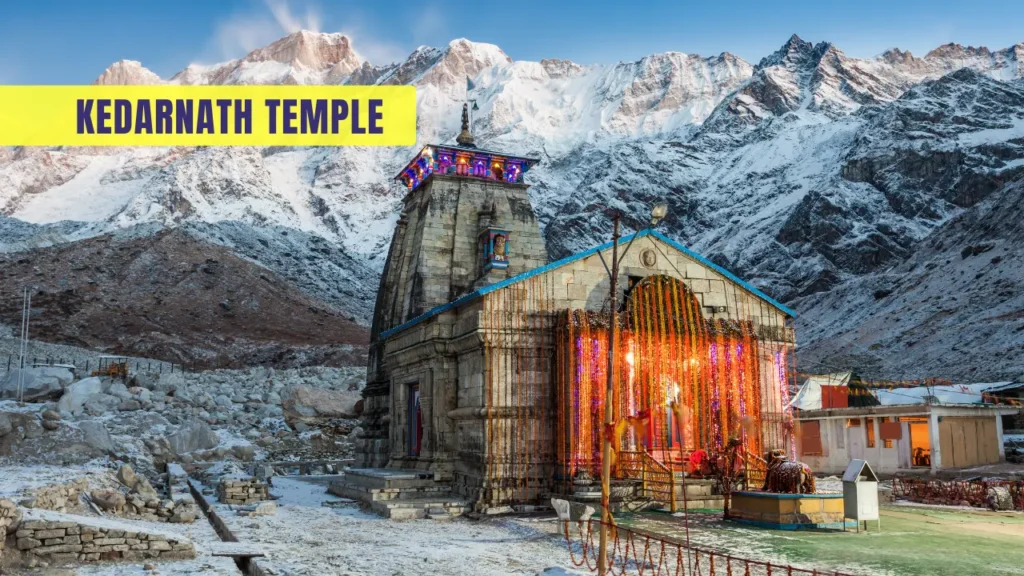
Templepedia– Friends in this article we are going to talk about Kedarnath Temple stands high in the mountains of Uttarakhand, built beside the Mandakini River close to the Chorabari Glacier. Perched at 3,583 meters, it honors Lord Shiva and draws many who walk long paths just to see it. This holy place counts among the twelve Jyotirlingas where Shiva appeared as endless light. Pilgrims visit not only for faith but also because it forms part of the four major stops known as Char Dham. For those hoping to find peace beyond life’s cycle, this temple offers something deep and lasting.
Long ago, during the time of the Mahabharata, the Pandavas searched for Lord Shiva. He took the shape of a bull then vanished into the ground here. What stayed behind was his hump – now seen as the sacred stone still honored in the temple. Elsewhere across the mountains, parts of his form rose again at four other shrines. This place became one of those five holy sites by quiet fate.
Old tales say it stands more than twelve centuries old, though records tie today’s shrine to Adi Shankaracharya’s work in the 700s, built near where the Pandavas once worshipped. Built strong with heavy gray stones locked tight – no glue used – it shows how mountain builders worked long ago; when floodwaters tore through in 2013, a giant rock called Bhim Shila stood guard, sparing the walls from ruin.
Open only part of the year, the shrine welcomes people mainly between May and October. Winter shuts it down, forcing a move of the sacred image to Ukhimath. Getting there means walking nearly sixteen kilometers from Gaurikund – tough going – or flying by chopper through towering white mountains, including the massive Kedarnath summit at 6,940 meters high.
More than 1.6 million came in 2025, drawn not just by devotion but something deeper. This place stands far beyond stone – it holds stories of endurance, belief, connection to what lies beyond, deep within some of India’s roughest land
Kedarnath Temple – Timings
| Day | Morning Timings | Evening Timings |
|---|---|---|
| Monday – Sunday | 4:00 AM – 3:00 PM | 5:00 PM – 9:00 PM |
Kedarnath Temple- Location Details
| Detail | Information |
|---|---|
| Temple Name | Kedarnath Temple |
| Location | Kedarnath, Rudraprayag |
| District | Rudraprayag |
| State | Uttarakhand |
| Country | India |
| Deity | Lord Shiva (Jyotirlinga) |
| Temple Type | Hindu Temple |
| Altitude | 3,583 meters above sea level |
How to Reach Kedarnath Temple
| Mode | Details |
|---|---|
| By Road | Kedarnath is reached via Gaurikund. Buses and taxis are available up to |
Overview
Etymology and Deity of Kedarnath Temple
Kedarnath comes from two old words: one means field, the other lord – so it points to a ruler of open land. A very early story book says this place stands for sacred ground where moksha grows like harvest wheat. That shift – from soil to soul – is what brings people here, hoping release waits among the stones.
A stone shaped by nature stands here, not carved by hands – an emblem of Shiva rising three point six meters tall, just as wide. Its form breaks pattern: triangle instead of round, born from earth rather than design. Called Sadashiva, it means presence without beginning or end. Found long ago, its shape suggests something beyond geometry – quiet, old, unchanging.
When snow blankets the mountains, people turn to Bhukund Bhairavnath. He watches over Kedarnath Temple, standing guard as its protector. A powerful form of Shiva, he carries a presence that deters harm. Worship rises when the main shrine shuts for cold months. Faith keeps his rituals alive while winds howl through empty corridors. Safety of stone and spirit alike rests in his name.
When snow blocks the mountain path each year, the sacred idol moves. A ritual march carries it down to Ukhimath’s Omkareshwar Temple. There, through cold months, prayers never stop. Priests oversee every step of this shift. Devotees find the god here when the high shrine sleeps under ice.
Religious Importance of Kedarnath Temple
Piercing the quiet Himalayas, Kedarnath Temple stands among twelve holy sites where light shaped itself into a symbol of Shiva. Worshipers journey here because freedom from earthly cycles is said to touch those who pray near its glowing sanctum
Part of both the Char Dham and Panch Kedar pilgrimages, it sits among sacred highland temples tied to key gods. One journey leads devotees through four holy shrines in the mountains. Another follows five sites linked to Shiva’s many shapes. At Kedarnath, worship centers on the image of his back, seen as the hump of a bull. Being included in these two paths highlights its deep spiritual weight. Reaching this place is believed to bring closeness to god and release from life’s endless loops.
A glow rises where no hand lit the flame – pilgrims feel it first as silence pressing close. Light here does not shine. It waits. Step after step upward, breath thinning, minds shed what they carried. The stone gives nothing back yet answers every question anyway. Not worship but presence fills the space between thoughts. Cold air holds voices before they form. What begins as effort ends without words.
Also Check Out This:- Neelivaneswarar Temple – Powerful Ancient Shiva Temple
A story older than stone tells of Kedarnath, tucked into high mountains, mentioned in writings from long ago – the Skanda Purana – where people journey on foot just to stand near what they believe holds power. Not simply a visit, but something deeper happens there: old mistakes are washed away by silence and prayer under open skies.
This place ties back to Shiva, resting far above the world, calling souls upward without loud words. Its roots grow deep within ways passed down through centuries among those who honor him. What stands today was shaped not only by hands but belief that never faded.
Every year, huge crowds come to the temple hoping for darshan. Numbers jumped sharply since the early 2010s, back when around 4.5 lakh people visited – like the 5.83 lakh who came in 2012 – before the 2013 floods hit. By 2024, attendance reached 16.52 lakh. Then, by October 2025, it peaked at 16.56 lakh. Even though getting there is tough and only possible between May and October, devotion keeps drawing them in.
Few thought it would rise again after hitting near 40,000 in 2014. Still, people kept coming back. Devotion to feeling Shiva here proved stronger than collapse. Numbers climbed simply because the pull never faded.
History
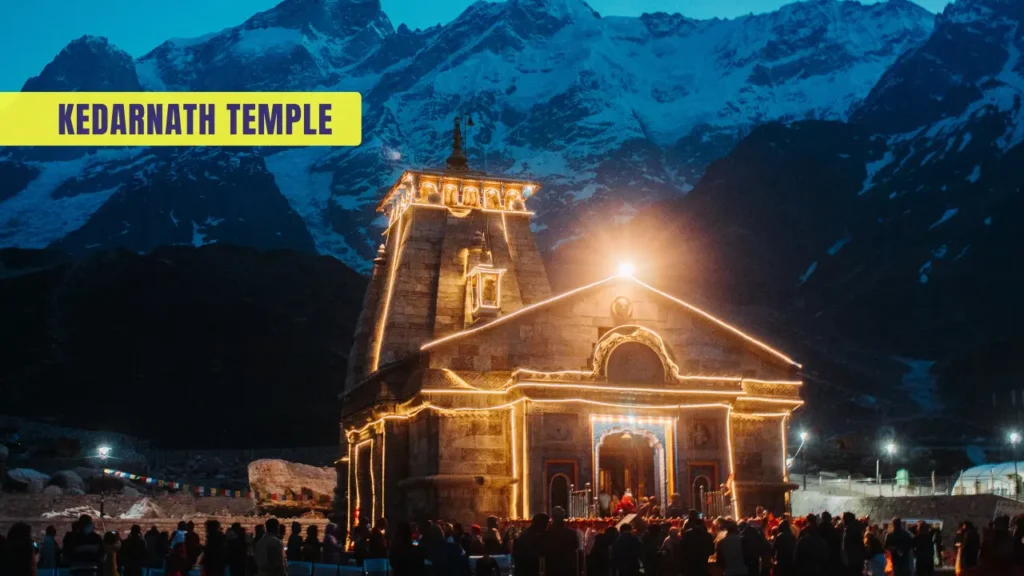
Historical Development of Kedarnath Temple
A story told in the Skanda Purana, written many centuries ago, first points to Kedarnath being held holy. That old account calls it a key dwelling place of Shiva, hinting that people were already honoring the spot well before those words were set down. Its presence in such writings shows how deep its roots run as a destination for pilgrims across the high mountains, far earlier than most recorded history notes.
Long ago, around the 700s, a thinker named Adi Shankara helped bring new life to an old temple. Because of him, ceremonies there began again. His work tied into larger plans for strengthening Hindu traditions across regions. Instead of leaving things loose, he set up clear lines for priests to follow. At the same time, centers called mathas were built nearby to support travelers coming to worship. Behind the main hall, a small shrine stands where people say he reached deep spiritual peace. That quiet spot marks where he disappeared into stillness.
Well into the 1100s, the temple rose in influence thanks to backing from nearby kings. One such ruler, Kumarapala of the Solanki line, supposedly added to its structure – details recorded in a written account called Kumarpal Charitra along with carved stones set up at the time. With gifts flowing in from royalty, facilities improved steadily. This steady rise placed it firmly within key religious circles devoted to Shiva during that era.
Back in the 1800s, British reports – especially those from the Geological Survey of India – noticed how far into the mountains the temple sat, along with its design, marking the earliest detailed accounts from a Western viewpoint. After India gained independence, management shifted slowly toward regional authority under a law made in 1939 for temples like Badrinath; later on, Kedarnath got included when that same rule changed in 1948 (U.P. Act No. 30/1948), which also set up a special group to handle operations
Frozen secrets beneath old stones start to tell a tale. Probes led by the Wadia Institute of Himalayan Geology point to survival through centuries under ice. The shrine stayed intact while glaciers pushed forward between 1300 and 1900. Signs hint at visits when cold retreated. Life flickered even in harsh freeze.
Mythological of Kedarnath Temple
Long ago, after winning a great battle described in an ancient Indian story, the five brothers looked to Shiva for peace. They carried guilt from so much death on that battlefield. Their hope was to earn his grace and find release. But Shiva did not welcome them right away. He chose instead to test their sorrow. So he changed into a bull, hiding high up where snow touches sky – near a quiet place called Guptkashi.
Bhima, mightiest of the Pandavas, reached for the bull when he saw it. To escape, Shiva sank straight down into the ground. All that stayed above was his hump – rising like a ridge in what today is called Kedarnath. There, on that spot, the brothers built a shrine around the form of the lingam they found.
When the Pandavas searched for Shiva, his form scattered across five mountain sites. One ancient tale, found in the Kedara Khanda of the Skanda Purana, tells how each part revealed itself separately. At Kedarnath, they saw the hump. Tungnath held the arms, far up in quiet stone. The face showed in Rudranath, hidden among rugged slopes. Midway through high meadows, Madhyamaheswhar marked the navel’s place. Kalpeshwar, thick with forest, kept the matted locks alive in mist.
What stands out is how the temple leads the holy trail, standing for Shiva broken into parts but still everywhere. It circulates among villagers that honoring each of these five spots brings release just like facing Shiva up close.
Stories from the Himalayas link Kedarnath to Shiva and Parvati’s circle, where healing broken bonds matters more than power. Near Gauri Kund, Parvati once proved her devotion so deeply that it shifted fate itself. Her act gave rise to Ganesha, born not by chance but purpose – to stand watch. This place holds echoes of repair, not just worship. What began in sorrow shaped lasting belonging among Shaivite beliefs
Also Check Out This:- Banke Bihari Temple Darshan, Timings, History | Templepedia
Out in the mountain tales, Shiva takes the shape of a bull – not just any image, yet one that holds deep stillness beneath raw force. This form walks the line between wild nature and inner calm, shaped by long solitude. Devotion runs steady through it, quiet but unshaken.
Instead of chasing life’s pull, it stands apart, rooted like a meditator lost in thought. Nandi is more than stone or beast – he carries order without effort, showing how power bends toward purpose when guided. The wanderer does not flee the world; he moves beyond its grip.
Architecture
Architectural Style of Kedarnath Temple
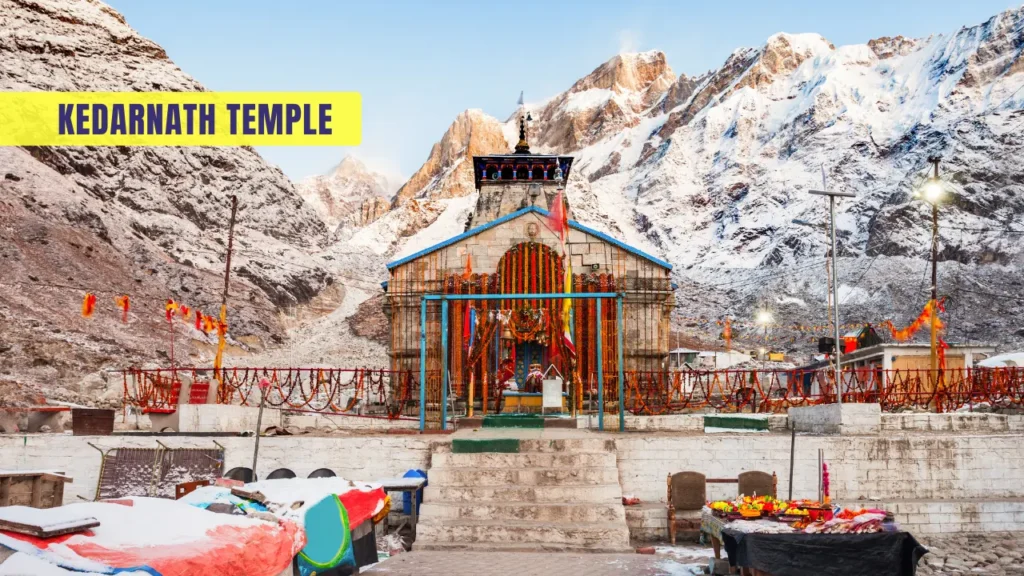
Up on the mountain ridge, the Kedarnath Temple stands shaped by cold winds and shaky ground. Built using thick grey stones cut smooth and stacked tight, it relies on iron bars instead of glue to hold each piece firm. Because snow piles deep here every winter, the roof tilts sharply so weight does not build up. Local rock forms strong walls that block biting air while fitting into high-altitude sacred design traditions.
About 187 feet long, the building stretches 80 feet across, standing nearly 85 feet tall. Its base holds the inner chamber where the holy lingam rests. A pyramid-like tower tops the shrine, common among temples built in the Nagara tradition. Four-sided at its layout, it reflects classic regional design choices. Inside, carved pillars show legends from ancient Hindu stories. Art fills the gathering space, shaped into rock with fine detail. These images bring both beauty and meaning to the place. Height meets craftsmanship where belief takes physical form.
A big rock called Bhim Shila sits wedged behind the temple, said to have shifted flood currents in 2013, saving the building. To its sides stand small temples for different gods, found within the larger site. Northward lie steaming pools known as Tapt Kund. Right at the back, just past the main shrine, rests the memorial stone of Adi Shankaracharya. Together these parts tie the design into both earth and belief.
Perched on a ridge where landslides often strike, the temple defies odds through sheer age and design. Built possibly as early as the 8th century, its base has held firm despite time’s weight. When floods hit in 2017, experts from IIT Madras stepped in to check what remained standing. Their findings? Not even water fury cracked its core. The reason lies in tightly fitted stones – no mortar, just precision – that form walls still upright after centuries of stress.
Deities and Idols Kedarnath Temple
Standing tall in the Kedarnath Temple, the main idol is a self-formed lingam of Shiva – no human hands shaped it. Instead, nature built it over time, a pyramid-like rock rising from solid stone. Locals honor it as Sadashiva, meaning forever benevolent. Without carvings or design, this raw form reflects Shiva’s boundless essence. It ties him deeply to the mountains around it. In Shaivism, such pillars stand for pure awareness stretching beyond sight.
Strange angles, shifting outlines – the form feels alive rather than shaped by hands, setting this shrine apart from others in the Jyotirlinga network. Instead of symmetry, there’s a rawness that speaks more to earth than to design. Ghee coats the lingam regularly, not just as ritual but as shield against biting mountain air. What looks like worship also serves quiet protection.
A figure carved from rock, showing Parvati – Shiva’s partner – rests just beyond the inner chamber, drawing quiet attention during prayer, highlighting unity valued in Shaivite tradition. Near the doorway, standing clear and large, is Nandi – the holy bull who carries Shiva – positioned frontward toward the shrine, watching over arrivals while reflecting steady loyalty.
Also Check Out This:- Trimbakeshwar Temple: Complete Spiritual Journey Guide 2025
Stone images inside the gathering space show the five Pandava siblings, their mother Kunti, plus Lord Krishna – frozen in time to recall an old tale from the Mahabharata, when they asked Shiva for pardon. Because of how these characters stand together, ideas about duty and making things right quietly weave through the temple’s story, yet never steal attention from the main lingam at its heart. Each figure is carved from strong rock so they survive harsh mountain climate year after year. This choice points to skill shaped by tough surroundings, built to endure what storms bring.
Hidden just beside the temple stands a small shrine dedicated to Bhairavnath – a raw, powerful form of Shiva. His statue acts like a watcher, placed there to guard the sacred grounds when snow cuts off the area in winter. People trust that his presence keeps harmful energies away during those silent, frozen months. The wildness he represents contrasts sharply with the calm shape of the central lingam inside. Protection comes through strength here – rough, unyielding, awake when everything else sleeps.
Religious believe
Rituals and Worship of Kedarnath Temple
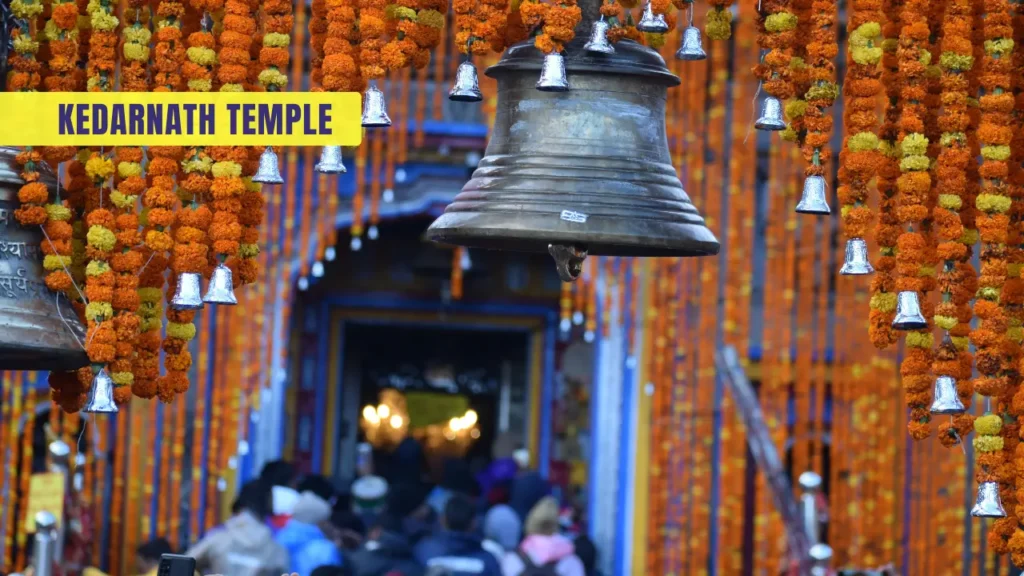
Before sunrise, chanting rises inside the stone temple as attendants prepare bowls of liquid offerings near the quiet idol. Water flows first, then slow streams of milk, followed by spoonfuls of curd, golden honey, and melted butter poured with care over smooth rock. A senior priest stands close, eyes closed, murmuring hymns passed down through generations. His helpers move without sound, arranging marigolds and bilva leaves beside the soaked figure. Each morning follows this rhythm – no sudden changes, just steady gestures meant to honor something beyond words. The air holds a thick scent of turpentine and sweetness long after the last drop falls.
When daylight comes, lamps move through the air while chants rise – pilgrims step forward for their moment before noon light. As dusk settles near seven, layered ceremonies unfold inside stone halls; first voices lift the Mahimna Stotra into shadowed corners. Then rhythm builds – the Shiv Tandava echoes with motion, painting Shiva’s dance without sight. Bells shake, shells cry out, smoke curls upward during the full closing ritual. Between afternoon hours, silence takes hold from three until five – doors shut so hands can prepare what eyes will later honor.
When spring arrives, the temple stirs to life. On Akshaya Tritiya – like May 2 in 2025 – the god returns amid chanting and crowds. This date falls in late April or early May, timed with mountain weather shifts. The journey begins at the winter home, winding up through hymns and footsteps alike. Meanwhile, autumn signals retreat. By Dev Uthani Ekadashi – October 23 in 2025 – the rituals conclude under crisp skies. After final prayers, the idol travels again, heading south to Ukhimath’s Omkareshwar Temple. Snow will soon block the high path. Worship continues there until thaw.
Something unique happens when getting ready to close things down. The lingam gets covered in thick ghee – a kind of pure butter – keeping it safe from bitter cold; this act shows how deeply people care. Instead of just saying prayers, they bring bel patra – leaves tied to the bilva tree – seen as sacred because their shape recalls Shiva’s trident and triple gaze. These offerings pile up slowly. Alongside them go bilva fruits, laid gently near the bottom of the lingam while someone prays alone. Each fruit stands for a wish washed clean, maybe even luck on the way.
Priestly Administration of Kedarnath Temple
From Karnataka’s Veerashaiva group comes the chief priest of Kedarnath Temple, called the Rawal. Each year a different one takes charge – chosen from five families tied to the role by bloodline. Though passed down through kin, the job brings duties that shape how the shrine runs day to day. Leading prayers falls on him, along with guiding the god’s image downhill when cold locks the highland temple shut. Snow blocks the path each winter, so they carry it away before roads vanish.
Most days, it is the pujaris – local men from Garhwali Brahmin families – who lead prayers and speak with visitors at the shrine. Though rituals happen deep inside the holy chamber, they follow directions given by the Rawal, who stays removed from hands-on worship. Lineage matters here; many of these attendants inherit their roles through family ties rooted in the area. When rare ceremonies take place, priests trained in the Veerashaiva customs of southern India step in to support specific parts of the rite.
A group called the Shri Badarinath-Kedarnath Temple Committee runs how things work at the temple. This setup started because of a law made back in 1939 in Uttar Pradesh. Around fifteen to seventeen people make up the team – one chosen by the state government leads it. Alongside sit two deputies, someone handling daily operations, plus others selected to join. Money gathered through gifts, stays for visitors, and public support flows into their hands. That income pays for repairs, buildings, better access, schools, and clinics nearby. Their job includes keeping track of cash, care for sacred spaces, helping travelers find what they need. Decisions shape life around both holy sites – not just worship but living conditions too.
From one generation to the next, priestly roles pass down through families. Learning happens through the Shaiva Agama Shastras – old writings that shape how temples honor Shiva. Rituals stay steady because of this deep study. Money earned at temples helps more than just ceremonies. It flows into village life, backing schools teaching Sanskrit and clinics using Ayurveda, both run by the overseeing group.
Geographical Context
Location and Setting of Kedarnath Temple
Near a sharp ridge of the Garhwal peaks sits the Kedarnath Temple, found in India’s Uttarakhand state, tucked into Rudraprayag district. Its location reads 30°44′6.7″N by 79°4′0.9″E on maps. High up it stands – 3,583 meters above the sea – where cold air lingers and paths grow steep
Lying far above sea level, it sits among sharp cliffs and rising mountains, shaped by rough land that adds to its quiet solitude and deep calm.
Away from noise, the temple rests in a green stretch where the Mandakini River curls through soft hills. Upstream, near a glacier called Chorabari, water begins its path just three kilometers off. From there, it moves down, joining the holy flow that slips beside the stone walls of the shrine.
Over there, around the temple, rise tall mountains wearing hats of snow – Kedarnath Dome among them, plus Bharte Khunta – all standing guard above icy valleys and soft green fields. Life thrives nearby inside the protected zone known as Kedarnath Wildlife Sanctuary, where more than a thousand kinds of plants take root, some uncommon ones like mountain rhododendrons and healing forest herbs. Animals also call this place home: shy snow leopards move through rocky cliffs, while black bears wander lower slopes, musk deer stay hidden in thickets, birds fill air with sound.
Up high, the weather turns harsh – winters bring deep cold, sometimes below minus ten degrees, while snow piles up thick, reaching three to five meters. Because of that, the temple stays shut between November and April. In 2025, travelers could pass through starting May second until October twenty-third. When summer arrives, it feels gentler, though breathing gets harder at nearly thirty-six hundred meters above sea level. Some people react badly to the thin atmosphere: their heads ache, they feel sick to their stomach. That kind of reaction isn’t rare here.
Heavy rains arrive between July and September, turning steep valleys into danger zones where sudden floods and land slips can happen fast. This stretch matters deeply to nature lovers because it feeds into the wider Nanda Devi Biosphere Reserve, a haven for rare mountain life. Close by, beyond the temple grounds, lies the edge of the Kedarnath Wildlife Sanctuary, quietly protecting what remains.
Access and Transport of Kedarnath Temple
Starting from Rishikesh, the journey toward Kedarnath Temple moves along a drivable highway – about 223 kilometers long – on NH58 until reaching Sonprayag, where vehicles stop. Beyond that point, travelers ride a bit farther by smaller transport up to Gaurikund. Once there, people walk sixteen kilometers upward through narrow climbs, wooden crossings, and shaded woodland lanes all the way to the shrine; how fast they go depends on strength, pace, and sky conditions, often lasting between six and eight hours. This footpath stays usable only during certain months, usually May through November, when official entry passes are required, arranged under state rules set by local authorities for order and protection.
Getting there does not always mean walking the whole way these days. Flights by helicopter leave from pads at Phata and Sersi, touching down near Kedarnath within quarter of an hour. A single trip costs between ₹4,400 and ₹6,100 per traveler, prices tending to climb during peak seasons as seen in 2025. For those who prefer slower movement, horse rides and dandi chairs wait at Gaurikund. Riding a pony covers the stretch for about ₹3,500 to ₹4,500, while hiring a dandi runs close to ₹8,000 one way, fit for loads under 90 kilos, helping older people or anyone with difficulty walking.
Work continues on the Sonprayag-Kedarnath ropeway, stretching 12.9 kilometers through the air – Adani Enterprises got the contract back in September 2025 via a shared funding model. Priced at ₹4,081 crore, it should cut journey time down to just over half an hour. Moving nearly two thousand people each hour, both ways, helps where roads struggle. Progress moves forward; finishing this could reshape how pilgrims reach the area in years ahead.
Modern Events and Challenges
2013 Floods and Aftermath of Kedarnath Temple
That weekend in mid-June 2013, skies opened without warning above Uttarakhash. Water roared down from broken clouds while a glacial lake burst loose near Chorabari. Sudden walls of mud and stone swept through Kedarnath, swallowing paths, homes, temples. Rivers turned into oceans – Mandakini rose twenty meters high where people once walked.
Some called it a mountain wave, though nothing like the sea. Thousands did not survive; more vanished beneath rubble. Rain had fallen too hard, too fast – three hundred millimeters packed into one day. Slopes cracked open, sliding downward with force enough to erase entire towns. What stood before could not hold.
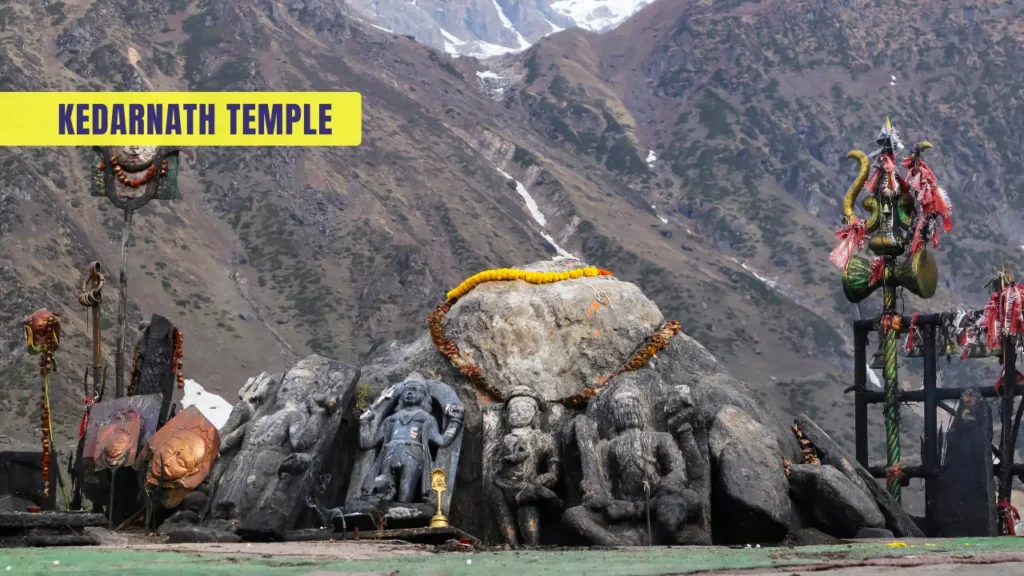
A wave of water crashed down hard that day, yet the old stone temple stood firm. A giant rock, called Bhim Shila, had slid into place just behind the building, blocking the worst of the flood’s force. Instead of smashing the walls, the muddy river curled around both stones like a path redirected. Inside, the carved pillar at the heart stayed whole – no cracks, no breaks. Around it, everything else vanished under thick layers of earth and broken stone.
The lanes where people once walked disappeared without a trace. Over one hundred lives ended near those steps, their remains pulled later from soaked rubble and hillside mud. Some say the rock was meant to land there, part of an old tale about unseen protectors watching over sacred ground.
Right away, soldiers led a huge mission to save people trapped in faraway mountain areas. Helicopters flew through dangerous storms, pulling out more than one hundred thousand pilgrims. At the sacred place itself, workers hauled away heavy rocks and thick layers of sludge. This cleared space so repairs could begin quickly. By November 4th, 2013, the building was stable enough to welcome visitors again. Lives shattered overnight – families lost homes when trails vanished beneath landslides. Vital paths used for travel disappeared along with landing zones meant for emergency flights.
From an environmental view, the incident caused major harm to plant and animal life high up in the Kedarnath zone. Rivers changed their nature because layers of earth piled up where they shouldn’t. Later research into land patterns showed how likely such regions are to face sudden bursts from icy lakes. That particular disaster in 2013 came down to a break near Chora bari plus natural landscape features guiding water flow.
Reconstruction and Development of Kedarnath Temple
After the 2013 floods, India’s government said yes to a major recovery effort worth about ₹7,346 crore for Uttarakhand. This support focused on rebuilding what was damaged, especially in places hit hard like Kedarnath. Money went toward fixing roads and bridges while also clearing wreckage left behind. Work began once approvals were through, aiming to restore movement and safety across affected zones.
Right away, teams began clearing debris once the disaster struck. State groups worked alongside army units to shift thick layers of mud, rocks, and broken materials out of the Mandakini Valley. By the end of 2013, paths started opening up again. Construction crews built fresh routes and crossings under the Char Dham road plan.
The stretch from Sonprayag toward Kedarnath saw wider, sturdier links added. After the floods, more than 3,000 kilometers of roadway either went up or got reinforced to better handle possible slope failures later on.
Work on fixing the temple sped up fast. The Archaeological Survey of India had gathered more than 40 old stone pieces by June 2014, while workers fixed the core building at the same time. That year, officials in Uttarakhand agreed to move forward with a safety layout involving two surrounding walls – inner and outer – to guard against flooding.
Behind the site, along the river edge, engineers built a barrier made of three levels to slow down land loss. Money came from both regional and national budgets, helping get things ready in time. Worship resumed during the 2014 pilgrimage period – a clear sign something real had shifted.
Fresh shelters now line the path, built green with sun-run energy plus recycling water on site. Up top where air thins, care spots hand out oxygen while med teams stand ready near stone steps and open halls. At places like Sonprayag, help isn’t far when breath grows short. Junk doesn’t pile as trucks haul it off each dawn – some gets turned into power, burned smart. When crowds swell, two tons vanish every single day. Bottles? Scan a code, toss one back, get something small in return.
More than 1.65 million visitors came to Kedarnath each year during 2024, then close to 1.7 million showed up in 2025 – numbers higher than before. Daily caps on entries helped keep crowds under control even as totals climbed steadily.
Starting with local observations, conservation work follows a national plan focused on the Himalayas. This initiative supports tracking how glaciers shrink and how natural systems respond over time. Instead of just reacting, teams plant trees where flooding and building projects removed them. Monitoring happens alongside recovery tasks, making sure changes in nature get noticed early.
Along the pilgrimage path, rules now limit plastic – especially disposable goods banned in mountain zones – while cleanup efforts gather tons of bottles each year to reduce waste buildup. Watching ice vanish has grown more urgent; sensors placed high by the Wadia Institute in 2025 stream live data from Chorabari Lake, measuring how fast glaciers shrink, roughly 7 meters yearly, helping spot danger before sudden floods strike.
Even with progress, problems remain. Over-tourism left behind 26 tonnes of trash in just one year – 2024 – a heavy load for local dump sites, hurting the land slowly. A new cable car plan stretches 13 kilometres, linking Sonprayag to Kedarnath. Officials gave approval in September 2025. Price tag: ₹4,081 crore. The job went to Adani Enterprises Ltd., working alongside government funds. Yet voices have risen against it. Trees might fall. Slopes could become more likely to slip when rain hits. This place is already weak under pressure.
Come winter of 2025, voices grow louder recalling what happened back in 2013; ideas now center on smarter growth, shaped by nature’s own boundaries – scientists suggest around 13,000 people each day is all Kedarnath can handle without harm. Faith matters, yet so does protecting the land it stands on.
Frequently Asked Questions (FAQs) – Kedarnath Temple
Where is Kedarnath Temple located?
Kedarnath Temple is located in the Rudraprayag district of Uttarakhand, near the Mandakini River in the Garhwal Himalayas. It is situated at an altitude of about 3,583 meters above sea level.
Why is Kedarnath Temple famous?
Kedarnath Temple is famous as one of the 12 Jyotirlingas of Lord Shiva. It is also an important part of the Char Dham Yatra and holds immense spiritual significance.
Who built Kedarnath Temple?
According to tradition, the original Kedarnath Temple was built by the Pandavas. Later, the temple was renovated by Adi Shankaracharya in the 8th century.
When does Kedarnath Temple open and close?
Kedarnath Temple usually opens in April or May (on Akshaya Tritiya) and closes in October or November (on Bhai Dooj), depending on weather conditions.
What are the darshan timings of Kedarnath Temple?
Kedarnath Temple darshan generally starts early in the morning around 4:00 AM and continues till evening. Timings may vary during peak yatra season and special poojas.
How can I reach Kedarnath Temple?
Kedarnath can be reached by trekking from Gaurikund, which is around 16 km away. Helicopter services are also available from nearby locations during the yatra season.
Is Kedarnath Temple part of Char Dham Yatra?
Yes, Kedarnath Temple is one of the four sacred sites of the Char Dham Yatra, along with Badrinath, Gangotri, and Yamunotri.
What is the best time to visit Kedarnath Temple?
The best time to visit Kedarnath Temple is from May to June and September to October, when weather conditions are relatively stable.
Is Kedarnath Temple open in winter?
No, Kedarnath Temple remains closed during winter due to heavy snowfall. During this time, Lord Shiva is worshipped at the Omkareshwar Temple in Ukhimath.
Is registration required for Kedarnath Yatra?
Yes, registration is mandatory for Kedarnath Yatra. Pilgrims must complete official registration before starting the journey.