
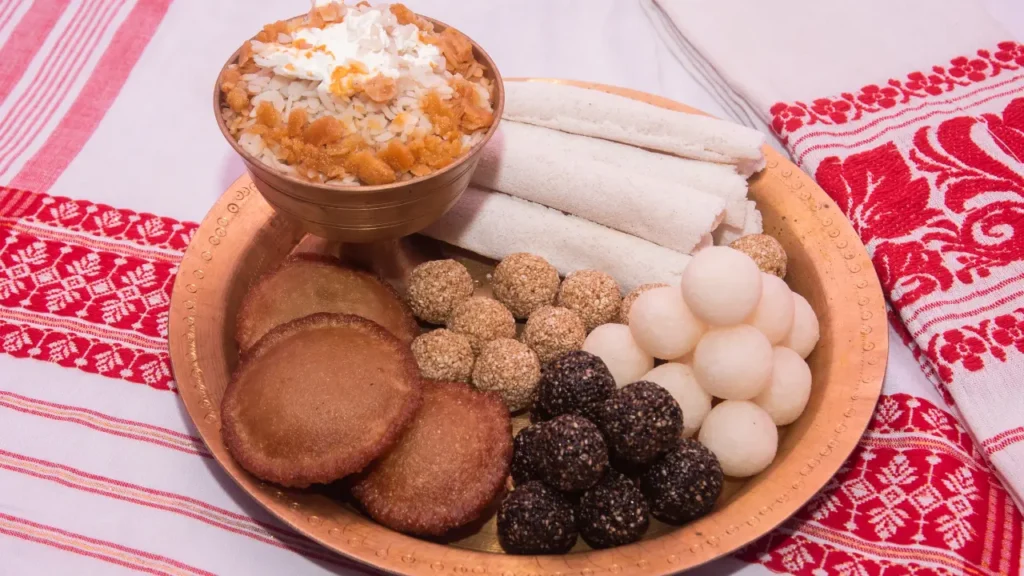
Magh Bihu 2026, also known as Bhogali Bihu, is one of the most prominent and important festivals of Assam. Celebrated every year in January, it symbolizes prosperity, gratitude, and collective joy after the harvest. Magh Bihu is deeply connected to nature, hard work, and food, and is therefore called the festival of “Bhog,” meaning enjoyment and abundance.
This festival, which coincides with Makar Sankranti, is celebrated not only in Assam but throughout Eastern India.
When is Magh Bihu celebrated?
Magh Bihu is typically:
- Celebrated in January 14th or 15th
- It falls in the month of Magh according to the Assamese calendar
- It marks the end of the winter season and the beginning of the new agricultural season
The most special part of this festival is Uruka, which is celebrated one day before Magh Bihu.
Magh Bihu’s cultural and spiritual significance
Magh Bihu is not just a harvest festival, but also an occasion to express gratitude towards nature. Farmers thank God and nature for the bounty of crops they have reaped through their hard work.
This festival is especially significant because:
- It promotes community life and brotherhood.
- It strengthens the spirit of sharing, giving, and fellowship.
- It conveys a message of balance and contentment in life.
Magh Bihu teaches us that true prosperity lies not just in wealth, but in shared joy and harmony.
Uruka and Meji: Special traditions of Magh Bihu
Uruka (The Eve)
Uruka is the most important night of Magh Bihu. On this day:
- People gather in open spaces or fields.
- A community feast is organized.
- Traditional dishes are prepared.
- Songs, music, and folk traditions are enjoyed.
Meji (Bonfire Ritual)
The next morning, a bonfire called Meji is lit. People:
- Offer prayers to the fire god.
- Offer sesame seeds, rice, and other grains.
- Pray for the well-being of their families and the village.
- This tradition symbolizes letting go of negativity in life and embracing positive energy.
Traditional dishes of Magh Bihu 2026
Magh Bihu is also known as the festival of food. The following dishes are specially prepared on this day:
- Pitha (rice-based dishes)
- Laru (sesame or coconut sweets)
- Boiled rice, fish, and local dishes
- Sweets made from jaggery and rice
Food is not just a matter of taste, but a symbol of abundance and shared joy.
Magh Bihu and nature worship
Magh Bihu does not involve the worship of any particular deity; rather, this festival:
- It is based on respect for fire,
- nature,
- and food.
This festival reminds us that human life is directly dependent on nature and that it is our duty to protect it.
Why is Magh Bihu still relevant in today’s times?
In modern life, where people are becoming increasingly individualistic, Magh Bihu:
- It teaches the importance of community.
- It conveys a message of simplicity and contentment.
- It inspires us to maintain balance with nature.
This is why Magh Bihu remains the soul of Assam even today.
Also Check Out This:- Makar Sankranti 2026: Date, Significance & Best Temples
Magh Bihu and TemplePedia
Festivals like Magh Bihu are important for TemplePedia because:
- These reflect India’s regional religious and cultural diversity.
- They connect culture, tradition, and spirituality.
Our Final Words on Magh Bihu 2026
Magh Bihu is not just a festival, but a means of expressing gratitude and joy for life. This festival teaches us that life can be balanced through hard work followed by celebration and shared meals.
This festival, deeply rooted in the soil of Assam, today sends a message of culture, prosperity, and community to all of India.
Stay connected with TemplePedia.in for more information on upcoming Indian festivals, traditions, and religious insights.
Frequently Asked Questions – Magh Bihu 2026
Q. What is Magh Bihu?
Magh Bihu, also known as Bhogali Bihu, is the harvest festival of Assam. It is celebrated after the completion of the harvest season and symbolizes food, prosperity, and community bonding.
Q. When is Magh Bihu celebrated?
Magh Bihu is usually celebrated on 14 or 15 in January every year, depending on the Assamese calendar. It coincides with the time of Makar Sankranti.
Q. Why is Magh Bihu called Bhogali Bihu?
The word Bhogali comes from Bhog, which means enjoyment and food. Since people celebrate this festival with community feasts and traditional dishes, it is called Bhogali Bihu.
Q. What is Uruka in Magh Bihu?
Uruka is the eve of Magh Bihu. On this night, families and villagers gather to cook and eat together, sing folk songs, and celebrate the abundance of the harvest.
Q. What is the significance of the Meji bonfire?
The Meji bonfire is lit on the morning of Magh Bihu as a symbol of gratitude to nature and fire. People offer rice and agricultural produce into the fire and pray for prosperity and well-being.
Q. What foods are prepared during Magh Bihu?
Traditional foods prepared during Magh Bihu include pitha (rice cakes), laru (sweet balls made of sesame or coconut), boiled rice, fish, and jaggery-based sweets.
Q. Is Magh Bihu a religious festival?
Magh Bihu is more of a cultural and agricultural festival than a religious one. It does not involve the worship of a specific deity but focuses on gratitude, nature, and community life.
Q. How is Magh Bihu related to Makar Sankranti 2026?
Both Magh Bihu and Makar Sankranti are celebrated around the same time and mark the end of winter and the harvest season. They share similar themes of prosperity, sunlight, and renewal.
Q. Where is Magh Bihu mainly celebrated?
Magh Bihu is primarily celebrated in Assam, but Assamese communities across India and abroad also observe the festival.
Q. Why is Magh Bihu 2026 important in today’s time?
Magh Bihu promotes values like sharing, gratitude, respect for nature, and community harmony, which are highly relevant in modern life.