
The Meenakshi Amman Temple in Madurai, Tamil Nadu, isn’t just another landmark- it’s a living masterpiece. People come from all over to see its wild mix of devotion, art, and old-school Tamil pride. The temple honors Goddess Meenakshi (that’s Parvati, in a special form) and Lord Sundareswaran (basically Shiva), and you can feel the energy the moment you step inside. It’s huge- about 15 acres. Fourteen massive gopurams shoot up into the sky, and there are more than 33,000 sculptures tucked into every corner. The place has been here for over 2,500 years, so you’re walking through real history.
No wonder millions of pilgrims show up every year. In this guide, you’ll find everything you need: pooja timings, the story behind the temple’s architecture, details on festivals, how to get there, a bit of history, plus all the travel tips to make your visit meaningful.
History of Meenakshi Amman Temple
The history of the Meenakshi Amman Temple is a blend of mythology and documented evolution. According to ancient legends, Goddess Meenakshi was born to the Pandya King Malayadhwaja after years of penance. The goddess was believed to be a warrior queen who conquered regions before meeting Lord Shiva in Kailash. When she met Shiva, her third breast, mentioned in the legend, disappeared as prophesied, proving he was destined to be her consort. Their divine marriage took place in Madurai, forming the foundation of the temple’s spiritual significance.
In historical terms, the earliest references to the Meenakshi Temple appear in Tamil Sangam literature dating back nearly 2,000 years. The temple suffered destruction during the Delhi Sultanate invasion in the 14th century. It was later rebuilt and expanded by the Nayak rulers, particularly during the 16th and 17th centuries. King Thirumalai Nayak played a major role in establishing the temple’s grand structures, gopurams, and sculptures that give the Meenakshi Amman Temple its iconic identity today.
The temple stands today as a testimony to the architectural achievement of the Nayak dynasty and the cultural continuity of Tamil Nadu.
Also Read This:- Best Temples in Andhra Pradesh
Historical Timeline
| Period | Contribution |
|---|---|
| 6th Century CE | Early references in Tamil Sangam literature |
| 12th–14th Century | Temple expanded during Pandya rule |
| 1311 CE | Temple damaged during Malik Kafur invasion |
| 16th Century | Major reconstruction by Nayak Kings, especially King Thirumalai Nayak |
| 17th–18th Century | Addition of iconic gopurams and mandapams |
| Today | One of the most visited temples in India |
Architecture of Meenakshi Amman Temple
The Meenakshi Temple architecture is considered one of the finest examples of Dravidian craftsmanship. Visitors encounter massive gateways, intricate carvings, and an impressive layout that reflects both artistic depth and engineering precision.
Key architectural highlights include:
Gopurams
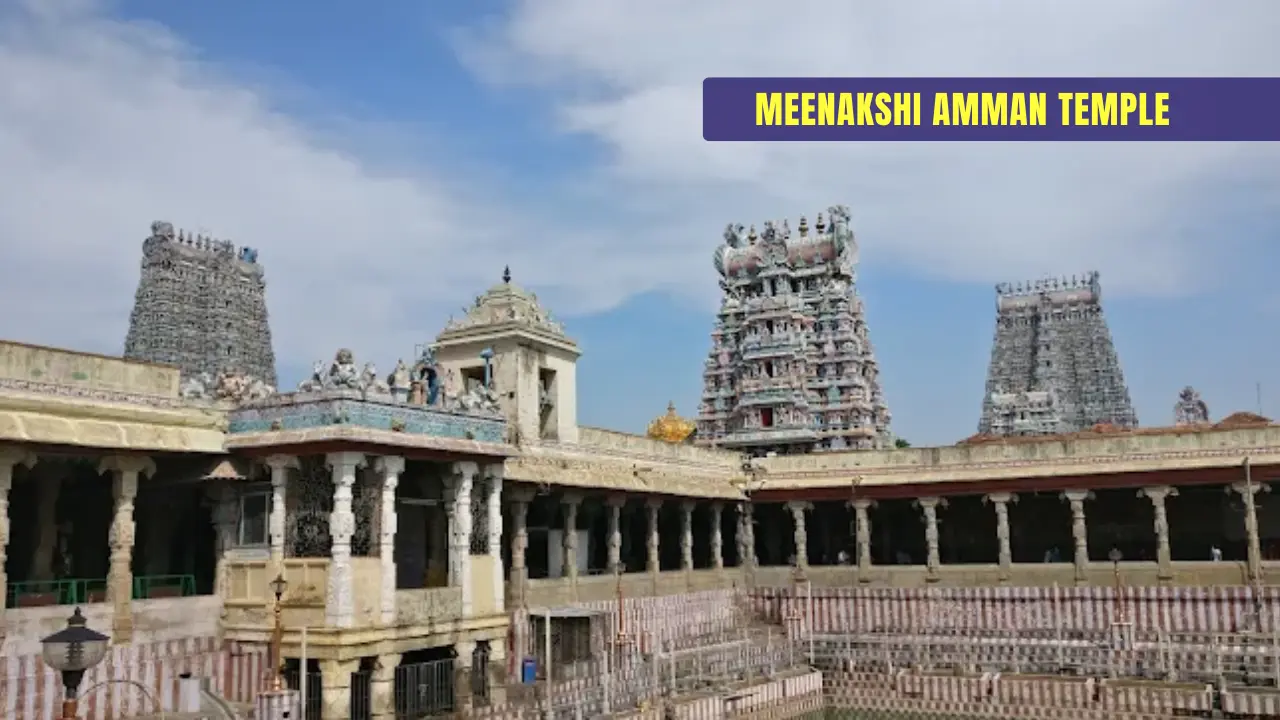
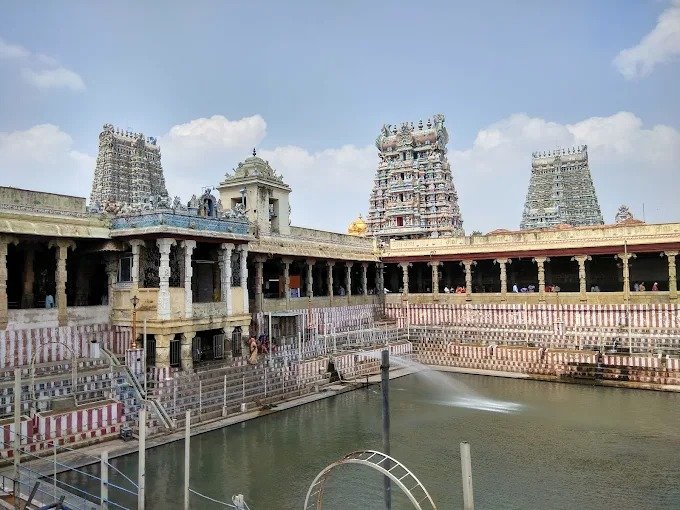
The temple features 14 gopurams, each covered with thousands of sculptures depicting mythological stories, gods, goddesses, demons, and celestial beings. The tallest is the South Tower, rising to about 170 feet, visible from miles away.
Hall of Thousand Pillars
The Hall of Thousand Pillars is one of the most studied architectural features of the Meenakshi Temple. Although it houses 985 pillars, each pillar displays unique carvings, symmetrical alignment, and remarkable structural engineering.
Golden Lotus Tank
The temple tank, known as Potraamarai Kulam, is a sacred water body inside the complex. Visitors believe that the water has spiritual significance and that ancient Tamil scholars judged literary works here.
Twin Sanctums
Unlike most temples in India that revolve around a single primary deity, the Meenakshi Temple has two main shrines dedicated to Goddess Meenakshi and Lord Sundareswarar. This makes the temple distinctive in its spiritual layout.
Sculptures and Mandapams
The temple contains more than 33,000 sculptures, ranging from mythological narratives to depictions of gods, dancers, warriors, and historical figures. Every mandapam, corridor, and pillar reflects the hallmark of South Indian artistry.

Meenakshi Amman Temple Timings
The following are the official daily timings of the Meenakshi Temple. These timings are reliable and used throughout the year except on major festival days.
| Pooja / Ritual | Timing |
|---|---|
| Temple Opening | 5:00 AM |
| Thiruvanandal Pooja | 5:00 AM – 6:00 AM |
| Vizha Pooja | 6:30 AM – 7:15 AM |
| Kalasandhi Pooja | 7:30 AM – 8:15 AM |
| Thiruvembavai Pooja | 8:30 AM – 9:15 AM |
| Uchikala Pooja (Midday Pooja) | 10:30 AM – 11:30 AM |
| Sayaraksha Pooja | 4:30 PM – 5:15 PM |
| Irandam Kala Pooja | 7:00 PM – 7:45 PM |
| Arthajama Pooja (Night Ritual) | 9:00 PM – 9:30 PM |
| Temple Closing | 10:00 PM |
These Meenakshi Amman Temple timings help visitors plan their darshan effectively.
Entry Fee, Dress Code, and Visiting Rules
The Meenakshi Temple entry fee is structured to allow easy access for all visitors.
Entry Fee
General entry is free.
Special Darshan tickets range from Rs. 100 to Rs. 200 depending on the crowd.
Dress Code
The Meenakshi Temple dress code encourages modest and traditional clothing.
Men are advised to wear dhoti, pants, or a decent shirt.
Women should wear saree, salwar suit, long kurti, or traditional attire.
Revealing clothing may be restricted.
Photography Rules
Photography inside the temple is strictly prohibited. Mobiles are allowed, but taking pictures is not permitted in the inner sanctums.
Major Festivals of Meenakshi Amman Temple
The Meenakshi Amman Temple celebrates several major festivals that highlight its cultural significance. These festivals attract large crowds from different parts of India.
Meenakshi Thirukalyanam
The divine wedding of Goddess Meenakshi and Lord Sundareswarar is the most important event at the temple. This festival symbolizes divine union and attracts thousands of devotees each year.
Chithirai Festival
Held in April, the Chithirai Festival is one of the most grand celebrations in South India. The streets of Madurai are filled with processions, rituals, music, and cultural performances.
Float Festival
A visually spectacular celebration where the deities are taken on a decorated float across the Teppakulam tank.
Navaratri
The temple showcases vibrant decorations, cultural events, lamp arrangements, and special poojas during this nine-day festival.
Aadi and Margazhi Festivals
These months hold special significance for goddess worship and devotional practices in Tamil Nadu.
How to Reach Meenakshi Amman Temple
Reaching the Meenakshi Temple is convenient due to Madurai’s strong connectivity.
By Air
Madurai Airport is approximately 12 km from the temple. It offers direct flights from Chennai, Bengaluru, Mumbai, Hyderabad, and Delhi.
By Train
Madurai Junction is one of the busiest railway stations in South India and is located just 1.5 km from the temple.
By Road
Madurai is connected via major national highways, including NH 44 and NH 85. Government and private buses operate frequently from cities like Chennai, Coimbatore, Trichy, Bangalore, and Tirunelveli.
Local Transport
Auto-rickshaws, cycle rickshaws, taxis, and app-based services are widely available. The temple is in the city center, making it easy to reach from any part of Madurai.
Must-Visit Attractions Inside the Meenakshi Temple
Visitors should not miss the following highlights:
Golden Lotus Tank
A sacred water tank associated with ancient Tamil literary tests and rituals.
Thousand Pillar Hall
An architectural masterpiece displaying stone carvings and hosting a museum.
East and South Gopuram
The tallest towers, covered with carved sculptures, offer a visually stunning experience.
Meenakshi Shrine
The main sanctum dedicated to Goddess Meenakshi, known for her fish-shaped eyes.
Sundareswarar Shrine
The Shiva shrine with the primary lingam, representing the divine masculine energy.
Pros and Cons of Visiting Meenakshi Temple
| Pros | Cons |
|---|---|
| Exceptional Dravidian architecture | Heavy crowds on weekends and festivals |
| Rich spiritual and historical value | Photography restrictions inside |
| Located at the center of Madurai city | Weather can be hot in summer |
| Multiple daily poojas and rituals | Long queues during peak season |
Meenakshi Temple Highlight
| Feature | Details |
|---|---|
| Location | Madurai, Tamil Nadu |
| Built | Reconstructed during the 16th century |
| Architectural Style | Dravidian |
| Total Area | 15 acres |
| Number of Towers | 14 |
| Main Deities | Meenakshi and Sundareswarar |
| Total Sculptures | More than 33,000 |
| Best Time to Visit | October to March |
F&Q About Meenakshi Temple
What is the specialty of the Meenakshi Amman Temple?
The temple is known for its twin sanctums, detailed Dravidian architecture, tall gopurams, and deep mythological significance.
Are foreigners allowed?
Yes. Foreigners can visit but may have restrictions on access to some inner sanctum areas.
How long does a typical darshan take?
On normal days, darshan may take 30 to 60 minutes. During festivals, it may take up to four hours.
Do I need to buy tickets for entry?
General entry is free. Special darshan tickets are optional.
Is photography allowed?
Photography is prohibited inside the temple premises.