
Radha Naam Jap is a gentle and deeply devotional spiritual practice rooted in the Bhakti tradition. Chanting the divine name “Radha” is believed to awaken love, humility, and inner peace within the heart. Unlike complex rituals or strict disciplines, this practice is simple, personal, and accessible to everyone.
In Vaishnava philosophy, Radha symbolizes pure devotion and unconditional love. Remembering her name helps devotees soften the heart, calm the mind, and cultivate a sense of spiritual closeness. This practice is especially meaningful for those seeking peace amid the distractions of modern life.
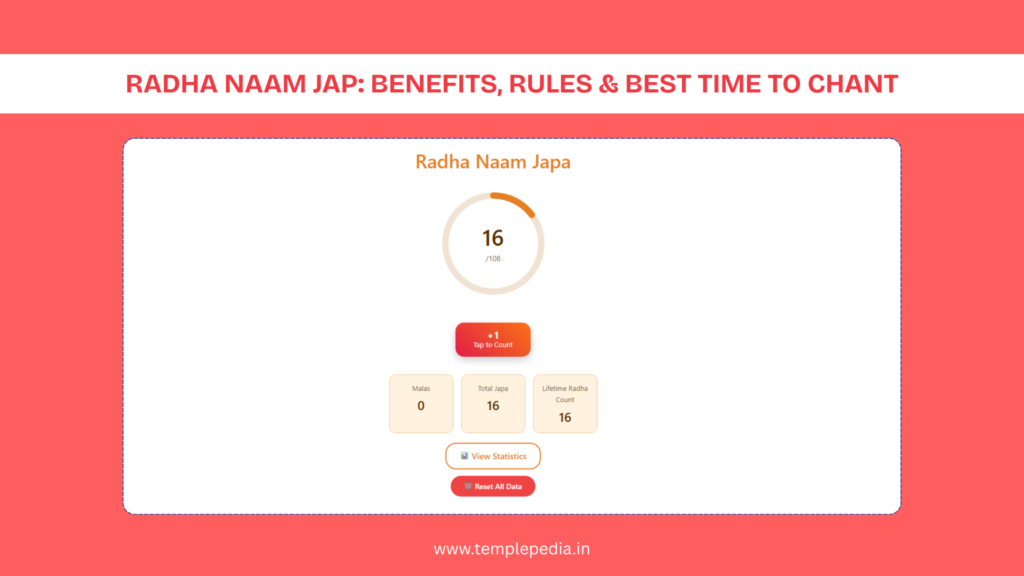
Table of Contents
Meaning of Chanting Radha’s Name
The repetition of Radha’s name is not merely a verbal exercise. It is an act of remembrance and surrender. The sound vibration gradually replaces restless thoughts with devotion and emotional clarity. Over time, this repetition becomes effortless and deeply comforting.
Saints and spiritual teachers often explain that divine name chanting works on the level of the heart rather than intellect. Even silent repetition can bring profound inner stillness.
Why This Devotional Practice Is So Effective
This form of chanting is effective because it does not rely on force or control. Instead, it gently guides the mind back to devotion whenever it wanders. The rhythm of repetition creates emotional balance and mental calm.
Some key reasons why devotees find this practice powerful include:
- It naturally reduces stress and agitation
- It nurtures devotion without pressure
- It supports emotional healing
- It can be practiced anytime, anywhere
Because of its simplicity, many people adopt radha naam jap as a lifelong spiritual habit.
Benefits of Regular Chanting
Daily chanting of Radha’s name offers both spiritual and mental benefits.
Inner Calm and Emotional Balance
The gentle repetition helps relax the nervous system and brings a feeling of comfort and safety.
Growth of Devotion
Over time, chanting shifts from mechanical repetition to heartfelt remembrance.
Better Focus
Regular practice trains the mind to stay present, improving concentration in daily life.
Accessible Spiritual Practice
There are no restrictions related to age, gender, or background. Anyone can practice sincerely.
Simple Guidelines for Daily Chanting
Although there are no rigid rules, following a few simple principles can help deepen the experience.
Chant With Awareness
Slow and mindful repetition is more effective than fast, distracted chanting.
Maintain Regularity
A few minutes every day is more beneficial than long sessions done occasionally.
Create a Peaceful Environment
A calm space supports better focus, especially for beginners.
Avoid Force
If the mind wanders, gently bring it back without frustration.
Best Time to Chant
This practice can be done at any time of the day. However, certain periods are considered more supportive.
Early Morning
Morning hours are naturally quiet and help cultivate focus and clarity.
Evening
Chanting in the evening helps release mental fatigue accumulated during the day.
Anytime During the Day
Silent repetition can be done while walking, resting, or traveling.
Consistency matters more than choosing a “perfect” time.
How Many Times Should One Chant?
There is no strict requirement regarding numbers. Some devotees chant freely without counting, while others prefer structured repetition.
Traditionally, 108 repetitions are common because they create a sense of completion and discipline. Beginners can start with fewer repetitions and gradually increase as comfort grows.
Using a simple counting method- such as a mala or a digital counter- can help maintain focus without mental distraction. Many people find radha naam jap easier to sustain when counting becomes effortless.
Integrating Chanting Into Daily Life
One of the greatest strengths of this practice is its flexibility. It can be integrated into daily routines without disrupting responsibilities. Many devotees chant:
- During morning walks
- While commuting
- Before sleeping
- During moments of stress
Over time, the name begins to repeat naturally in the mind, creating a constant sense of peace.
Common Mistakes to Avoid
To keep the practice meaningful, it is helpful to avoid:
- Chanting mechanically without attention
- Expecting quick results
- Comparing one’s practice with others
- Forcing concentration
Patience and sincerity are more important than perfection.
Chanting Practice for Beginners
Beginners should start gently. Choose a comfortable posture, chant slowly, and allow the rhythm to develop naturally. There is no need for complex rituals or advanced knowledge.
With time, the practice deepens on its own. Many beginners discover that radha naam jap becomes a source of emotional support and inner strength.
Conclusion
This devotional chanting practice offers a simple yet powerful way to cultivate peace, devotion, and emotional balance. Through regular remembrance of Radha’s name, the mind gradually becomes calmer and the heart more open.
Whether practiced for a few minutes or longer periods, radha naam jap helps bring spiritual comfort into everyday life. Consistency, sincerity, and love are the true foundations of this timeless path.
For structured daily chanting, many devotees use a simple Naam Japa Counter to maintain focus and consistency
Related Articles :-
- Mantra Counter Online – Free Naam Japa Counter for Daily Chanting
- What Is Naam Japa? Meaning, Benefits & How to Start Daily Practice
- Why Important of 108 in Japa Meditation? Spiritual Meaning
Frequently Asked Questions (FAQs)
Q1. What is Radha Naam Jap?
Radha Naam Jap is the devotional repetition of the divine name “Radha” to cultivate love, peace, and spiritual awareness through bhakti.
Q2. What are the main benefits of Radha Naam Jap?
Radha Naam Jap helps calm the mind, reduce stress, strengthen devotion, and bring emotional balance with regular practice.
Q3. Is Radha Naam Jap suitable for beginners?
Yes, radha naam jap is a gentle and simple practice that beginners can start without any special preparation or rules.
Q4. How many times should Radha Naam Jap be done daily?
There is no fixed number. Some devotees chant freely, while others prefer structured repetition like 108 times for discipline.
Q5. What is the best time to chant Radha’s name?
Early morning and evening are ideal, but chanting Radha’s name can be done anytime with sincerity and focus.
Q6. Can Radha Naam Jap be done silently?
Yes, radha naam jap can be done silently, softly, or aloud depending on personal comfort and surroundings.
Q7. Do I need a mala for Radha Naam Jap?
No, a physical mala is not mandatory. Many devotees chant without counting or use simple tools to maintain focus.
Q8. Is there any strict rule for practicing this chanting?
No. The practice is based on love and remembrance, not rigid rules. Regularity and sincerity matter most.
Q9. Can Radha Naam Jap be practiced during daily activities?
Yes, radha naam jap can be practiced while walking, resting, or during travel through silent repetition.
Q10. How long does it take to experience benefits from chanting?
Benefits vary for each person, but with consistent chanting, many people begin to feel calmness and clarity over time.