
Talupulamma Lova Temple
Nandivampu, Andhra Pradesh
Overview
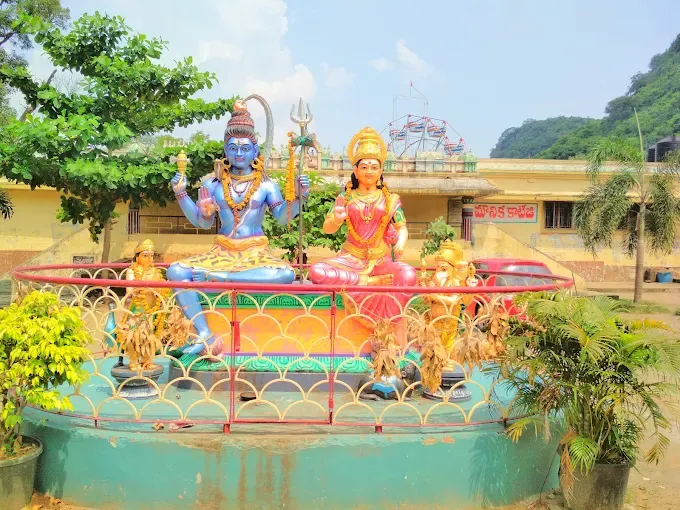
There are some temples that do not look grand on the outside but still leave a deep mark on your heart the moment you step in. Talupulamma Lova Temple is one of those rare places. Hidden between two lush green hills near Tuni in Andhra Pradesh, this temple feels less like a tourist spot and more like a quiet corner where nature itself bows down to the Goddess.
People visit this temple for different reasons — some come seeking blessings, some come to find a little peace, and some simply come because they have heard how naturally beautiful this place is. And honestly, almost everyone walks away feeling lighter. Maybe it’s the breeze, maybe it’s the silence of the hills, or maybe it’s the presence of Goddess Talupulamma — no one knows for sure, but the calmness is real.
You don’t just “visit” the Talupulamma Lova Temple. You experience it.
History
If you talk to elders living around Tuni, they share stories, not dates. They say this valley was always sacred, long before the modern temple structure came into existence. Tribal families who lived close to the hills used to worship Mother Talupulamma as their guardian deity — the one who kept the forest safe and protected travelers passing through the hills.
Nothing here feels forced or artificially created. Over years, smaller shrines slowly turned into a proper sanctum, and people from surrounding towns began coming regularly. The temple never became overly commercial; instead, it kept its simple identity — almost like it chose to grow quietly, holding on to its roots.
That’s why the history of Talupulamma Lova Temple is not written in stone — it is stored in memories, folk tales, and genuine faith.
Architecture
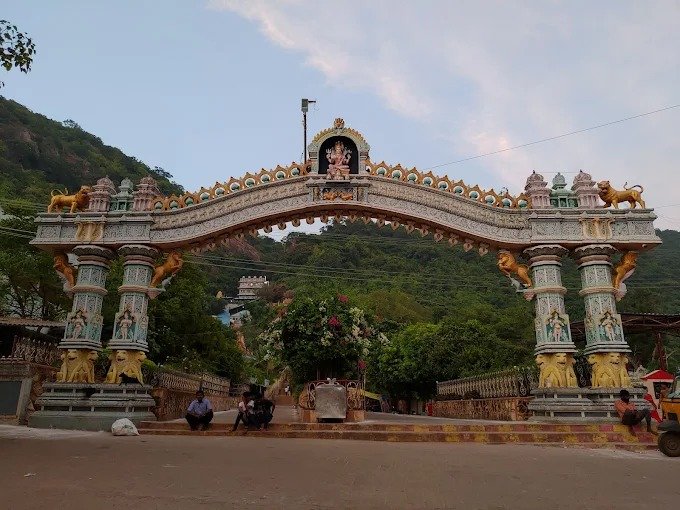
The architecture is simple, and maybe that’s the reason it blends beautifully into the natural surroundings. This is not a tall-gopuram temple. The structure sits on the slope of the hill, made from local stone and minimal ornamentation. But simplicity suits this temple more than grandeur ever could.
- The sanctum is compact and peaceful.
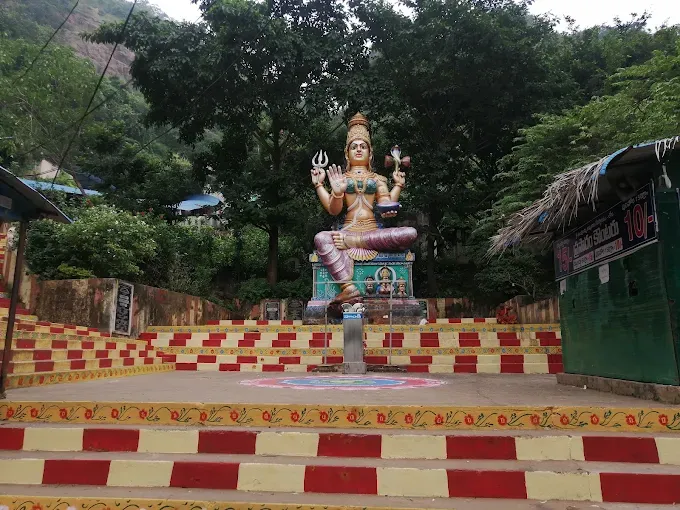
- Steps lead up through greenery, giving you time to slow down.
- The Veerabhadra Swamy shrine nearby adds a spiritual balance to the place.
- The valley stays cool even in summer, which makes the climb comfortable.
If you look around, you’ll notice that the hills form something like a natural protective wall around the shrine — almost as if nature itself guards the deity.
Importance
People have a very emotional connection with Talupulamma Lova Temple. Many devotees say that if you pray here with a clean heart, the Goddess listens. It’s a belief that has carried through generations. Travelers heading to new places, farmers starting a new season, and families looking for protection all come here for blessings.
What’s interesting is that most people return later to offer thanks. That sense of returning says a lot.
The temple has an extraordinary reputation for:
- removing negativity
- protecting travelers
- blessing new vehicles
- ensuring safety in journeys
- giving strength during tough times
It’s not surprising that many who visit this shrine say they feel “emotionally lighter” when they leave.
How to Reach Talupulamma Lova Temple
Reaching the temple is easy and slightly adventurous in a pleasant way.
By Road: Tuni town is the closest point. From there, autos and small vehicles take you near the foothill. The ride itself is scenic, passing through green patches.
By Rail: Tuni Railway Station is just around 9 km away.
By Air:
Visakhapatnam Airport (approx. 110 km)
Rajahmundry Airport (approx. 90 km)
Once you reach the entrance, a small climb takes you to the main shrine.
Temple Timings
Morning: 6:00 AM – 12:30 PM
Evening: 4:00 PM – 7:30 PM
During festival days, timings extend due to heavy flow of devotees.
Darshan Tips
- Early morning is the best time for a calm darshan.
- Keep footwear simple — the steps are natural stone.
- Carry a bottle of water especially in summer.
- Coconuts and flowers are the most common offerings.
- Elderly visitors may take support during the climb.
- On festival days, the crowd gets quite large — plan accordingly.
Best Time to Visit
The months from October to February are ideal — pleasant climate, greenery everywhere, and smooth travel.
The temple also becomes lively during:
- Navaratri
- Full moon days
- Local festivals specific to the region
Avoid afternoons in peak summer as the hill area can get warm.
Nearby Places
- Tuni Town: Good for food, stay, and local markets.
- Uppada Beach: A quiet and clean beach.
- Annavaram Temple: A famous Vaishnava shrine near Tuni.
- Veerabhadra Swamy Temple: Located close to Talupulamma Lova.
Conclusion
Some temples are majestic, some are historical, and a few are simply peaceful. Talupulamma Lova Temple belongs to the last category — it quietly grows on you. Surrounded by forests, protected by hills, and blessed by a motherly deity, this temple offers something rare: a peaceful space where your thoughts settle and your heart feels lighter.
Whether you believe strongly in rituals or simply enjoy places with natural charm, this temple has a way of touching people gently, without noise or show. It is one of those spots where you feel that nature and divinity are not separate — they’re just two sides of the same experience.
FAQs
What is Talupulamma Lova Temple famous for?
It is known for its natural setting, protective blessings, and the belief that the Goddess fulfils wishes quickly.
Is the temple difficult to climb?
The climb is short and manageable.
Are vehicles allowed near the hill?
Yes, but private vehicles usually stop near the foothill.
Is it safe to visit with family?
Absolutely. Most visitors come with families.
Are pujas done daily?
Yes. Simple pujas, coconuts, and archanas are offered regularly.