
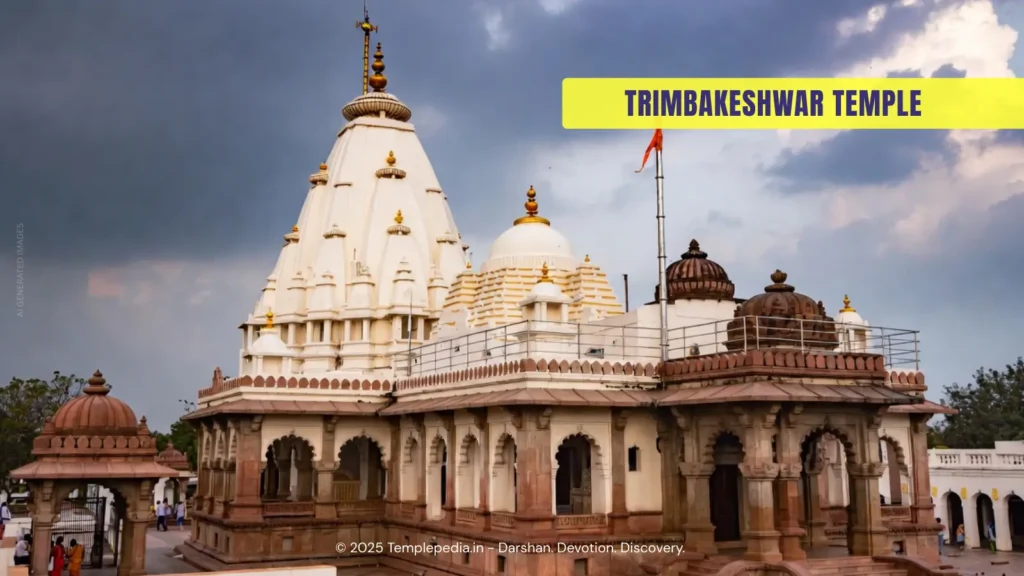
Tucked away in the quiet Brahmagiri mountains of Maharashtra – roughly 28 km from Nashik – is the sacred Trimbakeshwar Temple, one of India’s most cherished holy spots. For countless pilgrims traveling here, this old temple means hope, peace, or maybe even a fresh start.
The air here seems changed. When you get near the temple village – wrapped in thick trees and foggy hills – a quiet sense of something deeper pulls you in. It’s more than a shrine; this place holds one of twelve holy Jyotirlingas, said to be natural forms of Shiva filled with unmatched sacred strength.
What sets Trimbakeshwar apart? It’s how deeply it ties into nature’s gifts. From these hills flows the holy Godavari – sometimes known as the Ganga of southern India. People travel here not just to honor the triple-headed linga, symbolizing Brahma, Vishnu, and Shiva, yet also to see where a major Indian river starts its path.
If you’re after peace, love old buildings, or just dig mysterious spots, this place hits deep. We’ll show you every detail – cool backstory, handy advice, so your trip flows easy.
Trimbakeshwar Temple- Quick Info
| Detail | Information |
|---|---|
| Temple Name | Shri Trimbakeshwar Temple |
| Deity | Lord Shiva (Jyotirlinga) |
| Location | Trimbak, Nashik District, Maharashtra |
| Distance from Nashik | 28 kilometers |
| Jyotirlinga Number | One of the 12 Jyotirlingas in India |
| River | Godavari (origin point nearby) |
| Architectural Style | Hemadpanthi style with Nagara architecture |
| Best Time to Visit | October to March |
| Established | Ancient (current structure rebuilt in 18th century) |
| Famous For | Three-faced Shivalinga, Godavari origin, Kumbh Mela |
| State | Maharashtra |
| Pin Code | 422212 |
Trimbakeshwar Temple Overview
The Trimbakeshwar Temple shows deep belief, skillful work, yet strong commitment. Most Shiva shrines have just one linga; this place offers a rare twist – three faces on the Shivalinga standing for Brahma who begins, Vishnu who sustains, also Shiva who ends.
This temple’s not only impressive in design – its tied to key spiritual beliefs in Hindu tales. As one of twelve sacred Jyotirlingas spread around India, it pulls worshippers nonstop, since many feel praying here frees them from endless rebirth.
The temple area lies near the base of the Brahmagiri hills, giving it a stunning mix of scenery and calm. Around this holy site, the whole place – Trimbak – grows, shaped by faith and daily rituals; streets wind tightly, packed with sellers offering blooms, stalls dishing out prasad, alongside tiny food corners feeding visitors fresh veggie dishes.
Right away, you notice how calm it feels – even with lots of people around. It’s the mix of mantra chants, temple bells clinking, also that sweet smell of burning incense – somehow pulls you into deep focus. Priests run detailed ceremonies every single day, keeping old ways alive from their ancestors.
Some visitors carry out the Narayan Nagbali along with Tripindi Shraddha right here – Hindu practices said to release ancestral spirits while lifting household burdens. These traditions bring folks from all over India, turning Trimbakeshwar into more than a temple town – a hub where key spiritual acts unfold.
History and Mythology
The Sacred Legend
The tale of Trimbakeshwar Temple ties deep into old Hindu legends – full of gods stepping in, sacrifices, and sacred gifts. Old writings say the holy man Gautam Rishi stayed on Brahmagiri hill along with his wife Ahilya. That time, a harsh dry spell hit the land hard, lasting many years.
Thanks to his tough spiritual efforts and deep faith, Gautam Rishi won over Lord Varuna – the deity tied to waters – who gave him an endless supply of water. From the slopes of Brahmagiri, the Godavari started its flow, changing dry ground into rich green life. Seeing Gautam’s good fortune, rival sages grew bitter; they teamed up to plot harm.
They used dark spells, so a cow appeared inside Gautam’s hermitage. As soon as the holy man waved it off, the animal dropped lifeless. That act – taking a cow’s life – was seen as deeply wrong, leaving him shattered. In hopes of clearing his guilt, he turned to Lord Shiva with desperate prayers.
Moved by his dedication while seeing the hidden plot, Lord Shiva appeared here as a glowing lingam. Because of that moment, he granted grace to Gautam Rishi – freeing him from every wrongdoing. Whoever steps into the Godavari’s flow gains cleansing, thanks to the strength it received back then. That’s the reason people hold both the shrine and Kushavarta Kund – the river’s start – as deeply holy.
Historical Timeline Of Trimbakeshwar Temple
Though legends about the temple go way back, the building standing now tells a different tale. Built long ago, it changed shape many times through the ages – not once or twice, but again and again. What’s here today isn’t what first stood there; time reshaped it piece by piece.
The biggest changes came under the Peshwas in the 1700s. Because he worshipped Shiva strongly, Peshwa Balaji Bajirao paid for today’s temple building between 1755 and 1786. Instead of newer designs, it followed the old Hemadpanthi pattern common across Maharashtra back then.
Historical documents point to this place being a holy destination well before the 1000s. Rulers like the Yadavas, then later the Mughals, followed by the Marathas, each helped keep the temple standing or made it bigger. Over time, thousands came here – not just farmers and locals but emperors too – all hoping for spiritual favor.
The Trimbakeshwar Temple area played a quiet role in India’s fight for independence – many rebels stopped here, seeking strength from the holy atmosphere. Right now, a local trust runs the temple, keeping things running while honoring old traditions.
The Three Faces Mystery Of Trimbakeshwar Temple
One cool thing about Trimbakeshwar Temple? Its unique three-faced linga stands out. Most Shivalingas are just plain round pillars – this one’s different. Instead, it shows three faces carved right into the stone. Each face points to a major Hindu god – Brahma, Vishnu, or Shiva. Not separate idols – one piece tells the whole story.
The first face stands for Brahma, who brings the universe into being. Next comes Vishnu’s face, showing how balance is kept across existence. Then there’s Rudra – or Shiva – the force that breaks things down so something fresh can rise. Together, these three form a core idea in Hindu thought: making, holding, and ending flow like endless waves.
Now here’s what sets it apart – the trio of faces isn’t seen every day. Most times, the linga wears a shiny crown known as Mukut, hiding them from view. That covering comes off just for certain rituals. On those rare moments when worshippers catch sight of the three forms, folks believe good fortune follows.
This special form shows people how the sacred stays one, yet appears many ways to do various roles in existence – carved into rock, it becomes a poetic idea; a sign of oneness inside variety, something that fits close to Hindu beliefs.
Architecture and Design Details
Structural Marvel
Stepping into the temple, the sheer size hits you right away. Not far inside, Trimbakeshwar reveals its old-school Hemadpanthi design – detailed carvings cover it, built without any cement, using dark stone throughout. Instead of separate blocks, the whole thing looks like one giant piece hewn from solid rock.
The temple is about 75 feet high, its unique tower rising clearly above everything around. That tower uses the classic Nagara design from northern India, built in tiers that stack up like a peak. Each level adds height and shape, giving it an almost rocky feel – one meant to echo Mount Kailash, where Shiva’s said to live.
The main temple complex uses black stone – this adds a bold look while actually helping with the area’s weather. Because the material stays cool in summer heat, visitors feel at ease inside, especially when the sun hits hardest around noon.
The Temple Layout
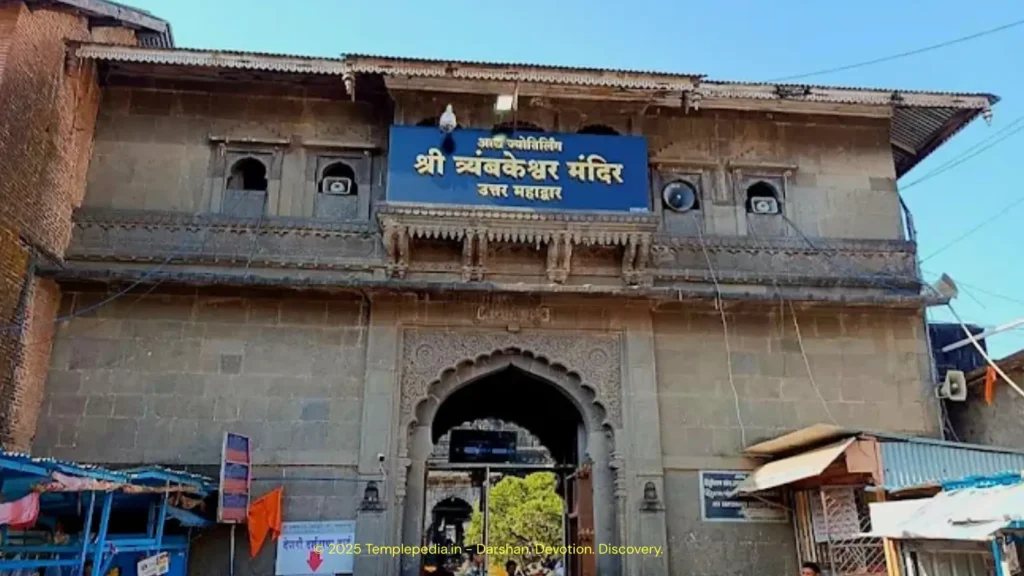
The temple’s built like old-style Hindu places, made up of separate areas. Coming in from the front gate, the first spot you hit is the Nandi hall – a big sculpture of Nandi, Shiva’s holy bull, looks straight toward the central shrine. The carving stands out, detailed and striking; locals think it brings luck – people quietly speak their hopes into its ears, trusting that Nandi passes them on to Shiva.
Beyond Nandi lies the Sabha Mandap, a space where worshippers meet for rituals instead of just prayer. Inside, rows of pillars rise up – each one packed with carvings of gods, epic tales, or twisting vines. Because every column is unique, you might end up staring at them way longer than expected.
The Garbhagriha lies right in the middle of the temple – its core space. Inside, down a bit below floor level, stands the holy three-headed Jyotirlinga. Water from the Godavari keeps flowing over it nonstop. That stream moves through the chamber then spills out as tirtha, the blessed liquid folks gather up.
Artistic Excellence
Trimbakeshwar stands out because of its detailed carvings. On the walls and columns, you’ll see intricate shapes showing deities, heavenly figures, also complex designs. There’s Ganesha, along with Parvati, Kartikeya, even representations of the nine planetary gods.
The ceiling tiles show lotus designs – these stand for clarity and sacred grace in Hindu art. Door openings grab attention, filled with detailed etchings; they hold guardian gods along with lucky signs built to push away bad vibes.
The temple’s carved stones show how skilled old-time crafters were. Even after years of wind and rain, the figures still look crisp and clear. When sunlight hits the dark rock, it casts bold contrasts – most striking at sunrise or late in the day.
Also Read This:- Prem Mandir Vrindavan – History, Timings, Architecture, Aarti & Travel Guide (2025)
Outside the main temple sit a few tiny shrines honoring different gods. While these side structures surround the central shrine, they follow ancient layout rules meant to boost good vibes.
Kushavarta Kund
Right beyond the central shrine sits the Kushavarta Kund – a holy pool said to mark where the Godavari begins. The pond’s shaped like a rectangle, with stairways going into the water, where visitors bathe ritually prior to stepping inside the temple grounds.
The kund gains importance at festival times, drawing crowds eager for ritual baths. Because locals think the liquid washes away bodily dirt along with inner stains. Nearby structures hold tiny temples and raised spots where holy men run different rites.
Temple Timings
| Day / Category | Morning Timings | Evening Timings | Aarti / Special Timings |
|---|---|---|---|
| Monday – Sunday | 5:30 AM – 9:00 PM | Temple remains open throughout | Morning Aarti: 5:30 AM |
| Daily Schedule | Abhishek: 6:00 AM – 8:00 AM | General Darshan: 5:30 PM – 9:00 PM | Evening Aarti: 7:00 PM |
| Special Pooja Times | Rudrabhishek: 7:00 AM – 9:00 AM | Shringar Darshan: 6:00 PM – 7:00 PM | Night Aarti: 9:00 PM |
| Monday (Special Day) | Extended Morning Puja: 5:30 AM – 10:00 AM | Extended Evening: 5:00 PM – 10:00 PM | Special Aarti: 8:30 PM |
| Festival Days | Opens early: 4:00 AM | Closes late: 10:00 PM – 12:00 AM | Multiple Aartis throughout the day |
Important Notes on Timings of Trimbakeshwar Temple
- During Shravan month (July-August), timings may extend with temple opening as early as 4:00 AM
- On Mahashivratri, the temple remains open for 24 hours
- During Kumbh Mela period (every 12 years), special arrangements and extended hours apply
- VIP darshan and special pujas have different time slots book in advance
- The temple closes briefly for cleaning and ritual preparations around 1:00 PM – 2:00 PM
Entry Fee, Dress Code, and Photography Rules
Entry Fees
One of the beautiful aspects of Trimbakeshwar Temple is that general darshan is completely free. Yes, you read that right—there’s no entry fee for regular visitors who wish to have darshan of the Jyotirlinga. This reflects the Hindu tradition of keeping temples accessible to all devotees regardless of their economic status.
However, for those who wish to skip long queues or perform special pujas, paid options are available:
- General Darshan: Free (may involve waiting in queue for 1-4 hours depending on season)
- Special Darshan: ₹100-300 per person (shorter waiting time)
- VIP Darshan: ₹500-1000 per person (minimal wait, special entry)
- Rudrabhishek Pooja: ₹1100-3100 (depending on scale)
- Laghurudra Pooja: ₹11,000 onwards
- Mahapooja: ₹21,000-51,000 (elaborate ceremony)
- Narayan Nagbali Ritual: ₹10,000-30,000 (three-day ceremony)
- Tripindi Shraddha: ₹8,000-25,000 (performed for ancestors)
These fees are approximate and may vary based on the temple trust’s current guidelines. It’s advisable to check with official temple authorities or the website before planning special ceremonies.
Dress Code Requirements
Trimbakeshwar Temple maintains strict dress code policies that all visitors must follow. This isn’t about being conservative for the sake of it- it’s about respecting the sacred nature of the place and maintaining the sanctity that devotees seek.
For Men:
- Traditional dhoti or pajama with shirt/kurta preferred
- Long pants are acceptable
- Shorts, bermudas, or any above-knee clothing strictly prohibited
- Must remove shirts before entering the sanctum sanctorum (bare upper body for darshan)
- Torn or transparent clothing not allowed
For Women:
- Saree, salwar kameez, or traditional Indian wear preferred
- Long skirts with dupatta acceptable
- Western wear like jeans can be worn but must be accompanied by long tops/tunics and dupatta
- Shorts, short skirts, sleeveless tops, or any revealing clothing strictly prohibited
- Dress should cover shoulders, back, and legs below knees
General Guidelines:
- Footwear must be removed before entering the temple premises (free cloakrooms available)
- Leather items (belts, wallets) should be avoided or deposited outside
- Clean, modest clothing is essential
- Trimbakeshwar Temple authorities reserve the right to deny entry if dress code is violated
Don’t worry if you arrive unprepared there are shops near the temple that rent traditional clothing at reasonable rates (Rs. 50-100). Many visitors find this a charming part of their temple experience.
Photography Rules of Trimbakeshwar Temple
Photography rules at Trimbakeshwar Temple are quite strict, and for good reason. The sanctity of the temple and the privacy of other devotees are paramount considerations.
Photography Restrictions:
- Mobile phones and cameras are NOT allowed inside the main temple complex
- Photography is completely prohibited within the sanctum sanctorum
- Dedicated cloakrooms are available where you must deposit electronic devices
- Violating this rule can result in confiscation of devices and penalties
Permitted Photography:
- Outside temple premises (exterior views, surrounding areas)
- Kushavarta Kund area (with discretion)
- Trimbakeshwar Temple gopuram (tower) from outside
- Surrounding town and scenic views
The temple provides secure locker facilities (free or nominal charge) where you can safely store your phone, camera, and other valuables. Many devotees appreciate this policy as it allows everyone to focus completely on their spiritual experience without digital distractions.
Best Time to Visit Trimbakeshwar Temple
Picking when to go to Trimbakeshwar Temple really shapes how it feels. It’s open all through the year, yet some times work out better. While visiting during cooler months means fewer crowds, going after rains brings lush views around the area. Though peak season draws more people, off-season lets you move freely without hassle.
Seasonal Considerations
Winter (October to February) – Most Recommended
This might just be the ideal moment to head to Trimbakeshwar. Temperatures sit between 10°C and 25°C – so it’s great for checking out temples or wandering nearby spots. A light wind drifts down from the Brahmagiri hills, which keeps things feeling nice.
Morning fog usually wraps the temple, giving it a dreamy vibe – great for snapping pics from afar. Thanks to mild temps, hiking to Brahmagiri top feels light, or just chilling by Kushavarta Kund works too.
Monsoon (June to September) – For Nature Lovers
If you’re into rainy days and thick green forests, this place feels like magic when the clouds pour. All around, nature turns bright green as streams tumble off the Brahmagiri slopes. The Godavari surges stronger now, while the breeze carries that rich scent of damp soil mixed with new leaves.
Still, expect lots of rain – trips could slow down or change. Paths around the temple turn slick, while hikes to close sites become tough. Yet when you’re okay with soaking clothes and packed groups during Shravan’s busy days, rainy season brings something quiet, deep.
Summer (March to May) – Only for Committed Devotees
Summers here often bring scorching weather, sometimes hitting 35-40 Degree C. It gets blazing hot, particularly around noon prayers. In case you’re traveling in these months, aim for dawn visits – say between 5:30 and 8 AM – or wait till after 6 PM, once things cool down a bit.
Summer trips mean fewer people around – unless there’s a festival going on – so you won’t wait long for darshan. Bring a bottle of water, dress in loose cotton clothes, while using a hat or umbrella to stay cool under the sun.
Festival Times – For Cultural Immersion
Mahashivratri (February/March) – a top moment to come, yet it gets packed fast. Thousands after thousands pour into the shrine, sparking intense spiritual energy. Through the night, unique ceremonies keep going nonstop. Grab your stay early before spots vanish.
In Shravan (around July or August)- every Monday gets packed. Folks – mostly Kanwariyas – trek on foot from home, hauling river water to pour at the shrine. No shoes, just faith. The vibe? Thick with prayer and raw excitement. People chant, move slow, stay focused. It’s loud yet peaceful somehow. Water sloshes in pitchers as feet hit dusty roads. Smoke from incense curls into hot air. Everyone’s part of something bigger that week.
Kartik Purnima (October/November)– A key moment marked by unique rituals. At this time, the climate feels just right, which boosts its charm.
Kumbh Mela (Every 12 years): Trimbakeshwar holds one of four major Kumbh Melas. The upcoming event kicks off in 2027. At that time, crowds flood the area – pilgrims by the million pour in. This turns the place into a rare spiritual scene you won’t forget.
Weekly Considerations
Mondays belong to Shiva – so expect more people. For a calmer visit, skip this day instead. Yet when you’re keen on seeing deep devotion alive, Monday fits just right.
Tuesday through Saturday bring lighter crowds – good for a calm visit. On Thursdays, which link to Vishnu, more people show up but it’s still smooth.
Sundays bring decent turnout – not as quiet as workdays, yet calmer than Mondays’ rush. Traffic picks up a bit, though nowhere near Monday’s scramble.
How to Reach Trimbakeshwar Temple ?
Reaching Trimbakeshwar is convenient, thanks to good connectivity with major cities. The temple town is well-connected by road, rail, and air.
| Mode of Transport | Nearest Hub | Distance | Approx. Time | Best For |
|---|---|---|---|---|
| By Air | Mumbai Airport (Chhatrapati Shivaji) | 180 km | 4–5 hours by road | International travelers |
| By Air | Nashik Airport (Ozar) | 40 km | 1 hour by road | Domestic travelers |
| By Train | Nashik Road Railway Station | 30 km | 1 hour by road | Major city train travelers |
| By Train | Trimbak Road Railway Station | 18 km | 40 minutes | Closest railway access |
| By Road | From Nashik | 28 km | 45 minutes | Most convenient |
| By Road | From Mumbai | 180 km | 4–5 hours | Self-drive / bus |
| By Road | From Pune | 180 km | 4 hours | Self-drive / bus |
| By Road | From Shirdi | 110 km | 2.5 hours | Temple circuit travelers |
Detailed Route Information
By Air:
Nashik Airport is the nearest airport, approximately 40 kilometers from Trimbakeshwar. However, this airport has limited connectivity with only a few domestic flights. Most travelers prefer landing at Mumbai’s Chhatrapati Shivaji International Airport, which is well-connected to cities worldwide.
From Mumbai Airport, you can:
- Hire a private taxi (Rs. 4,000-6,000)
- Book app-based cabs like Uber or Ola
- Take a prepaid taxi to Nashik first, then local transport to Trimbakeshwar Temple
- Some travel agencies offer direct airport-to-temple packages
From Nashik Airport, local taxis charge ₹800-1,200 for the 40-kilometer journey to Trimbakeshwar Temple.
By Train:
Nashik Road Railway Station is the main railhead, connected to major Indian cities including Mumbai, Delhi, Pune, Bangalore, and Hyderabad. From Nashik Road station:
- State transport buses (MSRTC) run regularly to Trimbakeshwar (₹40-60, every 30 minutes)
- Private buses and shared taxis available (₹50-100 per person)
- Hired taxis cost ₹600-900 for the 30-kilometer journey
- Auto-rickshaws available for shared rides (₹70-100 per person)
Trimbak Road Station is closer (18 km) but has fewer train connections. If your train stops here, take local transport to cover the remaining distance.
By Road:
This is the most popular option, offering flexibility and scenic views.
From Nashik (28 km):
- Take State Highway 42 via Ankai-Tankai
- MSRTC buses depart every 20-30 minutes from Nashik CBS (₹40-60)
- Private vehicles take 45 minutes to 1 hour
- Road condition is excellent throughout
From Mumbai (180 km):
- Take NH 160 via Thane-Kalyan-Ghoti
- Travel time: 4-5 hours depending on traffic
- Regular MSRTC buses from Mumbai Central and Dadar (₹300-450)
- Private vehicles can use Mumbai-Nashik Highway
From Pune (180 km):
- Via NH 60 through Junnar-Narayangaon-Sinnar
- Approximately 4 hours journey
- MSRTC buses available from Pune’s Swargate stand (₹250-400)
- Scenic route through Western Ghats
From Shirdi (110 km):
- Via Sinnar-Nashik route
- 2.5-3 hours journey
- Perfect for combining both pilgrimage sites
- Private taxis offer Shirdi-Trimbakeshwar-Nashik packages (₹2,500-3,500)
Local Transportation in Trimbak
Once you reach Trimbak town, the temple is easily accessible:
- Auto-rickshaws available from bus stand to temple (₹20-50)
- Walking distance if staying in nearby hotels (500m-1km)
- Cycle-rickshaws available for local movement
- Most hotels offer free pickup/drop to temple
Parking Facilities: The temple has designated parking areas. Charges are nominal:
- Two-wheelers: ₹10-20
- Cars: ₹30-50
- Large vehicles: ₹100-200
Also Read This:- Meenakshi Amman Temple- Best Temple in Madurai
Nearby Places to Visit
Trimbakeshwar isn’t just about the temple- the surrounding region offers numerous attractions that make your trip even more enriching.
Brahmagiri Hill
Rising majestically behind the temple, Brahmagiri Hill is where the Godavari River originates. The trek to the summit is moderate and takes about 2-3 hours. The trail winds through dense forests and rocky paths, offering spectacular views of the valley below.
At the top, you’ll find ancient caves where sages once meditated and the exact spot where the Godavari emerges—a small spring that grows into one of India’s mightiest rivers. The sunrise view from Brahmagiri is absolutely breathtaking. Carry water, wear comfortable shoes, and start early morning for the best experience.
Anjaneri Hills (20 km)
Believed to be the birthplace of Lord Hanuman, Anjaneri Hills is another popular trekking destination. The fort atop the hill offers panoramic views, and the trek passes through diverse flora including medicinal plants. Local guides share fascinating stories about Hanuman’s childhood spent on these hills.
Gangapur Dam (10 km)
A beautiful reservoir built on the Godavari River, perfect for a peaceful evening. The sunset views are spectacular, and it’s a popular picnic spot for families. The surrounding gardens are well-maintained, making it ideal for relaxation after temple darshan.
Coin Museum, Ankai-Tankai Fort (15 km)
History enthusiasts shouldn’t miss this fort complex that once served as a strategic military outpost. The Coin Museum displays ancient currencies from various dynasties that ruled this region. The fort ruins tell stories of battles, bravery, and political intrigue spanning centuries.
Nandur Madhmeshwar Bird Sanctuary (30 km)
A paradise for birdwatchers, this wetland sanctuary attracts migratory birds during winter. You can spot flamingos, cranes, storks, and numerous other species. The best time to visit is October to March when bird activity is at its peak.
Pandav Leni Caves, Nashik (35 km)
These 24 ancient Buddhist caves carved into hillsides date back to the 1st century BCE. The intricate rock-cut architecture, stupas, and prayer halls offer insights into Buddhist monastic life. The climb to the caves rewards you with excellent views of Nashik city.
Sula Vineyards, Nashik (45 km)
India’s largest wine producer offers tours and tastings. Experience the wine-making process, stroll through vineyards, and enjoy fine dining with scenic views. It’s a completely different experience that complements your spiritual journey nicely.
Panchavati, Nashik (30 km)
This sacred area along the Godavari is where Lord Rama spent part of his exile. Visit Sita Gufa (cave), Kalaram Temple, and Ramkund—a bathing ghat where ashes of deceased are immersed. The area has deep connections to the Ramayana epic.
Daily Activities and Temple Highlights
Morning Rituals (5:30 AM – 12:00 PM)
The temple day begins before sunrise. At 5:30 AM, the sanctum doors open with the ringing of bells and chanting of mantras. The Kakad Aarti (waking ceremony) is performed, symbolically waking Lord Shiva from his divine rest.
The morning Abhishek (ritual bathing of the linga) is particularly elaborate. Priests pour water from the Godavari, milk, honey, ghee, yogurt, and panchamrit over the Jyotirlinga while chanting Vedic hymns. The sight of these sacred substances flowing over the ancient linga while priests perform synchronized rituals is deeply moving.
Between 6:00-10:00 AM is the busiest darshan period. Devotees queue up for a glimpse of the deity. The three faces of the linga are adorned with fresh flowers and sandalwood paste. Special pujas like Rudrabhishek are performed during this time for those who have booked in advance.
Afternoon Break (1:00 PM – 2:00 PM)
The temple partially closes for routine cleaning and ritual preparations. The priests change the deity’s attire, offer bhog (food offerings), and prepare for evening worship. This is when the temple takes a brief pause in its daily rhythm.
Evening Celebrations (5:30 PM – 9:00 PM)
Evening darshan has a different energy. As the sun sets and the temperature drops, more families arrive. The deity is decorated with fresh flowers and ornaments. The Shringar Aarti at 7:00 PM is a visual spectacle—dozens of oil lamps are waved before the deity while devotional songs fill the air.
The temple complex is beautifully lit up in the evening, creating an enchanting atmosphere. The sound of bells, the fragrance of incense, the glow of oil lamps, and the collective devotion of hundreds create an experience that stays with you long after you’ve left.
Special Ceremonies
Rudrabhishek: This elaborate ritual involves chanting the Rudram (Vedic hymn) while performing abhishek. It’s believed to remove obstacles and bring prosperity. The rhythmic chanting creates powerful spiritual vibrations.
Narayan Nagbali: This three-day ritual is performed to pacify ancestral spirits and remove family curses. It involves creating symbolic bodies from dough, performing death rites, and finally immersing them in the Godavari. Many families come specifically for this ceremony believed to solve persistent family problems.
Tripindi Shraddha: Performed for ancestors who died untimely deaths or whose last rites weren’t performed properly. It’s considered extremely important in Hindu tradition for ancestral peace.
Trimbakeshwar Temple – Q&A
Q1. Where is Trimbakeshwar Temple located?
A: Trimbakeshwar Temple is located in Trimbak town, Nashik district, Maharashtra, near Brahmagiri Hill and the origin point of the Godavari River.
Q2. Why is Trimbakeshwar Temple famous?
A: It is one of the 12 Jyotirlingas and is known for its three-faced Shivalinga, representing Brahma, Vishnu, and Mahesh. The temple is also connected to the origin of the sacred Godavari River.
Q3. What are the Trimbakeshwar temple timings?
A: The temple is open from 5:30 AM to 9:00 PM, with multiple aartis, abhishek rituals, and darshan sessions throughout the day.
Q4. Is there any entry fee in Trimbakeshwar temple?
A: No, there is no entry fee for darshan at Trimbakeshwar Temple. Only special poojas require charges.
Q5. What is special about the Jyotirlinga here?
A: The Jyotirlinga has a unique three-faced form, believed to represent Brahma, Vishnu, and Mahesh, making it spiritually very powerful.
Q6. Which pujas are popular at Trimbakeshwar Temple?
A: Popular rituals include Rudrabhishek, Kaal Sarp Dosh Puja, Mahamrityunjaya Jaap, Narayan Nagbali, and Pitra Dosh Puja.
Q7. What is the best time to visit Trimbakeshwar Temple?
A: The best time is October to March when the weather is pleasant. Festivals like Mahashivratri also attract thousands of devotees.
Q8. How do I reach Trimbakeshwar Temple?
A: The nearest major railway station is Nashik Road (30 km), and the nearest airport is Ozar Airport (40 km). Mumbai Airport is around 180 km away.
Q9. Is photography allowed inside the Trimbakeshwar Temple?
A: No, photography is strictly prohibited inside the main temple sanctum.
Q10. How much time is required for darshan?
A: On normal days, darshan takes 30–60 minutes. On weekends and festivals, it may take 2–4 hours due to long queues.