
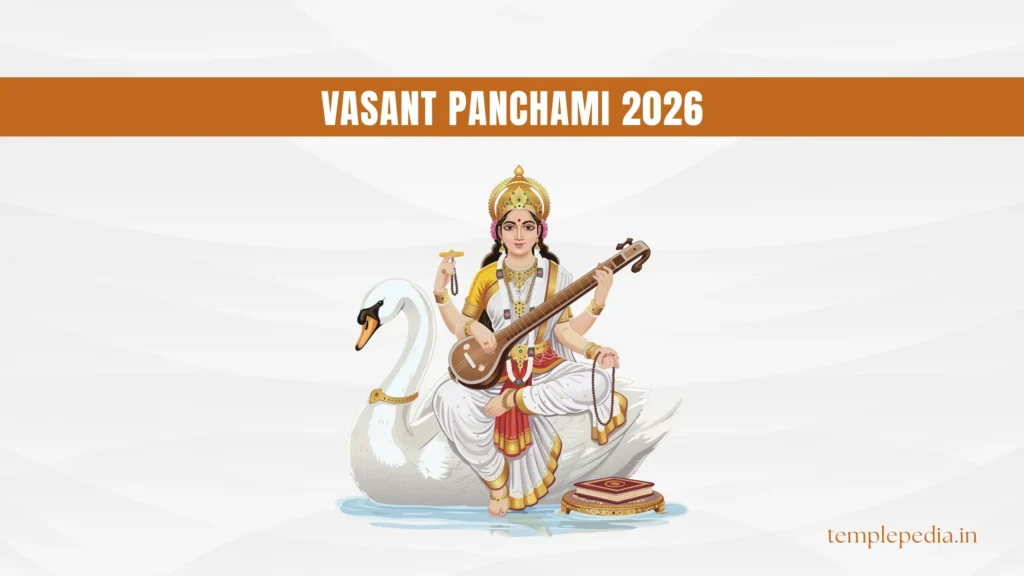
Vasant Panchami, also known as Basant Panchami, is a Hindu festival celebrated on the fifth day of the waxing phase (Shukla Paksha) of the lunar month of Magha in the Hindu lunisolar calendar. It usually falls in late January or early February and marks the arrival of the spring season, known as Vasant. The festival is considered an auspicious time for new beginnings and is associated with prosperity, renewal, and positive energy.
The festival is primarily dedicated to the worship of Goddess Saraswati, who symbolizes knowledge, wisdom, music, arts, and learning. On this day, her idol or image is decorated in yellow garments, and devotees offer yellow flowers, sweets, and fruits, reflecting the mustard blossoms that dominate the landscape during spring. Saraswati Puja is especially significant for students, scholars, artists, and musicians who seek divine blessings for intellectual growth and creative excellence. In many households, young children are introduced to learning through the Vidyarambh ceremony, marking their formal entry into education.
Beyond religious rituals, Vasant Panchami is also celebrated through cultural traditions such as kite flying, wearing yellow attire, and preparing festive dishes like kesari and kheer, often infused with saffron. These practices highlight themes of joy, abundance, and seasonal change. The festival is widely observed in India and Nepal, with regional variations—most notably in Bengal, where it is regarded as the birthday of Goddess Saraswati.
While rooted in ancient agrarian and devotional traditions, Vasant Panchami remains free from major historical controversies. In some regions, the celebration extends beyond Hindu communities, appearing in Sufi traditions in Pakistan as Basant, where kite flying is prominent, though the observance remains distinct from its Hindu origins.
Also Check Out This:- श्री सरस्वती चालीसा – Saraswati Chalisa (Hindi)
Vasant Panchami 2026: Key Details at a Glance
| Topic | Details |
|---|---|
| When is Vasant Panchami 2026? | 23 January 2026 (Friday) |
| Vasant Panchami Tithi | Magha Shukla Panchami |
| When does it usually fall? | Late January or early February |
| Why is Vasant Panchami celebrated? | To mark the arrival of spring and worship Goddess Saraswati |
| Which deity is worshipped? | Goddess Saraswati (knowledge, learning, arts) |
| Where is it celebrated? | India and Nepal |
| Major regions in India | West Bengal, Bihar, UP, Rajasthan, Punjab, Odisha, Assam, South India |
| Key rituals | Saraswati Puja, Vidyarambham, yellow attire, cultural programs |
Vasant Panchami: Key Details at a Glance
| Topic | Details |
|---|---|
| When is Vasant Panchami celebrated? | Vasant Panchami is observed on the fifth day (Panchami) of the bright half of the lunar month of Magha in the Hindu calendar. |
| When does Vasant Panchami usually fall? | It generally falls in late January or early February, depending on the lunar calendar. |
| Why is Vasant Panchami celebrated? | The festival marks the arrival of the spring season and is dedicated to the worship of Goddess Saraswati, the deity of knowledge and learning. |
| Which deity is worshipped on Vasant Panchami? | Goddess Saraswati, who represents wisdom, education, music, arts, and creativity. |
| Where is Vasant Panchami celebrated? | Vasant Panchami is mainly celebrated in India and Nepal. |
| Which regions in India celebrate it prominently? | West Bengal, Bihar, Uttar Pradesh, Rajasthan, Punjab, Odisha, Assam, Tamil Nadu, Andhra Pradesh, and Karnataka. |
| What are the main rituals of Vasant Panchami? | Saraswati Puja, wearing yellow clothes, offering books and musical instruments, Vidyarambham ceremony, and cultural programs. |
| What is the significance of yellow color? | Yellow symbolizes knowledge, prosperity, energy, and the blooming mustard fields of spring. |
Also Check Out This:- Indian Festivals 2026 – Complete 2026 Calendar with Holidays
Etymology and Date
Nomenclature and Etymology
The term “Vasant Panchami” originates from Sanskrit and is a compound of two words: vasanta, meaning the spring season, and pañcamī, which refers to the fifth day of a lunar fortnight. This name directly reflects the timing of the festival, as it is observed on the fifth day (pañcamī) of the bright half (śukla pakṣa) of the month of Māgha in the Hindu lunisolar calendar. The festival coincides with the arrival of spring (vasanta) in the northern hemisphere, symbolizing seasonal transition and renewal.
Across different regions, the festival is known by various linguistic names while retaining its original meaning. In Hindi-speaking regions, it is commonly called “Basant Panchami,” where Basant represents the Prakrit or vernacular form of vasanta, preserving the same etymological roots. In parts of southern India, the festival is referred to as “Sri Panchami,” a name that highlights the auspicious nature of the day, with śrī signifying prosperity, fortune, and divinity, while still emphasizing the pañcamī observance.
Additionally, the festival is widely known as “Saraswati Puja”, reflecting its primary devotional focus on Goddess Saraswati. While this name emphasizes the religious and ritual aspects of the celebration, it differs from the calendrical terminology associated with the festival’s date. Together, these varied names illustrate how seasonal change, astronomical timing, and devotional practice intersect in the naming conventions of Hindu festivals.
Astronomical and Calendar Calculation
Vasant Panchami is observed on the Panchami tithi (fifth lunar day) of the Shukla Paksha (waxing phase of the Moon) in the month of Magha, as per the Hindu lunisolar calendar. Astronomically, the Magha month is identified when the full moon (Purnima) occurs in the Magha nakshatra, a lunar mansion extending from approximately 0° to 13°20′ within the constellation Leo. This classification is determined by the Moon’s ecliptic longitude measured against fixed stellar coordinates, forming the astronomical basis of the lunar calendar system.
The Hindu lunisolar calendar synchronizes lunar months, averaging about 29.5 days, with the solar year through the periodic insertion of an intercalary month (adhik maas). This adjustment typically occurs every 2.5 to 3 years, when the divergence between lunar and solar cycles exceeds a defined threshold. Such intercalation ensures that seasonal festivals, including Vasant Panchami, remain aligned with the onset of spring, rather than drifting across seasons over time.
Tithis, which form the fundamental temporal units of the Hindu calendar, are calculated based on the angular separation between the geocentric ecliptic longitudes of the Moon and the Sun. Each tithi represents a 12° increase in this angular difference, resulting in 30 tithis per synodic lunar month. Specifically, Shukla Paksha Panchami corresponds to the phase when this separation reaches approximately 48° to 60° after the new moon (Amavasya), generally occurring four to five solar days after Amavasya.
Modern panchangs (Hindu almanacs) determine these calculations using advanced ephemeris data that account for the precise orbital mechanics of the Earth, Moon, and Sun. Many contemporary systems rely on computational models derived from VSOP87 planetary theories, alongside traditional Siddhanta frameworks refined with modern astronomical observations. These calculations yield location-specific tithi timings, adjusted for longitude, latitude, and the equation of time to ensure regional accuracy.
The observance of Vasant Panchami is fixed on the day when Panchami tithi predominates during Purvahna Kaala, the forenoon period extending from sunrise to roughly midday. Traditionally, Purvahna is defined as the first six ghatis (approximately 2.4 hours) after sunrise, though in practical terms it is often treated as sunrise to noon. In rare cases where Panchami begins after Purvahna has ended, observance may shift to the preceding Chaturthi tithi to preserve auspicious daytime timing. While regional differences exist between Amanta (new-moon-based) and Purnimanta (full-moon-based) calendar systems, Magha Shukla Panchami ultimately aligns on the same solar date, placing Vasant Panchami between late January and early February in the Gregorian calendar.
Religious Significance and Core Observances
Association with Saraswati and Knowledge Initiation
Vasant Panchami is primarily dedicated to the worship of Goddess Saraswati, the Hindu deity who embodies knowledge, wisdom, music, arts, speech, and learning. On this day, devotees seek her blessings through structured and symbolic Saraswati Puja rituals.
The goddess is traditionally depicted wearing yellow garments, a color associated with spring, vitality, and the blooming mustard fields of the season. Offerings commonly include yellow sweets, flowers, fruits, and books, all of which symbolically represent intellectual growth and creative pursuits. This devotional focus reinforces the festival’s core theme of intellectual awakening, with Saraswati revered as the remover of ignorance and the source of creative and scholarly inspiration.
Vasant Panchami holds special significance for knowledge initiation ceremonies, most notably Vidyarambha or Akshararambha, which mark the formal beginning of a child’s education. Typically performed for children between the ages of three and five, these rites involve parents or priests guiding the child’s hand to write their first letters—often beginning with the sacred syllable Om.
The writing may be done on a slate, a plate of uncooked rice, or even sand, symbolizing the child’s first conscious step into literacy and learning. The ritual is believed to invoke Saraswati’s grace, ensuring academic success, clarity of intellect, and the removal of obstacles in education.
Regional traditions further enrich these practices. In Bengal, the ceremony is known as Haat Khori, literally meaning “hand initiation,” where toddlers hold a stylus or finger to trace letters for the first time. This ritual marks an auspicious entry into academic life and is widely observed during Vasant Panchami.
Ethnographic studies note that such ceremonies encourage early familiarity with learning tools like books, writing instruments, and educational spaces. Timed specifically to the fifth lunar day of the bright half of Magha, these initiations align with the astrological auspiciousness of the tithi, reinforcing the belief that Vasant Panchami is an ideal day to begin educational journeys while celebrating the renewal and optimism of the spring season.
Worship of Other Deities
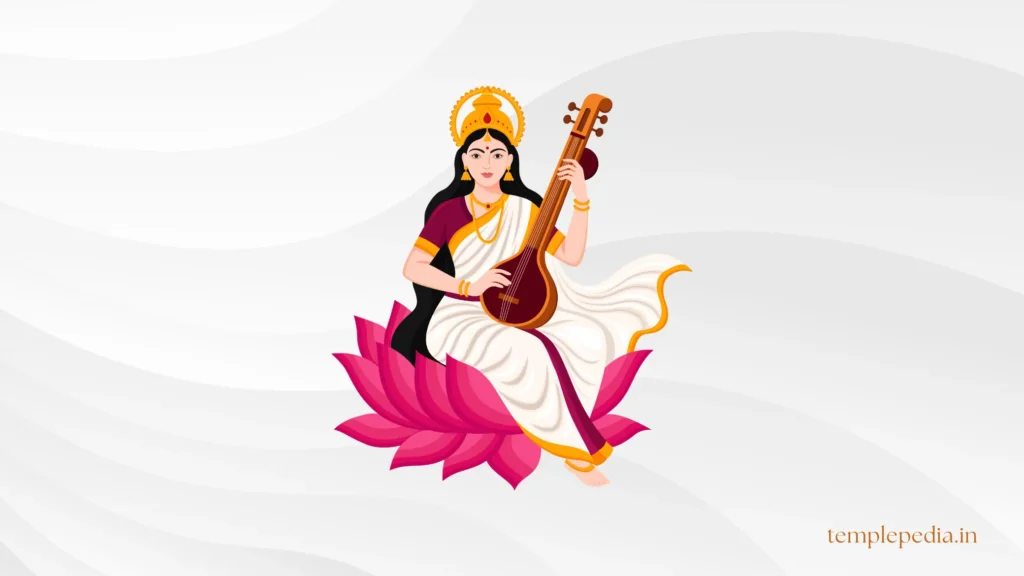
In certain regional and sectarian Hindu traditions, Vasant Panchami is not limited solely to the worship of Goddess Saraswati. Instead, the festival also includes rituals dedicated to other deities associated with creation, love, fertility, and seasonal renewal. In some communities, devotees offer prayers to Lord Shiva and Goddess Parvati, presenting symbolic offerings such as mango blossoms and sheaves of wheat.
These offerings reflect themes of fertility, prosperity, and agricultural abundance, particularly in rural and agrarian regions where Vasant Panchami marks the hopeful beginning of the spring cultivation cycle.
The festival is also linked to Kama Deva, the deity of love and desire, through mythological narratives that associate Vasant Panchami with the awakening of creative forces. According to legend, Kama Deva is believed to have invoked an artificial spring on Mount Kailash in an attempt to break Shiva’s deep meditation, an event that ultimately led to the birth of Kartikeya.
This association has led some communities to observe the day as auspicious for seeking harmony in relationships, emotional balance, and creative inspiration, although formal worship of Kama Deva varies widely by region and tradition.
In certain practices, Surya, the sun god, is also honored on Vasant Panchami. Offerings and early morning rituals acknowledge the Sun’s role in ending winter, restoring warmth, and sustaining life on earth. In some regions, these observances include the recitation of Vedic hymns during dawn prayers, symbolizing gratitude for the solar energy that supports agricultural growth and seasonal transformation.
Additionally, Puranic traditions associate Vasant Panchami with Brahma, the creator deity, regarding the day as the moment when cosmic creation began. As a result, select Brahminical observances incorporate meditative worship of Brahma alongside Saraswati to invoke both intellectual clarity and generative power.
While such practices highlight the festival’s broader cosmological and philosophical significance, the primary devotional focus of Vasant Panchami remains centered on Goddess Saraswati in most Hindu traditions.
Agricultural and Seasonal Rites
Vasant Panchami signifies the seasonal transition from winter to spring within the Hindu lunisolar calendar and aligns closely with the observable arrival of warmer temperatures. Across northern India, this period is marked by the blooming of yellow mustard fields, a visible indicator of agricultural renewal and fertility. Occurring in late January or early February, the festival coincides with natural changes in climate that encourage plant growth and signal the end of winter dormancy.
For farming communities, this seasonal shift holds practical importance. The conclusion of winter is viewed as a beneficial rest period for the soil, allowing recovery before renewed cultivation begins. Vasant Panchami therefore becomes a moment of gratitude for the land’s resilience and an anticipatory celebration of improved crop conditions under milder weather. Farmers recognize the festival as a turning point when environmental conditions become increasingly favorable for agricultural activity.
In rural agrarian regions, particularly in states such as Gujarat and Rajasthan, Vasant Panchami includes rituals centered on prayers for a prosperous upcoming harvest. Farmers often invoke deities associated with abundance and prosperity, seeking blessings for balanced rainfall, fertile soil, and stable climatic conditions. These practices are rooted in empirical observations of seasonal cycles, as the festival aligns with the readiness of fields for fresh sowing—especially for wheat and other rabi crops that follow winter dormancy.
Symbolic agricultural actions are also common during the observance. In some communities, farmers scatter seeds ceremonially or begin preparatory fieldwork, treating the day as an auspicious starting point for renewed farming efforts. This optimism is reinforced by visible signs of nature’s revival, including increased bird activity, emerging blossoms, and lengthening daylight hours.
Rather than relying heavily on mythological narratives, these rites emphasize practical realism and environmental awareness. Historical agrarian traditions trace such observances back to Vedic-era understandings of seasonal rhythms and their role in sustaining food security through predictable climatic patterns. The widespread use of yellow attire and offerings during these rituals mirrors the color of mustard crops, reinforcing a direct connection between the festival and tangible agricultural transformation rather than abstract symbolism alone.
Observances in Hinduism
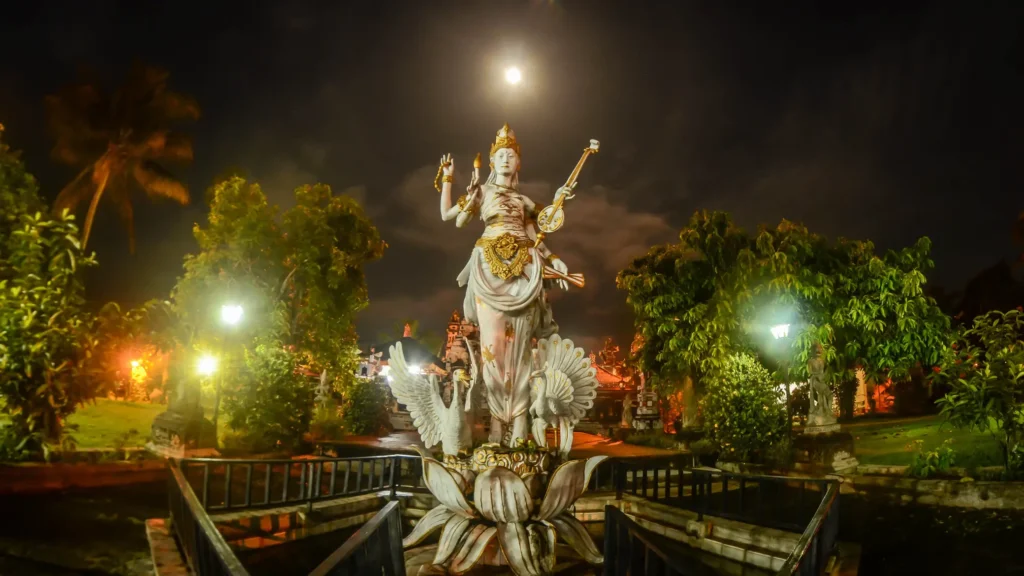
Puja Rituals and Regional Variations in India
The core observances of Vasant Panchami in Hinduism revolve around the worship of Goddess Saraswati, with rituals generally beginning at sunrise. Devotees customarily take a ritual bath and wear yellow attire, symbolizing prosperity, learning, and the vibrancy of spring. An altar is prepared using a yellow cloth, upon which an idol or image of Saraswati is placed. Books, pens, manuscripts, and musical instruments are arranged nearby to seek blessings for wisdom, education, and artistic skills. Common offerings include yellow flowers, fruits such as bananas, and sweets like kheer infused with saffron. The worship concludes with the recitation of Saraswati hymns most notably “Ya Kundendu Tushara Hara Dhavala” followed by aarti performed with lit lamps.
In more elaborate ceremonies, devotees perform Shodashopachara Puja, a structured ritual consisting of sixteen prescribed offerings. These sequential steps include dhyana (meditation on the deity), avahana (invocation), ceremonial water offerings (padya and achamaniya), arghya (rice offering), application of sandalwood paste (chandana), flowers (pushpa), incense (dhoopa), lamp (deepa), food offerings (naivedya), fruits (phala), and concluding rites such as aarti, pradakshina (circumambulation), and visarjana (ritual dismissal). Rooted in Vedic liturgical tradition, this detailed vidhi is intended to invoke Saraswati’s presence for intellectual clarity, creativity, and scholarly advancement.
Regional variations across India reflect local customs while maintaining Saraswati as the central deity. In eastern states such as West Bengal, Bihar, Odisha, and Assam, large-scale community pujas are organized in decorated pandals, often accompanied by cultural programs. A significant ritual here is Haate Khori, where children are formally introduced to writing by tracing their first letters on a slate using white paste, symbolizing the beginning of formal education.
In Punjab and northern India, Vasant Panchami observances blend religious rituals with seasonal celebrations. After Saraswati Puja, communities engage in kite flying (patangbazi), prepare yellow-hued foods like besan halwa, and offer prayers for agricultural prosperity, emphasizing Basant’s association with spring renewal and fertility.
In southern India, including Tamil Nadu, Andhra Pradesh, and Karnataka, the festival is observed as Sri Panchami. The focus here lies on Vidyarambham or Aksharabhyasa, where young children trace alphabets on rice grains or slates in temple settings. These rituals are often accompanied by Vedic chanting and parental vows for academic dedication. Worship in these regions commonly integrates Lakshmi–Saraswati devotion, symbolizing the balance between material prosperity and knowledge. Together, these practices highlight Vasant Panchami’s pan-Indian character, blending devotional, educational, and agrarian elements shaped by regional climate and cultural tradition.
Educational and Artistic Customs
Vasant Panchami is closely associated with educational beginnings, as devotees seek the blessings of Goddess Saraswati, the deity of knowledge and learning. One of the most significant customs observed on this day is Vidyarambham, also known as Aksharabhyasa, in which young children—generally between the ages of three and five are formally introduced to literacy. During this ritual, children trace their first letters, often beginning with the sacred syllable Om or the alphabet, on a plate filled with rice grains or on a slate, using a gold or silver stylus.
Performed under priestly supervision, this ceremony symbolizes the formal commencement of education and is conducted during an auspicious muhurta to invoke Saraswati’s grace for intellectual development and academic success.
Across India, educational institutions observe Saraswati Puja with special reverence on Vasant Panchami. Students place textbooks, notebooks, pens, and other study materials before the idol or image of the goddess as offerings.
These items are not used until the completion of the evening aarti, as it is believed that their consecration on this day imbues them with divine energy conducive to learning and concentration. This practice is followed not only by students but also by scholars, teachers, and professionals who seek clarity of thought, wisdom, and progress in their respective fields.
Artistic traditions form another important dimension of Vasant Panchami observances, reflecting Saraswati’s association with music, dance, and creative expression. Musicians traditionally tune their instruments and perform compositions in raga Basant, considering the day highly auspicious for artistic refinement and innovation. Communities, cultural organizations, and schools often organize music recitals, poetry readings, and devotional dance performances.
These artistic expressions celebrate the arrival of spring and reinforce collective appreciation for creativity, culture, and the performing arts within a shared festive environment.
Conclusion
Vasant Panchami represents a harmonious blend of seasonal transition, intellectual awakening, and cultural continuity within Hindu tradition. Rooted in both astronomical timing and agrarian cycles, the festival marks the gentle shift from winter to spring while emphasizing the pursuit of knowledge, creativity, and renewal. Through the worship of Goddess Saraswati, educational initiations like Vidyarambham, artistic performances, and region-specific rituals, Vasant Panchami reinforces the enduring value placed on learning and cultural expression across generations.
At the same time, its agricultural and seasonal observances highlight a pragmatic understanding of nature’s rhythms, linking human activity with environmental change. Whether observed through scholarly rituals, community celebrations, or artistic devotion, Vasant Panchami continues to serve as a meaningful occasion that unites education, culture, and seasonal awareness within a shared framework of tradition. Its continued relevance across regions and communities reflects the festival’s adaptability and its central role in celebrating knowledge, creativity, and the promise of new beginnings.
Frequently Asked Questions (FAQs) – Vasant Panchami
Q. What is Vasant Panchami?
Vasant Panchami is a Hindu festival that marks the arrival of the spring season and is dedicated to Goddess Saraswati, the deity of knowledge, learning, music, and arts.
Q. When is Vasant Panchami celebrated?
Vasant Panchami is celebrated on the fifth day (Panchami) of the bright half of the lunar month of Magha, usually falling in late January or early February.
Q. Why is Goddess Saraswati worshipped on Vasant Panchami?
Goddess Saraswati is worshipped on Vasant Panchami to seek blessings for wisdom, education, creativity, clarity of thought, and academic success.
Q. What is Vidyarambham or Aksharabhyasa?
Vidyarambham or Aksharabhyasa is a traditional ritual performed on Vasant Panchami in which young children are formally introduced to education by writing their first letters.
Q. Why is yellow color important on Vasant Panchami?
Yellow symbolizes knowledge, prosperity, energy, and the blooming mustard fields of spring, which is why yellow clothes, flowers, and sweets are widely used during the festival.
Q. Is Vasant Panchami an auspicious day for starting education?
Yes, Vasant Panchami is considered highly auspicious for beginning education, learning music, arts, and other intellectual or creative pursuits.
Q. How is Vasant Panchami celebrated across India?
While Saraswati Puja is central everywhere, celebrations vary regionally, including Haate Khori in Bengal, kite flying in North India, and Sri Panchami with Vidyarambham in South India.
Q. What foods are traditionally prepared on Vasant Panchami?
Common foods include saffron-flavored kheer, kesari, besan halwa, and other yellow-colored dishes, symbolizing joy and abundance.