Confused between Tulsi Mala vs Rudraksha Mala? There was a time when Dev found himself completely stuck in a spiritual loop.
He had successfully overhauled his lifestyle: waking up at 5:00 AM, replacing chaotic morning news with soulful bhajans, and attempting to sit still for twenty minutes of meditation. But instead of feeling peaceful, a nagging question kept keeping him up at night:
“Should I be using a Tulsi Mala or a Rudraksha Mala?”
The advice he received from friends and family only made things worse. His uncle insisted, “Rudraksha is pure cosmic power, Dev. It protects your aura.” Meanwhile, his grandmother softly countered, “No, beta, Tulsi is the purest form of devotion. It melts the heart.”
The deeper Dev dove into internet forums, the more conflicted he felt. It felt less like a spiritual journey and more like choosing between competing brands.
Everything changed during a weekend trip to Vrindavan. Sitting by the banks of the Yamuna River, he approached an elderly sadhu resting under a neem tree. Dev dumped all his confusion onto the old man.
The saint smiled, adjusting his saffron shawl, and said something that changed Dev’s perspective forever:
“Beta, Rudraksha and Tulsi are not competitors in a race. One carries the fiery, stabilizing energy of Shiva, while the other holds the liquid, ecstatic love of Krishna. The real question isn’t which bead is superior. The question is: What is your soul crying out for right now?”
Today, millions of practitioners use both Tulsi and Rudraksha for japa, mantra meditation, and mental grounding. Yet, if you are a beginner stepping onto the path of daily sadhana, you likely share Dev’s initial confusion. Let’s break down the real spiritual, energetic, and practical differences between these two sacred tools in a grounded, human way
Table of Contents
Decoding the Sacred Roots: What Exactly is a Tulsi Mala?
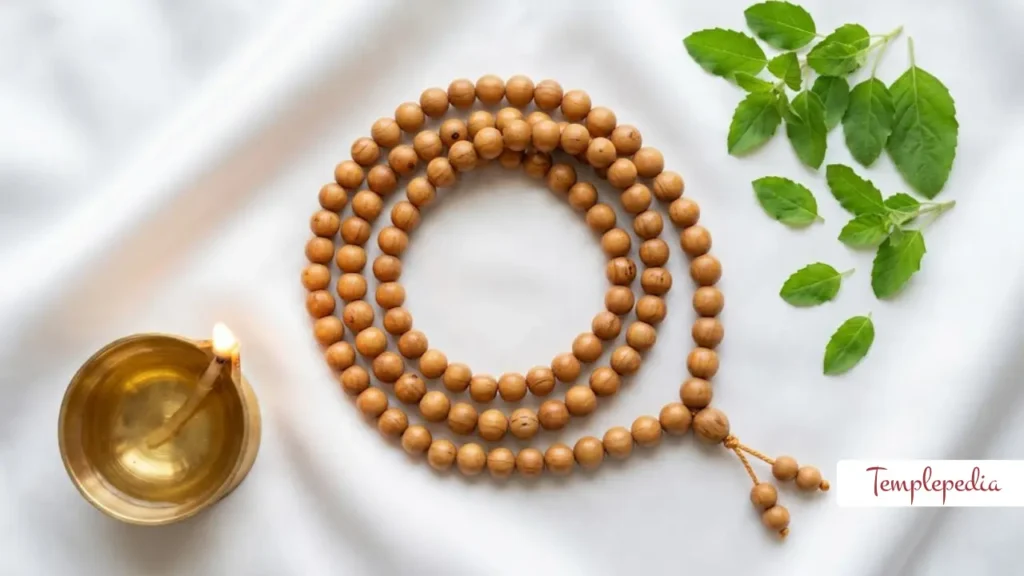
When discussing Tulsi Mala vs Rudraksha Mala, the first step is to understand the distinct origin of each sacred tool. To fully comprehend the essence of a Tulsi Mala, you have to understand the holy plant itself. Ocimum sanctum, commonly known as Holy Basil, isn’t just a medicinal herb in Indian households; it is considered a living goddess- an extension of Tulsi Maharani, who is deeply beloved by Lord Vishnu and His avatar, Lord Krishna.
An authentic Tulsi mala is hand-carved from the dried, woody stems of the Tulsi plant after it has naturally completed its life cycle. In the ongoing debate of Tulsi Mala vs Rudraksha Mala, this wood-based bead stands out for its unique, delicate craftsmanship.
The Energetic Profile of Tulsi
- Deities Associated: Lord Krishna, Radha Rani, Lord Vishnu, and Lord Rama.
- Core Vibration: Unconditional surrender (Bhakti), emotional healing, absolute purity, and divine love.
- The Physical Sensation: Lightweight, smooth, and naturally fragrant. It carries a subtle, cooling energy when it rests against your skin.
For centuries, Vaishnava devotees and ISKCON practitioners have worn Tulsi beads around their necks (Kanthi Mala) and used them for counting japa. The underlying philosophy here is completely heart-centric. When evaluating Tulsi Mala vs Rudraksha Mala, remember that you don’t approach Tulsi to demand cosmic powers; you approach Tulsi to soften your heart so that devotion can flow freely.
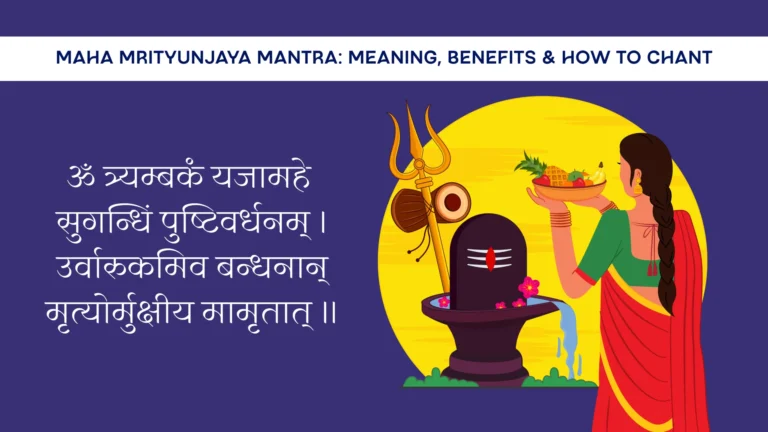
Maha Mrityunjaya Mantra: Meaning, Benefits & How to Chant
Unleashing the Cosmic Energy: What is a Rudraksha Mala?
On the other end of the energetic spectrum in the Tulsi Mala vs Rudraksha Mala comparison lies the fierce power of Shiva’s beads. Unlike the carved wood of Tulsi, a Rudraksha Mala is made of organic seeds harvested from the fruit of the Elaeocarpus ganitrus tree, found primarily in the Himalayan regions, Nepal, and parts of Southeast Asia.
The word itself tells a profound story: Rudra (another name for Lord Shiva) and Aksha (tears). Scriptural lore suggests that after witnessing the suffering of humanity during a deep, thousands-of-years-long meditation, Shiva opened his eyes. Tears of intense compassion fell to the earth, and where they touched the soil, Rudraksha trees sprouted. This core difference in origin is what makes the study of Tulsi Mala vs Rudraksha Mala so fascinating for modern spiritual seekers.
The Energetic Profile of Rudraksha
- Deities Associated: Lord Shiva, Shakti, and Kartikeya.
- Core Vibration: Mental stillness, energetic protection, intense focus, destruction of past karma, and inner strength.
- The Physical Sensation: Textured, heavy, and naturally warm. It interacts dynamically with the body’s bio-electric field.
Yogis, ascetics, and householders alike have worn Rudraksha for millennia. It remains the ultimate tool for those walking the path of Gyana (knowledge) and Raja Yoga (meditation and discipline), offering a protective shield against negative external energies.
Also Read This:- Rudraksha Mala Benefits & How to Use It for Japa – The Sacred Secret Every Shiva Devotee Should Know
Tulsi Mala vs Rudraksha Mala: A Quick-Glance Comparison
If you need a straightforward way to contrast their core attributes, this breakdown simplifies how their energies function in daily life:
| Feature | Tulsi Mala | Rudraksha Mala |
| Primary Source | Holy Basil plant stems (Wood) | Rudraksha tree fruit (Seed) |
| Spiritual Path | Bhakti Yoga (Path of Love & Devotion) | Raja/Tantra Yoga (Path of Meditation & Willpower) |
| Primary Deity | Lord Krishna / Sri Vishnu (Krishna Mala) | Lord Shiva (Shiva Mala) |
| Mental Impact | Calms anxiety, heals emotional grief | Sharpens focus, reduces erratic thoughts |
| Best Mantras | Hare Krishna Mahamantra, Vishnu Mantras | Om Namah Shivaya, Mahamrityunjaya |
| Physical Property | Smooth, light, subtly fragrant | Grooved, rugged, bio-electromagnetic |
The Ultimate Japa Dilemma: Which Is Better for Daily Mantra Chanting?
Sound is vibration, and the tool you use to count that vibration acts as a cosmic amplifier. When analyzing Tulsi Mala vs Rudraksha Mala for daily practice, matching the right bead to your specific mantra can fundamentally alter the speed of your spiritual growth.
When to Pick Up the Tulsi Mala (Best Mala for Chanting Krishna Mantras)
If your daily practice revolves around developing a personal, emotional relationship with the Divine, Tulsi is your ultimate anchor.
- Best Used For: The Hare Krishna Mahamantra, Om Namo Bhagavate Vasudevaya, or any mantra dedicated to Rama, Sita, Vishnu, or Radha-Krishna.
- The Bhakti Impact: Chanting with Tulsi doesn’t feel like a rigorous mental workout; it feels like returning home to someone who loves you unconditionally.
When to Pick Up the Rudraksha Mala (Best Mala for Chanting Shiva Mantras)
If your mind feels like a chaotic stormy night—plagued by overthinking, anxiety, or a lack of disciplineShiva’s sacred seed acts as a grounding lightning rod.
- Best Used For: Om Namah Shivaya, the Mahamrityunjaya Mantra, Om chanting, or foundational root mantras.
- The Meditative Impact: The uneven texture of Rudraksha stimulates specific nerve endings in your fingertips as you roll each bead, pulling your wandering mind back to the present moment.

108 बार ॐ जप करने से क्या होता है? जानिए इसके अद्भुत आध्यात्मिक रहस्य
Key Spiritual Benefits of Tulsi Mala
Understanding the explicit Tulsi Mala benefits helps clarify why it holds such a high status in devotional lineages, especially when making a choice between a Tulsi Mala vs Rudraksha Mala:
- Awakens Pure Bhakti: It directly stimulates the heart chakra, making your energetic system highly receptive to divine love.
- Calms Emotional Turbulence: The cool properties of Tulsi wood help pacify erratic moods, deep anxiety, and internal restlessness.
- Acts as a Divine Shield: Traditionally, keeping Tulsi close to your body protects your physical aura from negative cosmic frequencies.
- Purifies the Mind: It is believed that keeping Tulsi close to your throat chakra aligns your thoughts and daily speech with sattva (goodness).
Key Spiritual Benefits of Rudraksha Mala
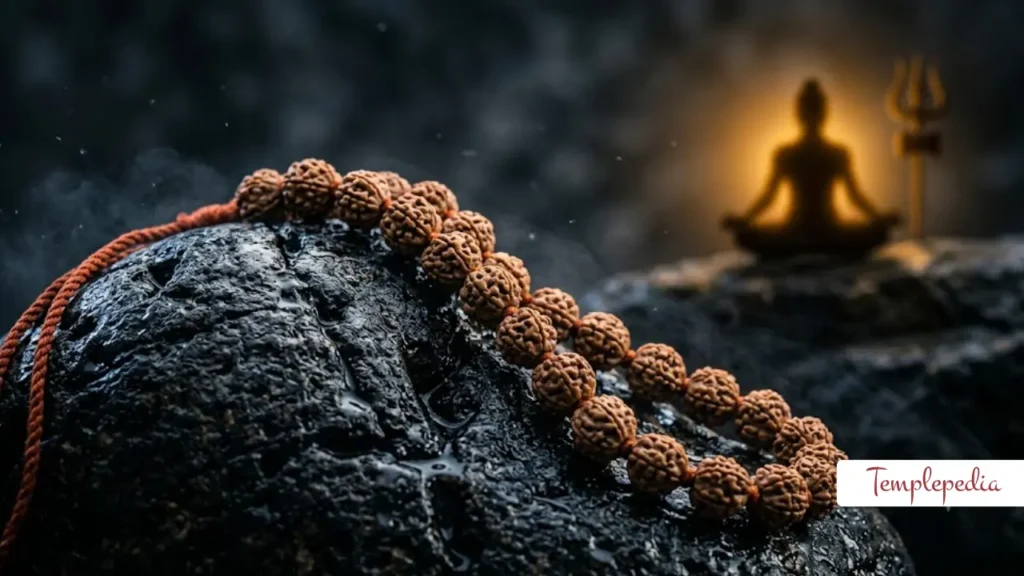
Conversely, the traditional Rudraksha Mala benefits lean heavily into mastering self-discipline, mental stillness, and absolute cosmic protection:
- Creates an Energetic Cocoon: Rudraksha acts as a powerful shield against external negative forces, making it perfect for people who travel frequently.
- Balances the Nervous System: It holds distinct bio-electromagnetic properties that help regulate physical stress and settle a hyperactive brain.
- Deepens Shiva Consciousness: It aligns the human mind with absolute silence, helping you drop worldly attachments during your sitting practice.
- Accelerates Mantra Siddhi: Because of its high raw conductivity, it acts as an exceptional storehouse for the energy generated during intense japa cycles.
Practical Rules: Dos and Don’ts for Wearing Both Malas
Because both of these spiritual tools are highly receptive to your personal energetic vibrations, ancient wisdom suggests a few simple guidelines to keep their sanctity intact.
Rules for the Tulsi Mala
- Dietary Alignment: Traditionally, those who wear a Tulsi Kanthi (neck mala) commit to a clean, vegetarian lifestyle. If you cannot maintain this diet, it is highly recommended to use your Tulsi mala solely for chanting japa, keeping it safely in a cotton bead bag when you are not practicing.
- Avoid Chemicals: Do not wear your Tulsi beads during chemical showers or in swimming pools, as harsh soaps and chlorine will strip the natural oils, causing the delicate wood to crack.
Rules for the Rudraksha Mala
- General Cleanliness: Anyone can wear a basic 5 Mukhi (five-faced) Rudraksha, regardless of their diet or lifestyle. However, it is recommended to remove it before visiting a crematorium or during the birth of a newborn due to heavy energetic shifts in the environment.
- Conditioning the Seeds: Every few months, gently clean your Rudraksha with a soft toothbrush under clean water, let it dry completely, and apply a drop of sandalwood oil to keep the seed healthy.

108 Names of Lord Hanuman (With Meaning)
Can You Wear Tulsi and Rudraksha Together?
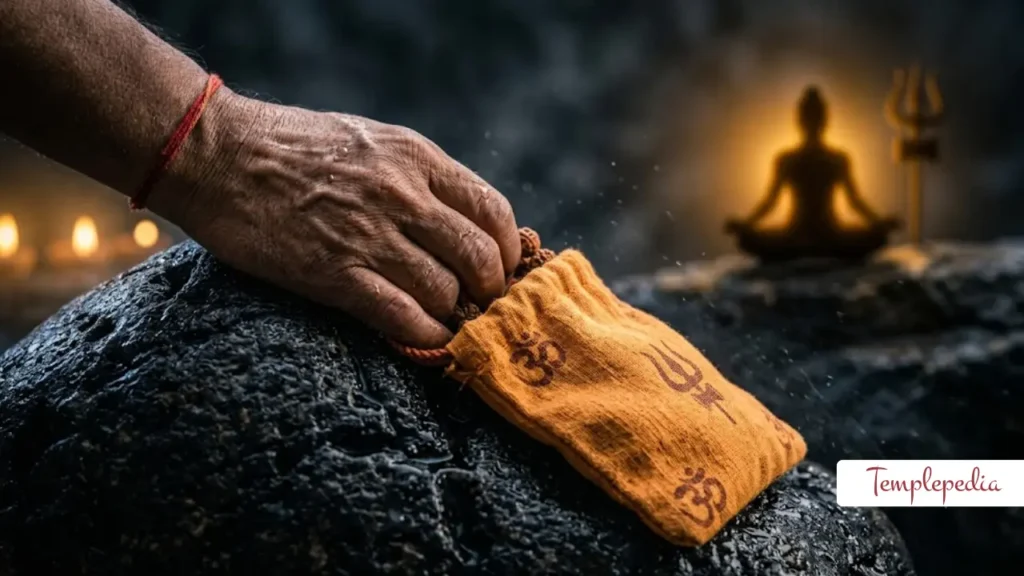
This remains one of the most heavily debated questions in modern spiritual forums. If you find yourself torn in the Tulsi Mala vs Rudraksha Mala dilemma, the short answer is: Yes, absolutely.
From a deep philosophical perspective, ancient scriptures recognize a unified divine form known as Harihara – where Hari represents Vishnu and Hara represents Shiva. They are two sides of the exact same consciousness. Wearing both together symbolizes an exquisite internal balance:
- The Rudraksha gives you the unshakable inner strength, clear boundaries, and focus of a warrior.
- The Tulsi infuses that raw power with grace, deep empathy, and soft devotion.
If you choose to wear both, you can either wear them as two separate strings around your neck or find a custom-woven design where the two beads alternate systematically.
Final Thoughts: The Right Choice is the One That Moves You
It is incredibly easy to get caught up in the intellectual trap of optimizing every single part of your spiritual life. We look at charts, we read SEO blogs, and we weigh pros and cons as if we are buying a new piece of technology.
But the spiritual reality of Tulsi Mala vs Rudraksha Mala doesn’t answer to consumer logic.
If you look at a Rudraksha, and its raw, earthy, Himalayan texture gives you a sudden sense of quiet stillness – that is your answer. If you hold a Tulsi Mala, and its delicate fragrance and connection to divine love make your heart feel safe- that is your answer.
One teaches you how to sit still in the middle of a storm; the other teaches you how to drop your ego and surrender. Ultimately, both paths lead to the exact same destination: absolute inner peace.torm; the other teaches you how to dance in the rain. Ultimately, both paths lead to the exact same destination: inner peace.
Related Articles
- Naam Japa Counter
- What Is Naam Japa
- Importance of 108 in Japa
- Best Time for Mantra Chanting
- Maha Mrityunjaya Mantra
- Mantra Counter Online
FAQ – Tulsi Mala vs Rudraksha Mala
Q1. Which mala is best for absolute beginners who just want to calm down?
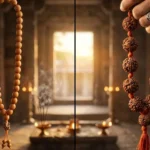
If you don’t follow a specific deity and simply want to reduce daily stress, picking the right option between a Tulsi Mala vs Rudraksha Mala depends on your current mental state. However, for raw anxiety control, start with an authentic 5 Mukhi Rudraksha Mala. It has a profound grounding effect on the human nervous system and does not require strict lifestyle or dietary alterations to wear.
Q2. Can women wear Rudraksha or Tulsi during their menstrual cycle?
Yes, absolutely. When comparing the spiritual rules of a Tulsi Mala vs Rudraksha Mala, ancient wisdom reminds us that spiritual energy belongs strictly to the soul, which completely transcends biological cycles. However, some traditional family lineages suggest keeping your active chanting mala inside its protective cotton cloth bag during these days out of personal preference for ritualistic purity. Follow whatever feels most respectful to your inner conscience.
Q3. How many beads should a standard Japa Mala have?
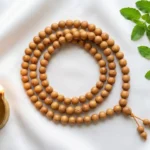
Whether you choose a Tulsi Mala vs Rudraksha Mala, both traditional variants contain exactly 108 beads, plus one extra elevated bead called the Meru or Guru bead. When performing daily mantra japa, you should never cross over this central Guru bead; instead, simply turn the entire mala around in your fingers and begin counting in the opposite direction.
Q4. How do I know if my Tulsi mala is authentic?
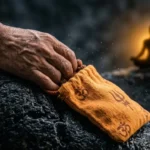
Real Tulsi wood is extremely lightweight, features an uneven, organic natural texture, and gives off a very faint, refreshing herbal scent when dipped briefly in warm water. Fake variants flooding the online market are often made of plastic, cheap generic wood blocks, or painted beads that quickly bleed color when they come into contact with sweat or water.
Tags:- Tulsi Mala vs Rudraksha Mala, Tulsi Mala vs Rudraksha Mala, Tulsi Mala vs Rudraksha Mala, Tulsi Mala vs Rudraksha Mala